Water Mitigation vs Water Restoration: What’s the Difference?
Two terms homeowners often use interchangeably — but they’re not the same thing, and knowing the difference can protect your property and your insurance claim.
📞 24/7 Emergency Line: (945) 297-3238Why This Distinction Actually Matters
If you’ve searched for help after a water damage event, you’ve probably seen the terms “water mitigation” and “water restoration” used as if they mean the same thing. They don’t — and the difference isn’t just semantics. Understanding which phase you’re in affects how fast you need to act, what your insurance covers, and what to expect from the company you hire.
In simple terms: mitigation stops the damage, restoration fixes the damage. One happens in hours, the other happens over days to weeks. Most homeowners need both — but only if mitigation happens first, and happens fast.
See our full range of restoration services for everything our IICRC-certified team covers across both phases, including fire, mold, and storm damage.
Side-by-Side: Mitigation vs Restoration
🚨 Water Mitigation
- Emergency, time-sensitive response
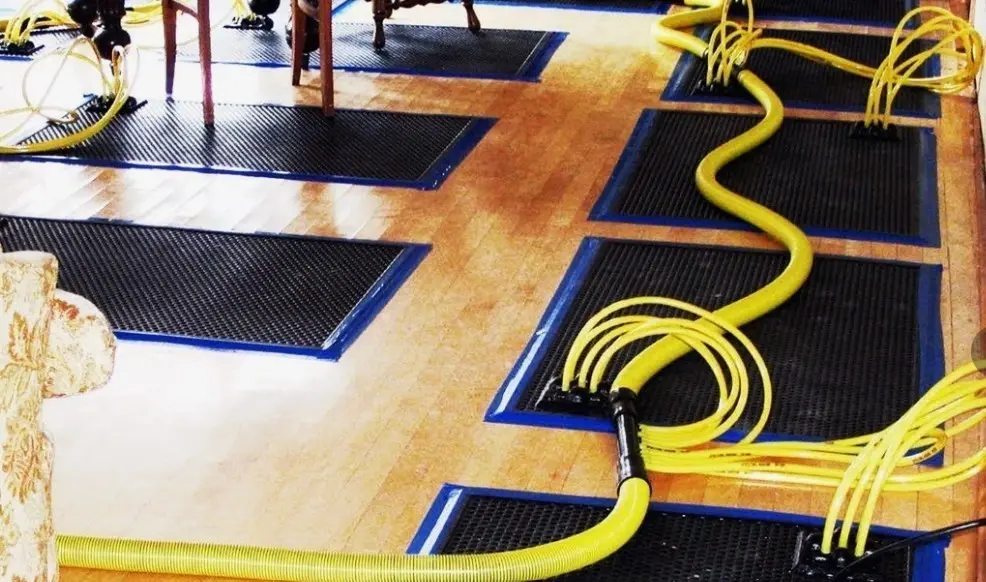
- Water extraction and structural drying
- Prevents further damage and mold growth
- Typically begins within 60 minutes of your call
- Duration: 3–5 days on average
🔧 Water Restoration
- Repair and rebuild phase
- Replacing drywall, flooring, insulation
- Returns property to pre-loss condition
- Begins after mitigation and clearance testing
- Duration: days to several weeks, depending on scope
Quick Comparison Table
| Factor | Water Mitigation | Water Restoration |
|---|---|---|
| Goal | Stop damage from spreading | Repair and rebuild damaged areas |
| Timing | Immediate (within the hour) | After mitigation is complete |
| Key Tasks | Extraction, drying, antimicrobial treatment | Drywall, flooring, structural rebuild |
| Typical Duration | 3–5 days | Days to weeks |
| Insurance Focus | Emergency mitigation is usually covered to prevent further loss | Covered based on scope of repairs needed |
How the Two Phases Fit Together
Emergency call placed, technicians dispatched, arrival within 60 minutes.
Water extraction begins immediately using truck-mounted pumps and industrial equipment.
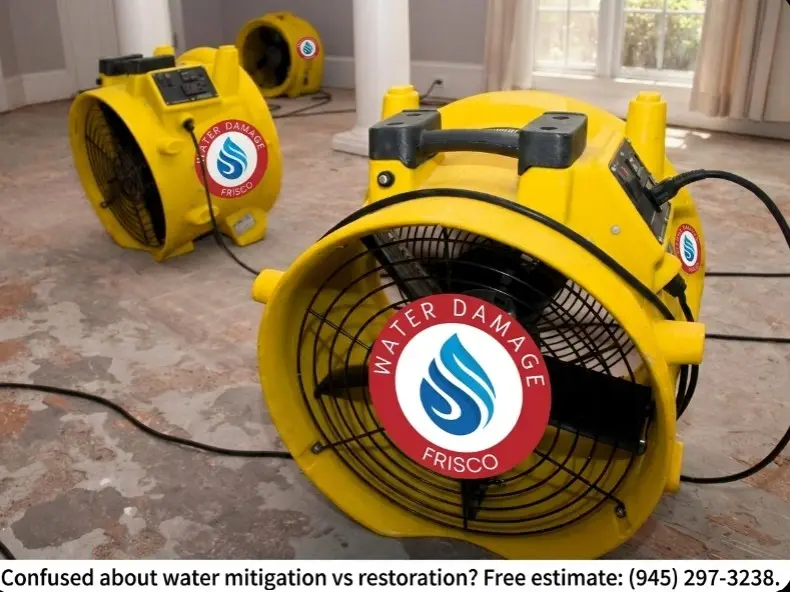
Structural drying with dehumidifiers and air movers, daily moisture monitoring until IICRC dry standard is met — this is mitigation.
Clearance testing confirms property is dry. Restoration phase begins: repairs, rebuilding, final touches.
Why You Can’t Skip Straight to Restoration
Some homeowners assume they can go straight to repairs without a proper mitigation phase. This is a costly mistake. Mold can begin growing within 24 to 48 hours after water exposure — and North Texas’s warm, humid climate makes that risk even higher. If restoration work starts before the property is fully dry, new materials can absorb residual moisture, leading to hidden mold growth behind freshly repaired walls.
Skipping mitigation can also affect your insurance claim. Adjusters expect to see documentation that mitigation steps were taken promptly — delaying or skipping this phase can be interpreted as failure to prevent further damage, which some policies exclude from coverage.
Related Services
Frequently Asked Questions
Is water mitigation the same as water damage restoration?
Do I need both mitigation and restoration?
Can restoration start before mitigation is finished?
Does insurance cover both phases?
How do I know if I only need mitigation, or restoration too?
Not Sure Which Phase You Need?
Our certified team will assess your property and explain exactly what’s needed — no guesswork.
📞 Call (945) 297-3238 Now