Does Homeowners Insurance Cover Dishwasher Leak Damage in Texas?
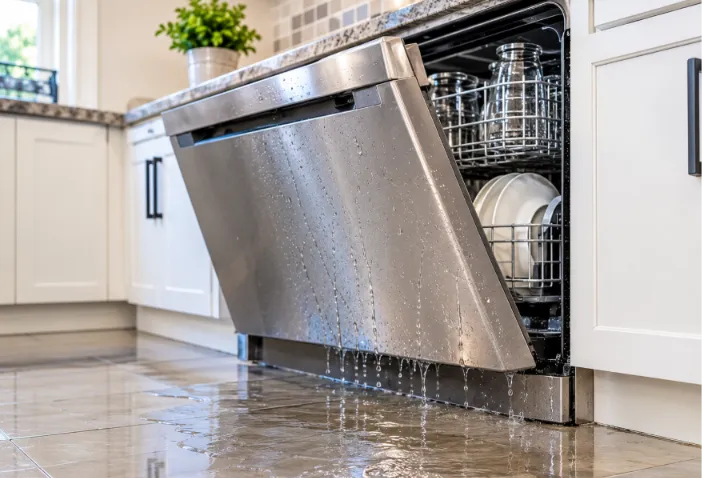
Short answer: usually yes, if the leak was sudden and accidental. When a supply line bursts, a hose pops off, or a clogged drain makes the dishwasher overflow, most Texas homeowners policies pay for the resulting damage to floors, walls, cabinets and belongings, after your deductible.
Usually no, if the leak was slow and ignored. Damage from a worn door seal that dripped for months, plus rot and mold that grew from it, is typically treated as a maintenance problem. The dishwasher itself is also not covered when it simply breaks down.
So the question does homeowners insurance cover dishwasher leak damage rarely has a plain yes or no answer. It turns on how the water escaped, how long it ran, and how quickly you reacted. This guide explains how Texas insurers and adjusters usually think about it, what the Texas Department of Insurance (TDI) says about claim deadlines, and what to do in the first hours. If water is on your floor right now, start with our guide on what to do when a dishwasher leaked overnight.
Dishwasher leak in your Frisco home? Get the water out before it reaches the subfloor.
📞 Call (945) 297-3238 – 24/7What Texas Homeowners Insurance Usually Pays for After a Dishwasher Leak
Policy wording differs between carriers, so your declarations page and policy form always have the final word. In general, a covered dishwasher leak can trigger these parts of your policy:
- Dwelling coverage: repairs to the structure, including flooring, subfloor, baseboards, drywall, insulation and the cabinets around the dishwasher.
- Personal property coverage: belongings ruined by the water, such as rugs, stored items under the sink, or furniture on an affected floor.
- Additional living expenses: hotel or rental costs if the kitchen or the home is unlivable while repairs are made, where your policy includes it.
- Water removal and drying: reasonable emergency costs to stop further damage. Our explainer on whether insurance covers water mitigation shows how this works.
- Mold that follows a covered leak: TDI explains that if mold develops on a damaged item after a covered loss, it would be covered, subject to your policy terms.
What is not paid: repairing or replacing the leaking dishwasher itself when it wore out or failed mechanically. For that, people look to a home warranty or an equipment breakdown endorsement, if they have one.
When Your Insurer May Deny a Dishwasher Leak Claim
Denials usually come from a short list of reasons. Knowing them in advance helps you protect your claim.
The leak was gradual, not sudden
Most policies exclude damage from continuous or repeated seepage over weeks or months. TDI puts it plainly: most home policies do not cover water damage from gradual leaks or seepage, including the mold that results. A cracked drain hose that wept behind the dishwasher for a season is the classic example.
Wear, tear and lack of maintenance
Adjusters look at the age and condition of the parts. A brittle, corroded supply line is a maintenance issue in many carriers’ eyes, while a line that suddenly split is an accident. The fix itself (the new hose or the new unit) is generally on you either way.
Drain or sewer backup
If dirty water came up through the dishwasher drain from a clogged sewer line, that is usually treated as a backup, which needs a separate endorsement. Ask your agent whether you have water backup coverage.
Late reporting and no mitigation
You are expected to protect the home from further damage. If you left wet cabinets and flooring untreated for days, the insurer can argue the extra damage and mold were preventable. Our checklist for the first 24 hours after water damage covers the steps that matter.
Flood is a different peril
A dishwasher leak is not a flood, but if your Frisco home also took on outside water, that part falls under flood insurance, not your homeowners policy. See water damage versus flood damage for the difference.
Sudden vs. Gradual: How Adjusters Decide
The whole claim often hinges on one question: how long was the water escaping? Adjusters and restoration technicians look for physical evidence rather than relying only on your story.
| Evidence | Points toward sudden | Points toward gradual |
|---|---|---|
| Water staining | Fresh, single wet area with no rings | Multiple tide-line rings or dark halos |
| Cabinet base | Swelling only in the wet zone, solid wood still sound | Soft, crumbling or rotted particleboard |
| Mold | None, or light growth in a short time frame | Established colonies behind and under the unit |
| Hose or fitting | Clean break, popped clamp, loose connection | Corrosion, mineral crust, chronic dampness |
| Subfloor | Wet but structurally firm | Warped, stained dark, or deteriorated |
| Water bill and history | No unexplained usage change | Prior repairs or earlier complaints about leaks |
A moisture map and drying logs from a licensed restoration company give a neutral, time-stamped record of the damage. That documentation is far stronger than a verbal account when an insurer questions the timeline.
Dishwasher Leak Scenarios: Covered or Not?
| Scenario | Likely outcome | Why |
|---|---|---|
| Supply line bursts and floods the kitchen | Typically covered | Sudden, accidental discharge from an appliance |
| Clogged drain makes the unit overflow mid-cycle | Typically covered | Single event, unexpected overflow |
| Door gasket dripped for months and rotted the cabinet | Typically denied | Continuous seepage and wear exclusions |
| Water pours through the ceiling below an upstairs kitchen | Typically covered if the cause was sudden | Resulting damage to ceiling and contents follows the same sudden-versus-gradual test |
| Dishwasher stops working, no leak | Not covered | Mechanical breakdown is not a covered peril |
| Sewage backs up through the drain line | Only with a water backup endorsement | Backup is commonly excluded by default |
| Hidden leak behind cabinet found early, reported at once | Often covered | Prompt discovery and reporting support the sudden claim |
Every policy is different, and the table shows general patterns, not a guarantee. If your claim is denied, you can ask the insurer to explain in writing and then request a second look with documentation attached.
What to Do in the First 24 Hours After a Dishwasher Leak
What you do in the first day affects both the damage and the claim. Work through these steps in order.
- Stop the water. Turn off the dishwasher, then close the shutoff valve under the kitchen sink. If you cannot find it or the leak continues, shut off the main water valve.
- Make the area electrically safe. If water reached outlets, the dishwasher cord or your breaker panel, switch off power to the kitchen at the breaker and do not stand in standing water. If you smell burning or see sparks, call 9-1-1.
- Photograph and film everything before you clean: the floor, cabinets, the dishwasher, the hose and any ruined belongings. Keep the failed part if you can.
- Remove standing water and open the area. Mop or wet-vac the surface, pull out wet rugs, and run fans. Do not rely on a household fan alone for water in cabinets or under flooring.
- Call your insurer promptly and ask what they need to open the claim. Tell them what happened, when you discovered it, and what you did to limit the damage.
- Call a restoration company for extraction and drying. Our dishwasher leak water damage service in Frisco includes moisture detection, structural drying and documentation your adjuster can use.
- Make only temporary repairs and save every receipt. Hold off on permanent repairs until the adjuster has inspected, unless your insurer says otherwise.
Dishwasher water can contain food debris and detergent. Depending on the source, it can fall into a contaminated category and may require careful handling. Read about the water damage categories to see why that matters for cleanup.
Need a drying and moisture report your insurer will accept?
Our Frisco crew can be at your door fast and document every step.
How to File a Dishwasher Leak Claim in Texas
Filing is simpler when you follow the order the insurer expects. TDI describes the general flow in its guide to getting your insurance claim paid.
- Report the loss by phone, online or through your carrier’s app, and get a claim number.
- Send your documentation: photos, video, the failed part, receipts for emergency work and your restoration company’s report.
- Meet the adjuster. Walk them through the leak path. Share the moisture readings and drying logs.
- Compare estimates. Review the insurer’s scope against the restoration and repair estimates you collected.
- Get paid. Your deductible is subtracted from the settlement. With replacement cost coverage, some claims are paid in stages.
The Texas claim timeline
According to TDI, your insurer has 15 business days to acknowledge your claim and begin its review. After it receives what it needs from you, it has 15 business days to say whether it will pay, and a rejection must be explained in writing. The insurer can extend that decision window by 45 days if it explains why it needs more time. Once it agrees to pay all or part of the claim, it must pay within five business days. After a weather catastrophe, TDI can extend these deadlines by 15 days.
Should You File a Claim or Pay Out of Pocket?
Not every dishwasher leak is worth a claim. Weigh these points before you decide:
- Your deductible. Some Texas policies use a flat dollar deductible, others a percentage of dwelling coverage. If total repairs are close to or below the deductible, a claim may pay little.
- The real scope. A quick wipe-up is different from wet subfloor, swollen cabinets and a ceiling below. Hidden moisture often makes the loss larger than it looks, so get it measured first. Our water damage cost calculator and guide to water damage restoration cost in Frisco help you set expectations.
- Claim history. Insurers may record claims in industry databases and consider them at renewal. Ask your agent how a water claim could affect your premium before you file, and do not skip the call to the agent even if you decide not to file.
- Reporting duties. Waiting can hurt you. Hidden damage that grows can be argued as neglect, so decide quickly after you have facts, not weeks later.
Dishwasher Leaks, Mold and Your Policy
Wet cabinets and a warm, closed space under the counter are a setup for mold. TDI notes that mold can begin growing within a day of a leak, so drying speed matters for your health and for your claim. Mold that follows a covered leak is generally included, but TDI also warns that most home policies do not include mold cleanup and testing after a damaged item is removed, so ask your insurer about it directly.
Mold tied to long-term seepage is usually excluded. Read why Texas mold insurance claims get denied, and see TDI’s page on mold coverage. To understand what growth looks like after a leak, our guide to mold after water damage in Frisco shows the warning signs, and our dishwasher leak under sink cabinet damage article covers the cabinet side.
How Professional Documentation Strengthens Your Claim
Insurers pay on evidence. A restoration company that follows industry standards (the IICRC S500 guideline for water damage) will usually produce:
- Moisture readings and a map of wet materials, taken before drying begins
- Photos of the source, the leak path and affected materials
- Daily drying logs showing equipment placement and moisture trending to dry
- A written scope and itemized estimate for needed repairs
Ask any company you hire whether it is certified. We explain what that means on our IICRC certified page. For flooring, see how pros handle dishwasher leak hardwood floor damage, whether to save or discard wet carpet padding, and the method for drying hardwood floors after water damage. Expect a typical job to follow the steps in our water damage restoration timeline for Frisco.
Frisco Resources: Permits, Inspections and Safety
Replacing a dishwasher is often a simple job, but plumbing changes and repairs after a loss can raise permit questions. The City of Frisco’s Building Inspections Division recommends contacting an inspections representative before you start construction or modifications to find out whether you need a permit; its customer service line is 972-292-5301. For electrical hazards, fire concerns or fire code questions, see the Frisco Fire Department, which lists a non-emergency number of 972-292-6010. In an emergency, always call 9-1-1.
Living in a specific Frisco community? Our Frisco neighborhoods water damage guide and neighborhood service pages show what we see most often in each area, and you can always review our Frisco water damage restoration location page for service coverage.
How to Prevent the Next Dishwasher Leak
- Inspect the supply line and drain hose once or twice a year for kinks, bulges and corrosion at the fittings, and replace worn rubber hoses with braided stainless lines.
- Check the door gasket for cracks and food buildup. If water seeps out at the bottom of the door, see dishwasher leaking from the bottom of the door.
- Clear the drain and filter regularly so cycles do not back up and overflow.
- Look under the sink now and then for damp cabinet bases or a musty smell. Our guide to why a dishwasher leaks lists the usual causes.
- Add a leak sensor beneath the dishwasher. Smart leak detectors and shutoff valves alert you early and can close the water line for you.
- Travelling? Follow our tips to prevent water damage while you are away.
Renters and Landlords: Who Pays for a Dishwasher Leak?
If you rent, your landlord’s policy generally covers the building, while your renters policy covers your belongings. Responsibility can shift depending on the lease and who caused the leak. Our guide to Texas rental water damage and tenant rights explains how to report it and protect your deposit.
Other Appliance Leaks: What Does Insurance Say?
Dishwasher claims follow the same sudden-versus-gradual logic as other household sources. These sibling guides cover the details for each:
- Does homeowners insurance cover a washing machine leak?
- Does homeowners insurance cover a water heater leak?
- Does homeowners insurance cover a sink leak?
- Does homeowners insurance cover an AC leak?
- Does homeowners insurance cover a toilet overflow?
- Does homeowners insurance cover burst pipes?
For the bigger picture of leaks around the home, read about appliance water damage in Frisco and the most common home water damage spots. If you suspect moisture you cannot see, our guide to hidden water damage signs in Frisco homes will help.
Frequently Asked Questions About Dishwasher Leak Insurance Coverage
Does homeowners insurance cover a dishwasher leak in Texas?
Most Texas homeowners policies cover damage from a sudden and accidental dishwasher leak, such as a burst supply line or an overflow, after your deductible. Slow leaks, wear and tear, and mechanical failure of the appliance are usually excluded.
Will my insurance pay to replace the dishwasher?
Usually not. The dishwasher is generally treated as a maintenance or breakdown item. Insurance pays for the water damage it causes, not for the appliance that failed, unless a covered event such as a fire destroyed it or you hold an equipment breakdown endorsement.
How long do I have to report a dishwasher leak?
Policies require prompt notice, and the exact period depends on your policy. Report as soon as you discover the damage, ideally within days, and document it before cleanup. Late reporting gives the insurer room to argue the damage grew from neglect.
Is mold from a dishwasher leak covered?
Mold that develops after a covered, sudden leak is generally covered according to TDI. Mold from slow, long-term seepage is usually excluded, and many policies do not pay for mold testing and cleanup after removal. Check your policy and ask your insurer.
How long does a Texas insurer have to respond to my claim?
TDI says insurers have 15 business days to acknowledge a claim and 15 business days after receiving the information they need to accept or reject it, with a possible 45-day extension if they explain why. Payment is due within five business days of agreeing to pay.
Should I call the insurance company or the restoration company first?
Stop the water first, then call both. Your insurer opens the claim, and a restoration company starts drying right away and documents the damage. You do not need to wait for the adjuster before emergency water removal.
Will a dishwasher leak claim raise my premium?
It can, depending on your carrier and your claim history. Ask your agent before you file about how a water claim may affect renewal, then decide whether the repairs justify a claim.
Need Help After a Dishwasher Leak in Frisco?
Whether you are filing a claim or paying out of pocket, fast drying is the best protection for your floors, cabinets and your claim. Our team handles extraction, drying, mold prevention and insurance-ready documentation across Frisco and nearby DFW cities. Learn about our water damage restoration in Frisco, TX or our emergency water damage restoration in Frisco, or contact us online for a callback.
Water on the floor? Do not wait for the adjuster to start drying.
Free inspection. Available 24/7 in Frisco and surrounding areas.
This article is general information, not legal or insurance advice. Coverage depends on your specific policy, endorsements and the facts of the loss. Confirm details with your insurer or agent.