
Smart Leak Detectors And Shut-Off Valves: Are They Worth It for Frisco, TX Homes?
A water leak in a Frisco home rarely announces itself. It starts behind a washing machine, under a water heater, or inside a slab foundation built on North Texas’s notoriously expansive clay soil — and by the time you notice a stain on the ceiling or a soft spot in the flooring, the damage is already done. Smart leak detectors and shut-off valves exist to catch that moment early, before a $50 problem turns into a five-figure repair bill. So are they actually worth installing? Here’s a straight answer, built around what makes Frisco homes different from the rest of the country.
Key Takeaways
- There are two device categories: point leak sensors (they alert you) and automatic shut-off valves (they physically stop the water at the main line).
- Frisco’s expansive clay soil, rapid new-home construction, and heavy reliance on automatic sprinkler systems make leak risk higher here than in much of the country.
- A handful of sensors costs a fraction of an average water damage claim, and Texas water damage claims face a higher-than-average denial rate when documentation is thin.
- Many insurers discount premiums for installed leak-detection and shut-off systems — but you have to ask.
- The City of Frisco already runs free leak-prevention programs residents can pair with smart devices for extra protection.
What Are Smart Leak Detectors and Shut-Off Valves?
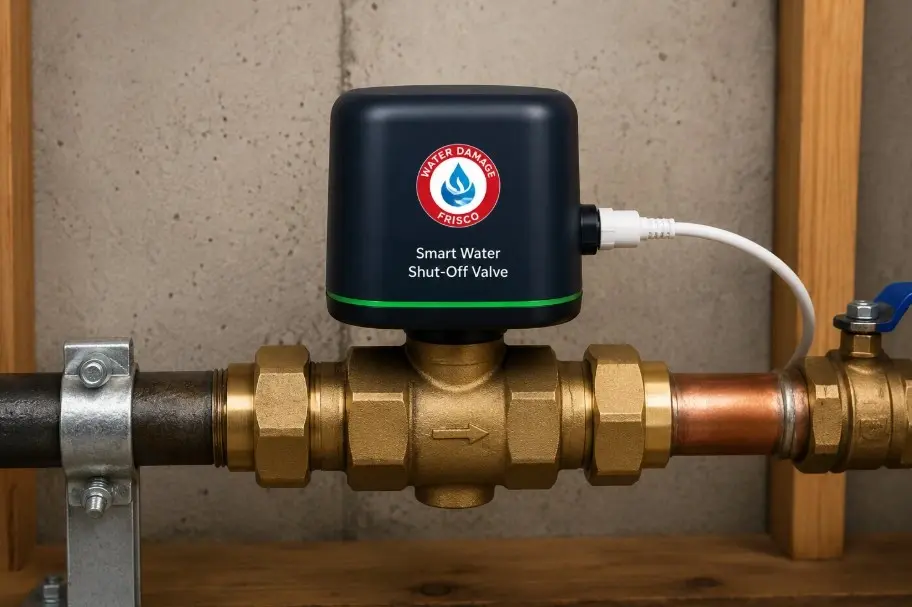
Both tools chase the same goal — stopping a leak before it becomes a flood — but they work differently. A smart leak detector (or leak sensor) is a small battery-powered puck you set on the floor near a water source. When it senses moisture, it sounds a local alarm and pushes a notification to your phone. An automatic shut-off valve is installed directly on your main water line. It continuously monitors flow and pressure, and when it detects a leak signature — a slow drip, a sudden burst, or water running for an unusually long time — it closes the valve on its own, with no one needing to be home to react.
The practical difference is simple: a sensor tells you there’s a problem so you can act. A shut-off valve acts for you. That distinction matters most for the two-income households and frequent travelers common in newer Frisco subdivisions, where a leak can run unnoticed for days.
Why Frisco Homes Face a Higher Leak Risk Than You’d Think
Generic national advice on this topic misses what actually drives claims in Collin and Denton County. A few local factors push the odds up:
- Expansive clay soil. Frisco sits on Blackland Prairie clay that swells and shrinks with moisture, which is a leading contributor to slab leaks in Frisco homes as foundations shift against the plumbing running through them.
- Rapid new construction. Frisco remains one of the fastest-growing cities in North Texas, and freshly built homes aren’t immune — settling foundations and first-year plumbing issues are common enough that we cover them separately in our guide to water damage risk in new-construction Frisco homes.
- Automatic sprinkler systems. Nearly every Frisco subdivision runs irrigation on a timer, and a cracked head or backflow preventer can waste tens of thousands of gallons before anyone notices — which is exactly why the City of Frisco runs a free checkup program for it (more on that below).
- Winter freeze events. North Texas pipes aren’t built for hard freezes, and a repeat of a Winter Storm Uri-style cold snap can split exposed lines fast; see our breakdown of protecting pipes from freezing in Frisco.
- Aging appliances. Supply lines on washers, ice makers, and water heaters remain the single most common source of indoor leaks — covered in detail in our guide to appliance water damage in Frisco homes.
Point Sensors vs. Whole-Home Shut-Off Valves — Which Do You Need?
Match the device to the risk you’re actually protecting against.
- Choose point sensors if you mainly want early warning at the usual suspects — the washing machine, the water heater, under the kitchen and bathroom sinks. They’re inexpensive, need no plumbing work, and are simple to place yourself.
- Choose a whole-home shut-off valve if you travel often, own a second property, or simply want protection that doesn’t depend on someone being home to hear an alarm. It’s also the stronger option for slab-foundation homes, since a hidden leak under the slab can run for weeks with no visible sign at floor level — see our overview of where water damage most often starts in Frisco homes.
Most well-protected Frisco homes run both: point sensors at individual appliances for immediate warning, plus a main-line shut-off valve as the backstop that acts even when the house is empty.
Where to Place Water Leak Detectors in a Frisco Home
A sensor only works where it can actually meet water. Prioritize these spots:
- Directly behind or under the washing machine hose connection
- At the base of the water heater, inside the drain pan if it has one
- Under every sink — kitchen, bathrooms, and any wet bar
- Behind the refrigerator, near the ice-maker line
- Beside the dishwasher and near the toilet supply valve
- At the AC condensate drain line — a clogged line is a surprisingly common source of slow leaks; see why AC units leak water in Frisco
- Near the sprinkler backflow preventer and any exposed exterior hose bibs
- At the lowest point of the utility room or garage, where a slab leak would first surface
What Do They Cost — and How Does That Compare to a Flood?
| Device Type | Typical Cost | Installation |
|---|---|---|
| Point leak sensor (single unit) | $20 – $50 | DIY, no plumbing needed |
| DIY clamp-on shut-off valve | $150 – $400 | DIY, fits over an existing valve handle |
| Professionally installed whole-home shut-off system | $500 – $1,500+ installed | Licensed plumber, spliced into the main line |
Set that against what a leak actually costs if it isn’t caught. Nationally, water damage and freezing is one of the most common homeowners insurance claims, averaging in the $13,000–$15,000 range per claim. Texas skews the picture further: non-weather water damage alone accounts for roughly 30% of all homeowners claims filed statewide, and Texas water damage claims are denied at a higher-than-average rate when the cause looks like a slow, undocumented leak rather than a sudden accident. Detection changes both numbers — it shortens the time water is running, and it gives you a documented timeline if you do need to file. For a more detailed local cost breakdown, see our Frisco water damage restoration cost guide, or run your own numbers with our water damage cost calculator.
Can These Devices Lower Your Texas Homeowners Insurance?
Often, yes. A growing number of carriers writing policies in North Texas offer a premium discount for installed water-monitoring or automatic shut-off systems, on the same logic as a discount for a security system — prevention is cheaper than a payout. The size of the discount varies by carrier, so the move is simple: call your agent, describe what you’re installing, and ask what it does to your premium.
There’s a second, less obvious benefit specific to Texas: insurers here can and do deny water damage claims tied to gradual, unaddressed leaks rather than sudden events. A leak detector that logs the exact moment water appeared gives you documentation that supports a claim instead of undermining one. If you’re navigating that process, our guide to filing a water damage insurance claim in Texas walks through what carriers expect to see.
What Smart Devices Can’t Do — When You Still Need a Restoration Pro
A detector’s job ends the instant it does its job: it warns you, or it shuts the water off. It doesn’t dry a soaked subfloor, and it can’t undo damage that happened before it triggered or in a spot it wasn’t covering. That’s the line where prevention ends and restoration begins.
If water has already reached flooring, drywall, or cabinetry, the clock matters — mold can begin taking hold within 24 to 48 hours of materials getting wet, which is faster than most homeowners expect. Our guides on spotting hidden water damage in a slab-foundation Frisco home and how quickly mold develops after water damage cover what to watch for. If you’re dealing with an active leak right now, see our emergency water damage response guide and our breakdown of the typical water damage restoration timeline for what happens next.
Frisco, TX Resources for Leak Prevention
Before you buy anything, it’s worth knowing the City of Frisco already runs two programs that pair well with smart leak detection:
- The city’s Preventing Water Waste program offers residents a free sprinkler system checkup from a licensed city irrigator — directly relevant given how often irrigation leaks go unnoticed on a Frisco water bill.
- If a leak does get past you, the city’s Partial Leak Credit program can offset the billed water consumption from a documented repair — but only within a 90-day window, which is another reason early detection matters.
Pair those city resources with your own prevention checklist — see our storm season flood prep checklist for Frisco and, if you travel often, our guide to preventing water damage while you’re away.
So — Are Smart Leak Detectors and Shut-Off Valves Worth It for Frisco Homeowners?
For nearly every homeowner in Frisco, Celina, McKinney, or the surrounding DFW suburbs, yes. A set of sensors at your highest-risk spots costs less than a dinner out and can catch a leak while it’s still a minor fix. Add a whole-home shut-off valve if you travel, sit on a slab in an area known for clay-soil movement, or simply want protection that works while you’re not home — and you’ve closed off the scenario that produces the worst floods.
Already dealing with water that got past a sensor, or a leak with no detector in sight? Our team provides water damage restoration in Frisco, TX around the clock — we find hidden moisture, dry it properly, and work directly with your insurance carrier.
Frequently Asked Questions
Are smart leak detectors and shut-off valves worth it in Frisco, TX?
For most homes, yes. A set of sensors costs a small fraction of an average water damage claim, and Frisco’s clay soil and irrigation-heavy landscaping make early warning especially valuable here.
What’s the difference between a leak sensor and an automatic shut-off valve?
A sensor detects moisture and alerts you so you can act. A shut-off valve is installed on the main line and physically stops the water itself — protection that still works when no one is home.
Do leak detectors lower home insurance premiums in Texas?
Often, yes. Many carriers writing policies in North Texas discount premiums for installed water-monitoring or shut-off systems. The amount varies, so confirm directly with your agent.
Where should I place water leak detectors in a Frisco home?
At your highest-risk points: the washing machine, water heater, under sinks, behind the refrigerator, near the dishwasher, at the AC condensate line, and near the sprinkler backflow preventer.
Do I still need a professional if I already have leak detectors installed?
Yes, once water has reached flooring, drywall, or cabinetry. Detectors prevent and warn — they don’t dry a structure. That’s when a licensed restoration team needs to step in before mold takes hold.
The Bottom Line for Frisco, TX Homeowners
- Two tools, two jobs: sensors that alert you, shut-off valves that act for you.
- Frisco’s clay soil, rapid new construction, and irrigation systems raise local leak risk above the national average.
- The cost is trivial compared to an average water damage claim — and Texas insurers scrutinize undocumented, gradual leaks closely.
- Pair smart devices with the City of Frisco’s free sprinkler checkup and Partial Leak Credit programs for layered protection.
- Detectors prevent and warn — a licensed pro is still what dries your home once damage has occurred.
Sources: Insurance Information Institute, Facts + Statistics: Homeowners and Renters Insurance; U.S. EPA, A Brief Guide to Mold, Moisture and Your Home; City of Frisco, Preventing Water Waste and Partial Leak Credit program pages; industry analysis of Texas homeowners insurance claim data.