
It Is Rarely the Appliance That Fails First, It Is the Hose
Most “common causes of water damage” lists mention appliances as one line item and move on. That undersells the problem in a specific, useful way: it is almost never the washing machine, dishwasher, or refrigerator itself that fails and floods a house. It is the cheap rubber hose or aging tank connected to it, components with a replacement lifespan far shorter than the appliance they are attached to, and one that almost nobody tracks.
This is a practical replacement schedule for the specific parts that actually cause appliance related water damage, organized by how long each one realistically lasts before it becomes a real risk in a Frisco home.
Quick reference: washing machine hoses (3 to 5 years), water heater tanks (8 to 12 years), dishwasher and ice maker lines (annual inspection), toilet supply lines and wax rings (check yearly). Details on each below.
Washing Machine Supply Hoses: Replace Every 3 to 5 Years, Regardless of Appearance
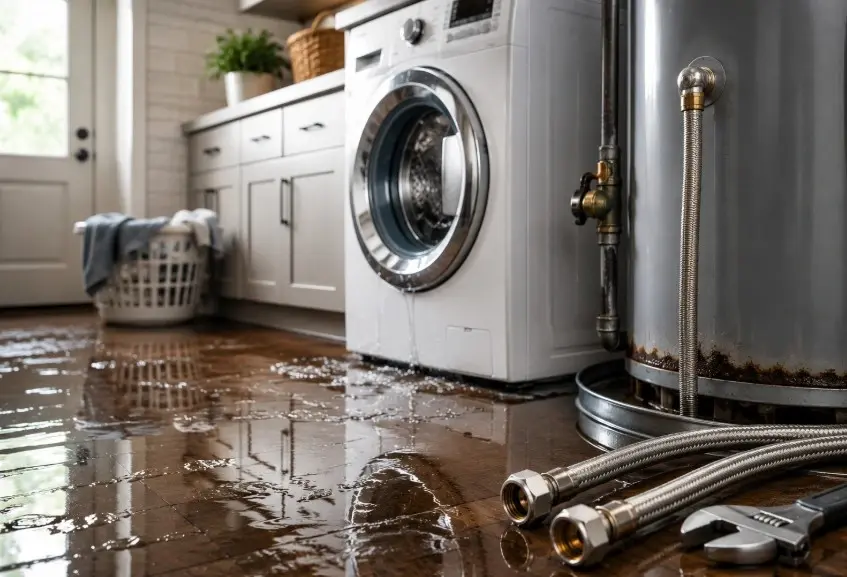
This is the single most common appliance related water damage source, and it is also one of the easiest to prevent. Standard rubber supply hoses sit under constant water pressure, typically 40 to 60 PSI, around the clock, even when the machine is not running. That sustained pressure combined with heat and vibration causes the rubber to degrade from the inside out, often with no visible warning before it fails. A burst hose can release hundreds of gallons in an hour, and since laundry rooms are often left unattended while a machine runs, this type of failure frequently goes unnoticed until real damage is done.
The fix is inexpensive and simple: replace rubber hoses every 3 to 5 years regardless of how they look, or upgrade to braided stainless steel hoses, which resist bursting significantly better. If you will be away from home for an extended period, shutting off the supply valves behind the machine removes the constant pressure entirely.
Water Heater Tanks: The 8 to 12 Year Window Nobody Tracks
According to the U.S. Department of Energy, a standard storage tank water heater has an average service life of roughly 8 to 12 years, while tankless units typically last considerably longer. Most homeowners do not know the age of their own water heater, which means they do not know when they have entered the higher risk window for tank corrosion and connection failure. A failing tank does not always announce itself gradually, corrosion can progress internally for years before a failure releases 40 to 50 gallons all at once, often into a garage, closet, or utility space where it goes unnoticed for a while.
Check the manufacture date on your unit’s data plate (it is usually encoded in the serial number) and treat the 8 to 10 year mark as the point to start planning for replacement rather than waiting for failure. Rust colored water, unusual rumbling sounds during heating cycles, or visible corrosion at the tank base are signs the window has already closed. Water heater failures are also a leading cause of the HVAC problems homeowners see after a water event, since utility closets often house both systems side by side.
| Component | Realistic Lifespan | Failure Signal |
|---|---|---|
| Washing machine hose (rubber) | 3 to 5 years | None, fails without warning |
| Washing machine hose (braided steel) | 7 to 10 years | Visible fraying near fittings |
| Water heater tank | 8 to 12 years | Rust colored water, rumbling, base corrosion |
| Dishwasher supply line | 5 to 10 years | Dampness or corrosion at fitting |
| Ice maker line (plastic) | 5 to 7 years | Brittleness, visible cracking |
| Toilet supply line and wax ring | 5 years (line) / 20 to 30 years (wax ring) | Instability, faint odor at base |
Dishwasher and Refrigerator Ice Maker Lines: The Ones Nobody Checks
These are the quietest failure points because they are almost entirely hidden from view, a dishwasher’s water line runs beneath a cabinet, and a refrigerator’s ice maker line typically runs behind the unit, against a wall, often for years without anyone looking at it. Unlike a washing machine hose failure, which is usually sudden and obvious, these lines are more likely to develop a slow leak that soaks into cabinetry, subfloor, or wall material for an extended period before anyone notices, which means the water damage is frequently worse by the time it is discovered, even though the leak itself may have started small.
Pull these appliances out and inspect the connections at least once a year, checking for corrosion, kinks, or dampness at the fitting. Plastic ice maker lines in particular are prone to becoming brittle over time and are worth upgrading to braided stainless if yours is still the original factory line. A slow leak in this area is also one of the more common paths to a ceiling or subfloor leak when a unit sits on an upper level.
Toilet Supply Lines and Wax Rings: Small Parts, Consistent Failure Point
Toilet supply lines share the same rubber hose failure mode as washing machine hoses, just at a smaller water volume, still enough to cause significant flooring damage if it happens while no one is home. Separately, the wax ring seal beneath a toilet degrades over time and can allow water to seep at the base with every flush, a slow leak that is easy to miss since it happens at floor level and can travel under flooring before becoming visible. If a toilet ever feels slightly unstable when you sit down, or you notice a faint odor near the base, that is often a wax ring signal worth addressing before it becomes a subfloor or slab problem.
A Simple Way to Actually Track This
The reason appliance related water damage is so common is not a lack of awareness that hoses and tanks eventually fail, it is that nobody tracks the age of these specific components the way they would track an oil change. A simple approach: when you install or replace any of these components, write the date directly on the part with a permanent marker, or keep a running note in your phone. Five minutes of tracking turns a guessing game into a straightforward maintenance schedule. The EPA WaterSense program also publishes guidance on checking household fixtures and connections as part of routine leak prevention.
What to Do If You Already Have a Slow, Hidden Leak
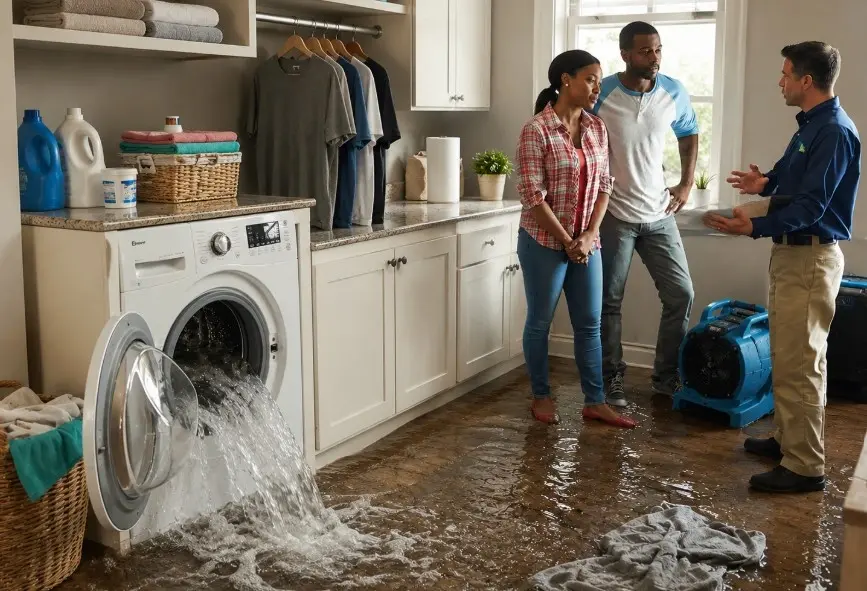
If you have noticed warped cabinet flooring, a musty smell near an appliance, or unexplained water stains and suspect one of these components, do not wait for it to become obvious, hidden leaks behind or beneath appliances are one of the more common ways water damage reaches subfloor and framing before anyone realizes there is a problem. Our water damage restoration team uses moisture meters and thermal imaging to find exactly how far a slow appliance leak has traveled, which matters more than it might seem, surface damage rarely reflects the true extent once water has been trickling for weeks or months. If mold has already developed around the area, our mold after water damage guide covers the warning signs to check for, and if you are trying to plan for cost, our water damage cost calculator is a fast starting point.
Found a hidden appliance leak or unexplained water stain? Get a fast, thorough assessment before it spreads further.
Call (945) 297-3238Appliance Water Damage Frisco TX Help Across the DFW Metroplex
We respond to appliance related water damage calls across Frisco and the surrounding North Texas communities. Find your city below for local response details:
Frequently Asked Questions
How often should I really replace my washing machine hoses?
Every 3 to 5 years regardless of visible condition, since the rubber degrades from the inside out and often shows no external warning before failure. Braided stainless steel hoses are a worthwhile upgrade for significantly better burst resistance.
How do I know how old my water heater is?
Check the manufacture date encoded in the serial number on the data plate, usually located on the upper portion of the tank. Once a standard tank unit passes 8 to 10 years old, it is worth planning for replacement rather than waiting for a failure.
Which appliance related leak is most likely to go unnoticed?
Dishwasher and refrigerator ice maker line leaks, since both are hidden behind or beneath the appliance and often develop slowly rather than failing suddenly. Annual visual inspection of these connections catches problems well before they become a real water damage event.
Is it worth replacing hoses that still look fine?
Yes, rubber supply hoses degrade internally well before any external sign of wear appears, which is exactly why manufacturers recommend replacement on a schedule rather than waiting for visible deterioration.
Don’t Wait for the Hose to Tell You It’s Time
Most appliance related water damage is preventable with a five minute maintenance habit most households never adopt. If a slow leak has already gotten ahead of you, our team is ready to help across Frisco and the DFW metroplex.
Suspect an appliance leak, tank failure, or hidden water damage? Talk to a local restoration specialist now.
Call (945) 297-3238Source: U.S. Department of Energy, Storage Tank Water Heaters
Appliance Leak Cleanup in Frisco
If an appliance leak has already soaked your floors, cabinets, or walls, these guides explain what to do next:
- Water heater leak cleanup in Frisco
- Washing machine leak water damage
- Dishwasher leak water damage
- Refrigerator and ice maker leak water damage
Dishwasher and garbage disposal connections often leak inside the sink cabinet, where the damage stays hidden. Learn how to find the source of a leak under the kitchen sink before the cabinet floor starts to rot.
Need help right now? See our full guide to water damage restoration in Frisco, TX for emergency response, services, and coverage across the city.