
Mold After Water Damage Frisco Tx: Timeline, Warning Signs & What to Do in Frisco, TX
Last Updated: May 2026 | Reading Time: ~10 minutes | Category: Mold Remediation, Water Damage, Frisco TX
🚨 Water damage sitting more than 24 hours? Call (945) 297-3238 — Water Damage Frisco provides free mold inspection and 24/7 emergency response throughout Frisco TX and all of Collin County.
One of the most urgent, and most dangerously underestimated, consequences of water damage is mold. Many Frisco homeowners assume they have time to “deal with it later,” not realizing that mold can begin growing in as little as 24 hours after water damage occurs.
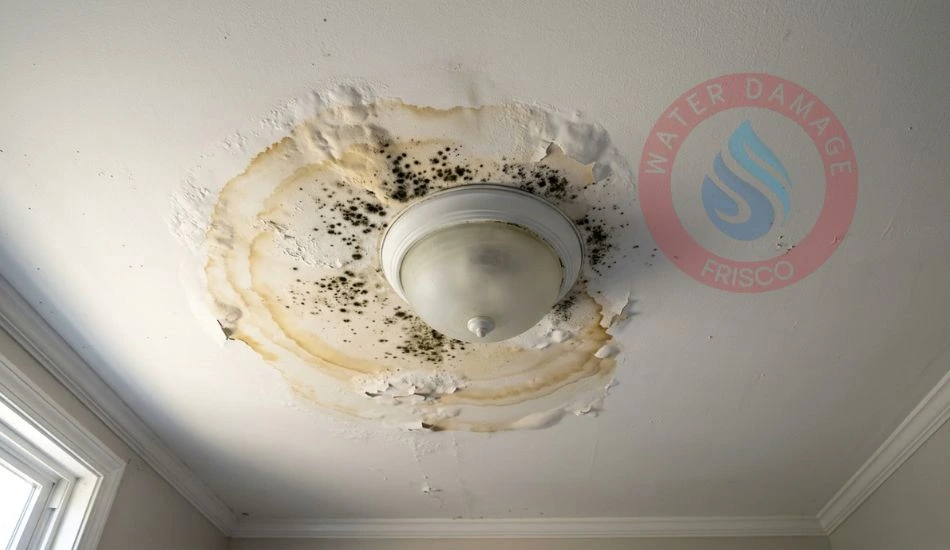
North Texas’s hot, humid summers make Frisco homes particularly vulnerable to rapid mold growth after water damage. Whether your damage came from a burst pipe, an overflowing sink or tub, flooding, or a ceiling water bubble, once mold establishes itself inside your walls, flooring, or HVAC system, remediation becomes significantly more complex and expensive.
This guide breaks down the complete mold growth timeline after water damage, what warning signs to watch for, serious health risks, and exactly what professional mold remediation in Frisco TX involves.
The Mold Growth Timeline After Water Damage in Frisco TX
Understanding the exact timeline of mold growth is critical for Frisco homeowners. The EPA’s mold cleanup guidelines are clear: speed of response is the single most important factor in preventing mold from taking hold after water damage.
0–24 Hours: The Critical Window of Opportunity
In the first 24 hours after water damage, water is actively absorbing into porous building materials — drywall, insulation, carpet, wood framing, and subfloor. Mold spores, which are naturally present in every home’s air, have not yet had time to colonize wet surfaces.
This is your most critical window. Professional water extraction and emergency drying initiated within this period dramatically reduces or eliminates mold risk entirely. Restoration costs are also at their absolute lowest during this window — acting now saves thousands of dollars later.
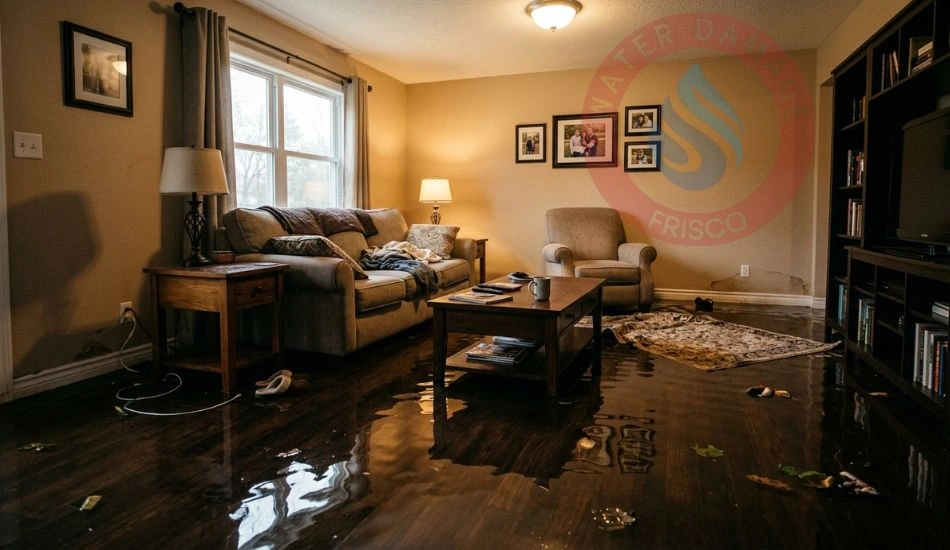
24–48 Hours: Mold Spores Begin to Activate
After 24 hours of sustained moisture, mold spores in contact with wet organic materials begin to germinate and put down root structures called hyphae. At this stage, mold is microscopic and not yet visible, but the colonization process has already begun inside your walls and beneath your flooring.
If professional water extraction begins within 24–48 hours, mold can still typically be prevented with antimicrobial treatment and thorough structural drying. This is why our team at Water Damage Frisco responds within 60 minutes, every hour matters.
48–72 Hours: Early Mold Colonies Become Visible
By 48–72 hours of sustained moisture exposure, early mold colonies may become faintly visible on surfaces — typically appearing as small fuzzy spots of gray, black, white, or green on drywall, ceiling tiles, or framing. A musty odor often becomes detectable around this time as well. If you see a water bubble or stain on your ceiling, mold may already be developing in the cavity above.
At this stage, porous materials with visible mold,drywall, carpet, insulation, will likely need to be removed and replaced, not just dried. Remediation costs are now significantly higher than they would have been in the first 24-hour window.
1–2 Weeks: Active and Aggressive Mold Colony Spread
With continued moisture, mold colonies spread aggressively and rapidly. What began as a small spot on one wall panel can spread throughout the entire wall cavity, into adjacent rooms, and into your HVAC system — distributing spores throughout your entire home. This is precisely when mold becomes a serious health hazard, particularly for children, elderly individuals, and anyone with respiratory conditions or compromised immune systems.
Related Reading
After 2 Weeks: Structural Risk and Health Emergency
Mold that has been growing for more than two weeks causes structural degradation, particularly in wood framing, which weakens under mold and secondary rot. The scope of remediation at this stage is extensive: full removal of contaminated materials, HEPA air scrubbing, possible structural repairs, and complete reconstruction. What could have been a $2,000–$3,000 mitigation job becomes a $15,000–$30,000 project. Do not let it reach this point, call our emergency team the moment water damage occurs.
Why Frisco TX Climate Makes Mold Grow Faster Than Average
Frisco’s climate creates near-perfect mold conditions for much of the year. The CDC identifies the ideal mold growth conditions as:
- Temperature between 60°F and 80°F — common indoors year-round in Frisco
- Relative humidity above 60% — North Texas summers regularly exceed this outdoors and indoors without proper dehumidification
- Organic material to feed on — drywall paper facing, wood framing, carpet fiber, insulation
- Limited air circulation — exactly what you get inside closed wall cavities and under flooring
During Frisco’s summer months, mold can establish itself in wet wall cavities in as little as 12–18 hours, significantly faster than the national average. This is why 24-hour emergency response is not a marketing phrase for Frisco homeowners — it is a genuine necessity. It is also why our IICRC-certified technicians use industrial dehumidifiers calibrated specifically for North Texas humidity levels, not standard residential equipment.
Common water damage sources in Frisco homes that create these accelerated mold conditions include overflowing sinks and tubs, burst frozen pipes during Texas winter events, the most common home water damage spots in Frisco, and storm-driven water intrusion from severe North Texas weather events.
10 Warning Signs of Mold After Water Damage in Your Frisco Home
After any water damage event, watch carefully for these warning signs that mold may already be growing, even when it is not yet visible to the naked eye. For a broader view of moisture-related warning signs, see our guide on the top warning signs of mold in your home.
1. Persistent Musty or Earthy Odor
A persistent musty smell, similar to wet cardboard, damp earth, or old books, is often the very first detectable sign of mold growth, even when it is entirely hidden inside wall cavities or beneath flooring. If any room that experienced water damage develops a musty odor, treat mold as present until a professional assessment proves otherwise. Do not ignore this smell.
2. Visible Discoloration on Walls, Ceilings, or Floors
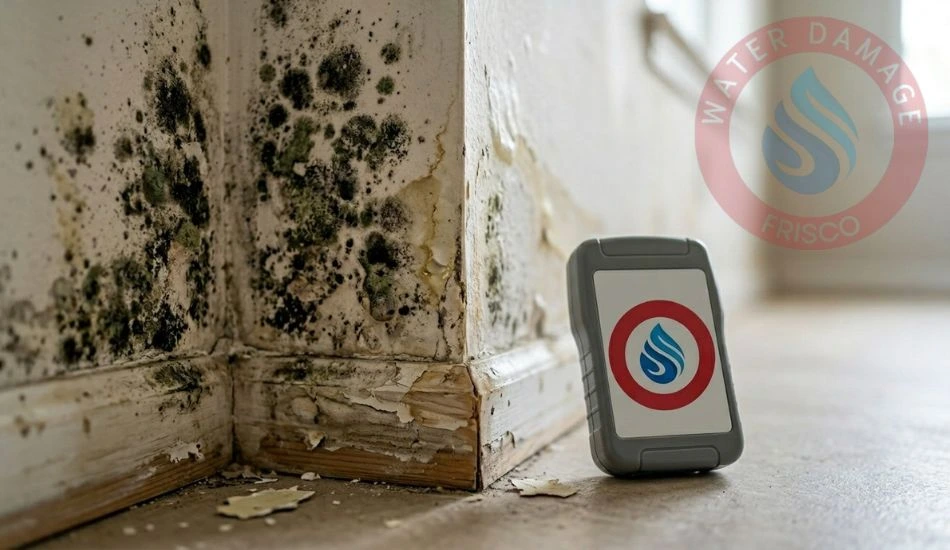
Mold appears in many colors: black, gray, green, white, brown, or orange. It presents as fuzzy, powdery, or slimy patches on drywall, ceiling tiles, grout, wood framing, or around window frames. Any unusual discoloration in water-damaged areas warrants immediate professional investigation, especially if you notice water staining or bubbling on your ceiling.
3. Worsening Respiratory or Allergy Symptoms Indoors
If household members experience increased sneezing, coughing, watery eyes, skin irritation, nasal congestion, or respiratory symptoms that noticeably improve when they leave the home, mold exposure is a strong possibility. Pay particular attention to symptoms in children or anyone with existing asthma, they are most vulnerable to airborne health hazards from water damage and mold.
4. Bubbling, Peeling, or Warping Wall Surfaces
Paint or wallpaper that is bubbling, peeling, or separating from the wall surface indicates moisture trapped inside the wall, which actively supports mold growth behind the surface you can see. This is a reliable sign that water has penetrated beyond the surface and into the wall cavity.
5. Water Staining or Dark Rings on Ceilings or Walls
Dark or yellowish staining, especially with visible rings around the edges, around a previously water-affected area indicates sustained moisture that has dried and rewet repeatedly. This cycling creates ideal mold conditions even without visible standing water.
6. Soft, Spongy, or Buckled Flooring
Hardwood, laminate, or subfloor that feels soft, spongy, or has visible buckling indicates significant moisture absorption beneath the surface. This subsurface moisture is invisible but actively feeding mold growth. Our Frisco water extraction team uses thermal imaging to locate exactly where this hidden moisture is concentrated.
7. Condensation on Windows or Cold Surfaces
Persistent condensation inside your home, particularly on windows, pipes, or cold surfaces, indicates high ambient humidity levels that support mold growth on any damp organic material present after water damage.
8. Black Spots or Fuzzy Growth Around HVAC Vents
Mold near HVAC vents or supply registers is a critical warning sign, it indicates mold may be growing inside your duct system and distributing spores throughout your entire home with every heating or cooling cycle. This requires immediate professional emergency response.
9. Warped or Stained Baseboards and Trim
Baseboards and wall trim that are stained, swollen, or separating from the wall are reliable indicators of moisture wicking up from wet flooring or traveling down wet drywall, conditions that create hidden mold growth at floor level.
10. Unexplained Musty Smell From HVAC System
If a musty or moldy odor comes from your air vents when the HVAC runs, mold has likely established itself inside your air handling system. This is one of the most serious mold scenarios, requiring both professional mold remediation and HVAC duct cleaning before the system can be safely operated again.
Serious Health Risks of Mold Exposure, What Frisco Families Need to Know
Mold is not a cosmetic issue. It is a health hazard that causes real, documented medical problems,particularly with prolonged exposure in an enclosed home environment. The CDC’s mold health guidance identifies the following health effects:
Common Health Effects of Mold Exposure:
- Nasal and sinus congestion
- Eye, throat, and skin irritation
- Persistent coughing and wheezing
- Recurring headaches
- Unexplained fatigue
- Worsening of existing allergies
Serious Health Effects in High-Exposure or Vulnerable Individuals:
- Asthma attacks and severe respiratory distress
- Hypersensitivity pneumonitis — a serious lung inflammation condition
- Opportunistic infections, particularly in immunocompromised individuals
- Mycotoxin exposure from Stachybotrys chartarum (black mold) — associated with neurological symptoms in high-exposure cases
Black mold (Stachybotrys chartarum) is found frequently after flooding and chronic moisture events in Texas. It produces mycotoxins that are associated with severe health effects including neurological symptoms. If you suspect black mold in your Frisco home, do not disturb it, call our certified mold remediation team immediately at (945) 297-3238.
For a deeper understanding of the health risks associated with water damage and stagnant water in Frisco TX homes, read our dedicated article: Stagnant Water in Frisco TX — Dangers and Health Risks.
Can You Remove Mold Yourself After Water Damage?
For very small, surface-level mold spots, less than 10 square feet of visible growth on a non-porous surface like tile or glass, the EPA suggests limited DIY cleanup with proper protective equipment (N95 respirator, gloves, goggles) may be possible. However, in any water damage context, the following situations always require professional remediation:
- Any mold growth on drywall, insulation, wood, or carpet, porous materials cannot be adequately cleaned and must be removed entirely
- Any mold growth area exceeding 10 square feet
- Any mold inside or near your HVAC system, distributes spores throughout the entire home
- Any mold growth following Category 2 or 3 water damage, gray water or black water events
- Any mold in a home occupied by children, elderly individuals, or anyone with asthma, allergies, or compromised immunity
- Any mold that returns after a previous DIY cleanup attempt
- Any mold discovered in a commercial property, see our commercial mold remediation service
Critical warning: Disturbing mold without proper containment and HEPA filtration equipment releases millions of spores into your home’s air, rapidly spreading contamination to rooms that were previously unaffected. DIY disturbance of a contained mold problem frequently creates a whole-home mold problem. Read our complete guide on how to prevent mold after water damage to understand what steps are safe for homeowners to take and which must be left to professionals.
Professional Mold Remediation Process in Frisco, TX, What to Expect
Water Damage Frisco follows IICRC S520 Standard for Professional Mold Remediation protocols on every job. As an IICRC-certified restoration company, our process includes:
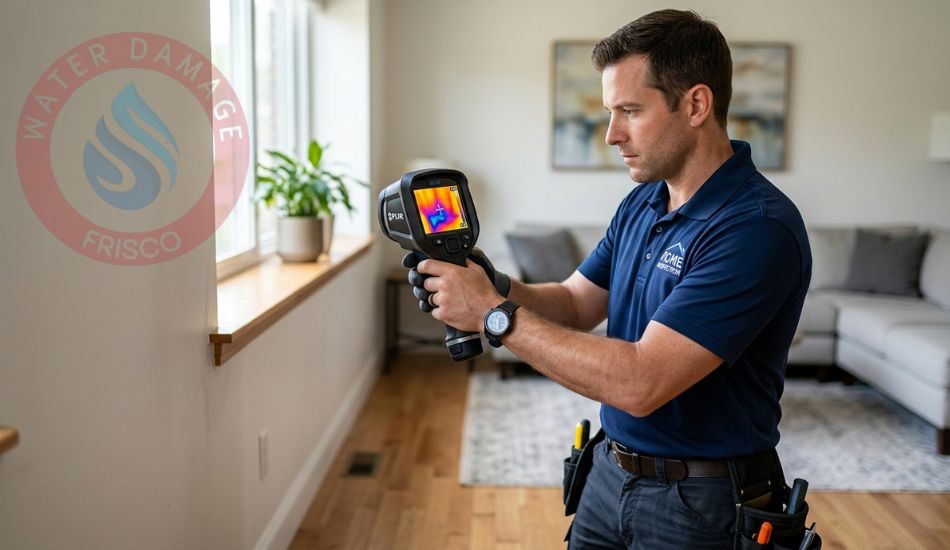
- Assessment and Moisture Mapping: Thermal imaging cameras and calibrated moisture meters identify all areas of mold growth, including hidden colonies inside walls, under flooring, and inside ceiling cavities invisible to the naked eye
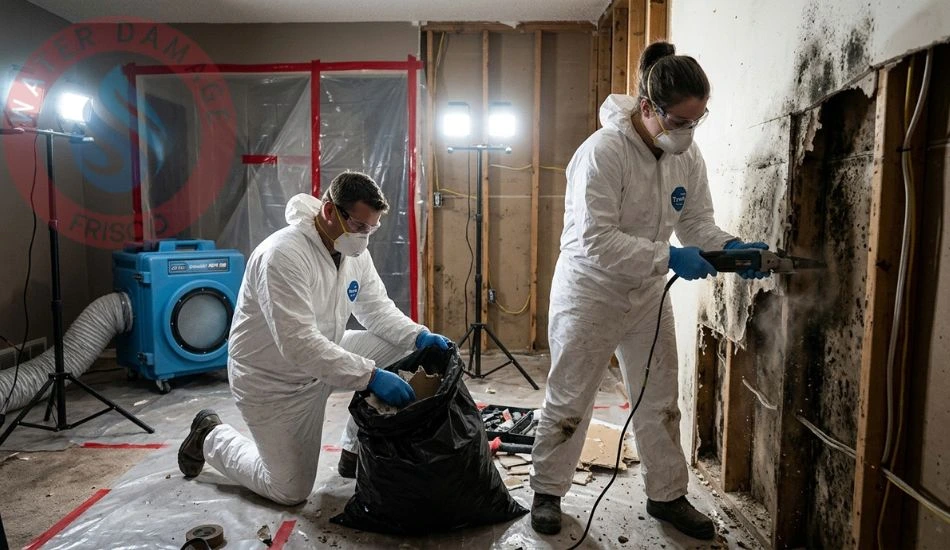
- Containment: Plastic sheeting barriers and negative air pressure systems isolate the work area completely, preventing spore dispersal to unaffected areas of your home during the remediation process
- Air Filtration: HEPA air scrubbers run continuously throughout remediation, capturing airborne mold spores down to 0.3 microns in size
- Material Removal: All affected porous materials, drywall, insulation, carpet, contaminated wood framing, are carefully removed, bagged, and disposed of per EPA guidelines. These materials cannot be saved once mold has colonized them.
- Surface Treatment: All remaining surfaces are treated with EPA-registered antimicrobial and antifungal agents to eliminate residual mold and prevent regrowth
- Complete Structural Drying: The original moisture source is fully addressed and complete drying is verified with moisture meters before any reconstruction begins, see our water remediation services page for details
- Post-Remediation Verification: Air quality testing or visual clearance inspection confirms that mold levels have returned to normal background levels, clearance documentation is provided for your records and insurance
- Full Reconstruction: New drywall, insulation, flooring, and all other removed materials are installed by our water damage repair team to restore your property to pre-loss condition
We handle both residential and commercial mold remediation in Frisco TX, including commercial water damage restoration for offices, retail, and multi-family properties throughout Collin County.
Does Insurance Cover Mold Remediation After Water Damage in Texas?
In most cases, mold remediation resulting from a covered water damage event IS covered by your homeowner’s insurance in Texas, provided you acted promptly and the mold is a direct result of a sudden, accidental water event (burst pipe, appliance leak, storm damage). Mold resulting from chronic, gradual leaks or deferred maintenance is typically excluded.
For a complete breakdown of what Texas homeowner’s insurance covers for water and mold damage, read our detailed guide: Water Damage Insurance Claims in Texas — What Every Homeowner Needs to Know. You should also review our hurricane and flood insurance guide if your mold damage resulted from a flooding or storm event.
Our team at Water Damage Frisco documents all mold damage professionally for insurance claims and works directly with your adjuster. We also assist HOA residents navigate HOA-related mold and water damage claims, a common situation in Frisco’s many managed communities.
How to Prevent Mold After Water Damage in Your Frisco Home
For a complete prevention guide, read our dedicated article: How to Prevent Mold After Water Damage. The most effective prevention steps in summary:
- Call a professional restoration company within the first hour of discovering any water damage, our 24/7 emergency water damage team responds within 60 minutes throughout Frisco
- Remove standing water as quickly as possible using professional water extraction equipment, not a household wet vac
- Open windows and run fans to increase air circulation, but only in dry weather conditions. Do not open windows during Frisco’s humid summer days as this introduces moisture-laden outside air
- Run your HVAC system in dehumidify or cooling mode to reduce indoor humidity, but only if the HVAC system itself was not affected by the water damage event
- Never place fans directly on visibly moldy surfaces, this releases and distributes spores throughout your home
- Remove wet carpet, rugs, and padding immediately, these are the fastest materials to develop mold and the hardest to adequately dry in place in Frisco’s summer climate
- Identify and fix the root moisture source, whether it is a frozen pipe, plumbing overflow, or roof leak, before attempting any restoration or drying work
Our Mold Remediation Service Areas, Frisco TX and All of Collin County
Water Damage Frisco provides professional mold inspection, testing, and full remediation services across the entire North Texas region. We have served hundreds of homeowners and businesses with water damage cleanup and mold remediation throughout:
- Frisco, TX — our primary service area, with teams stationed for rapid response
- McKinney, TX
- Plano, TX
- Allen, TX
- Prosper, TX
- Celina, TX
- Little Elm, TX
- The Colony, TX
- Carrollton, TX
- Oak Point, TX
- Dallas, TX
- Rockwall, TX
Free Mold Inspection After Water Damage in Frisco, TX
Water Damage Frisco offers free mold inspections as a standard part of every water damage assessment. Our IICRC-certified technicians use thermal imaging and moisture mapping to identify mold risk areas, including hidden mold that is not yet visible — and provide you with a clear, honest assessment of what remediation is needed.
We are one of the most experienced water damage cleanup and mold remediation companies in Frisco TX, with a proven track record serving homeowners across Collin County. See what our clients say on our Frisco water damage restoration page and read more about our company at our About Us page.
If you found water damage in your home today, do not wait. Mold grows fast in Frisco’s climate, and the difference between calling now versus tomorrow morning could mean the difference between a $3,000 mitigation job and a $20,000 full remediation and reconstruction project.
For Little Elm TX homeowners near Lake Lewisville, see our complete guide on mold remediation Little Elm TX.

Related Guides You Should Read:
- Top Warning Signs of Mold in Your Home
- How to Prevent Mold After Water Damage
- 2026 Water Damage Restoration Cost Guide for Frisco TX
- Burst Pipe Cleanup in Frisco TX — What to Do in the First 60 Minutes
- Water Damage Insurance Claim Guide for Texas Homeowners
- Stagnant Water in Frisco TX — Dangers and Health Risks
- Most Common Home Water Damage Spots in Frisco TX
- Water Damage Restoration Near Me — Frisco TX
- Emergency Water Damage in Frisco — What to Expect
- Frisco Water Damage Restoration — Our Services
- Emergency water damage restoration Frisco TX
📞 Call (945) 297-3238 — 24/7 Emergency Response, Free Mold Inspection, All Insurance Carriers Accepted.
Or contact us online here and our team will respond immediately.
If flood damage is the cause of your mold event, see our complete guide on flood damage restoration near me across DFW North Texas.
Mold after water damage are common throughout North Texas, including Frisco, McKinney, and Plano, due to expansive clay soil. For this issue call our water damage restoration in McKinney, TX.
Need help right now? See our full guide to water damage restoration in Frisco, TX for emergency response, services, and coverage across the city.