Dishwasher Leaking From Bottom of Door: What It Usually Means
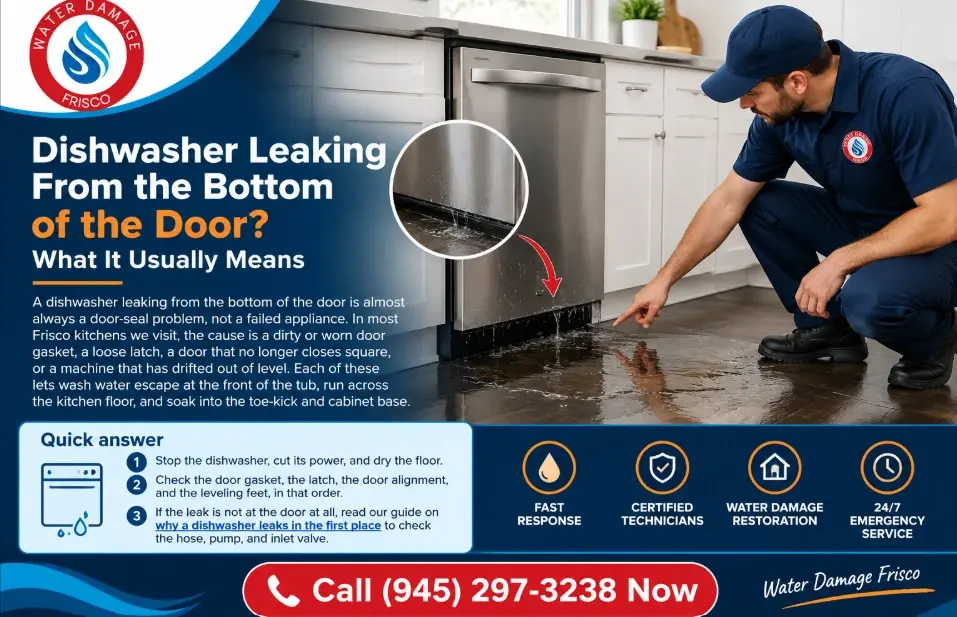
A dishwasher leaking from the bottom of the door is almost always a door-seal problem, not a failed appliance. In most Frisco kitchens we visit, the cause is a dirty or worn door gasket, a loose latch, a door that no longer closes square, or a machine that has drifted out of level. Each of these lets wash water escape at the front of the tub, run across the kitchen floor, and soak into the toe-kick and cabinet base.
Water Already on the Kitchen Floor?
Our IICRC-certified crew answers within 60 minutes across Frisco and nearby DFW cities.
24/7 emergency line: (945) 297-3238First Confirm Where the Water Is Really Coming From
Water that shows up under the front of the door is not always escaping from the door. Spray can find a gap, run down the inside of the door panel, and drip from the bottom edge, while the real fault sits elsewhere. A two-minute test saves hours of guessing.
- Dry the floor, the bottom of the door, and the front of the tub completely.
- Lay a dry towel across the floor in front of the machine.
- Run a short cycle and open the door a crack every few minutes without pulling the rack out.
- Note whether water appears at the corners of the door, along the full bottom edge, or only at the center.
Corner drips point to the gasket or a bent door. A wet line along the whole bottom edge points to overfilling, suds, or spray escaping. A puddle that appears only in the center, even when the door is closed, usually means the water is coming from underneath the machine, so move on to the pillar guide linked above.
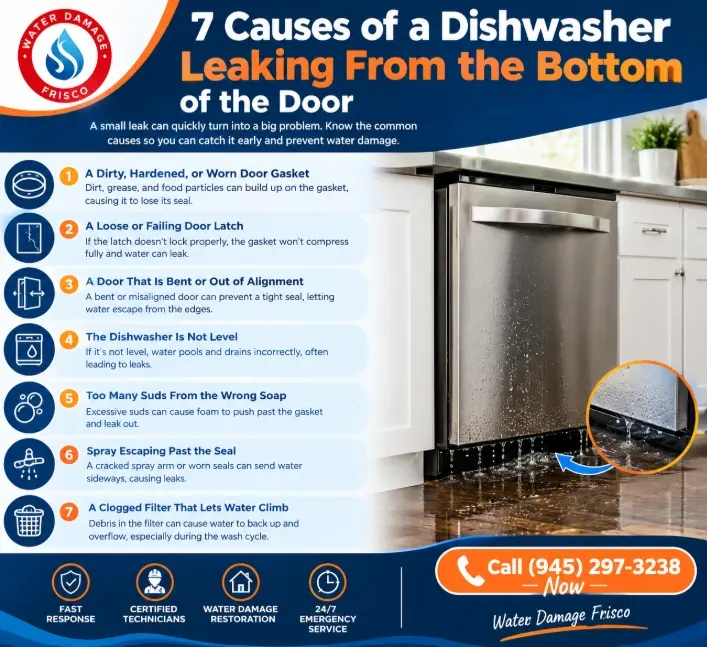
7 Causes of a Dishwasher Leaking From the Bottom of the Door
1. A Dirty, Hardened, or Worn Door Gasket
The rubber dishwasher door seal is the most common culprit. Detergent film, grease, and food particles build up on the gasket until it stops sitting flush. Over time the rubber also flattens, cracks, or pulls away at the corners. Even a small gap lets pressurized spray out during the wash cycle.
2. A Loose or Failing Door Latch
If the door does not lock with a firm click, the gasket never compresses fully. A worn latch, a loose strike plate, or a cracked handle assembly can all leave the door a few millimeters short of a true seal. You will often notice the leak only during the heavy wash phase.
3. A Door That Is Bent or Out of Alignment
A door that has been leaned on, slammed, or loaded while open can twist slightly. One upper corner stops touching the seal, and water escapes diagonally down to the bottom edge. Look at the gap between the door and the cabinet frame. It should be even on both sides.
4. The Dishwasher Is Not Level
If the dishwasher is not level, the tub tilts forward and water pools against the door instead of draining back toward the sump. This often happens after a floor repair, a new countertop, or years of vibration. Check with a small level inside the tub and adjust the front leveling feet.
5. Too Many Suds From the Wrong Soap
Hand dish soap creates foam that pushes past the gasket like a wave. If you see bubbles at the door edge or on the floor, the soap is the likely cause. Use only detergent made for dishwashers and run an empty rinse cycle to clear the residue.
6. Spray Escaping Past the Seal
Tall trays, cookie sheets loaded vertically, and long utensils can deflect the spray arm toward the door. A cracked spray arm can also shoot water sideways through a seam rather than through its nozzle holes. If the leak only happens with certain loads, this is the first thing to suspect.
7. A Clogged Filter That Lets Water Climb
When the filter basket is packed with debris, water drains slowly and the tub stays fuller than designed. The extra water rides higher up the door and breaches the seal. Pull the bottom rack, twist out the filter, and rinse it under warm water.
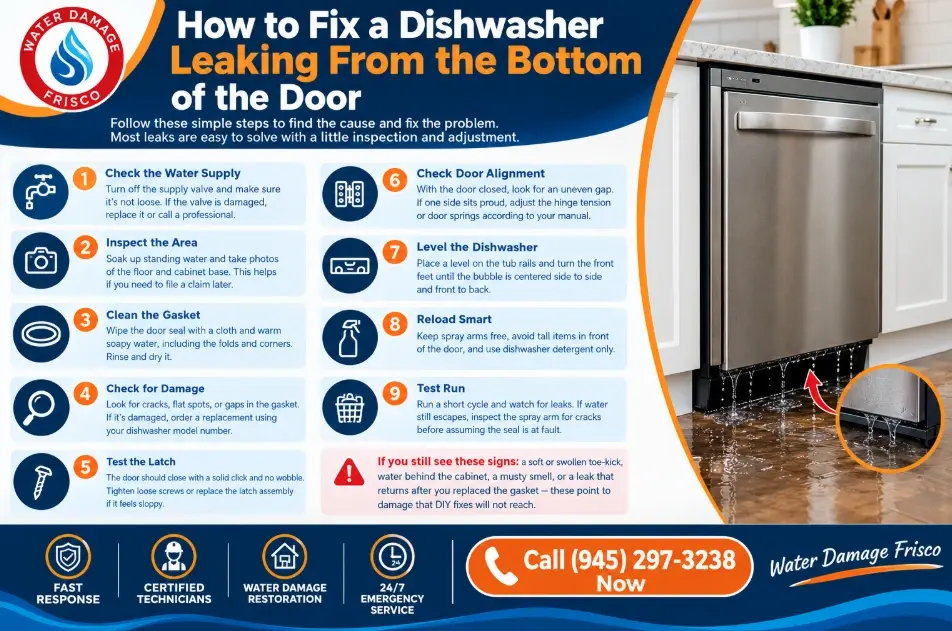
How to Fix a Dishwasher Leaking From the Bottom of the Door
These steps cover the door-related repairs most homeowners can do safely. Always cut the power at the breaker first, since the machine is hard-wired or plugged in beneath the sink.
- Power down and close the supply. Turn off the breaker and the small dishwasher shutoff valve under the kitchen sink. If you cannot find the valve, see how to shut off the main water valve in Frisco.
- Dry and photograph the area. Soak up standing water and take photos of the floor and cabinet base. You will want them if you file a claim later.
- Clean the gasket thoroughly. Wipe the full door seal with a cloth and warm soapy water, including the folds and the lower corners. Rinse and dry it.
- Inspect the gasket for damage. Look for cracks, flat spots, or gaps at the corners. If it is damaged, order the replacement by your dishwasher model number.
- Test the latch. The door should close with a solid click and no wobble. Tighten loose strike screws or replace the latch assembly if it feels sloppy.
- Check door alignment. With the door closed, look for an uneven gap. If one side sits proud, adjust the hinge tension or door springs according to your manual.
- Level the dishwasher. Place a level on the tub rails and turn the front feet until the bubble is centered side to side and front to back.
- Reload smart. Keep spray arms free, avoid tall items in front of the door, and use dishwasher detergent only.
- Test run with towels down. Run a short cycle and watch the first ten minutes. If water still escapes, inspect the spray arm for cracks before assuming the seal is at fault.
Door Leak Diagnosis at a Glance
| What You See | Likely Cause | First Fix |
|---|---|---|
| Drips at the lower corners of the door | Dirty or cracked gasket | Clean it then replace if damaged |
| Door will not click shut firmly | Worn latch or strike plate | Tighten or replace the latch |
| Uneven gap between door and cabinet | Bent or misaligned door | Adjust hinges and springs |
| Water pools at the front, tub looks tilted | Machine out of level | Adjust the front leveling feet |
| Foam at the door edge | Wrong soap | Rerun an empty rinse with dishwasher detergent only |
| Leak only with tall or crowded loads | Spray deflection or cracked arm | Reload and inspect the spray arm |
| Slow drain and water near the door line | Clogged filter | Remove and rinse the filter |
Not Sure How Far the Water Traveled?
We use moisture meters and thermal imaging to check under the dishwasher, inside the cabinet base, and beneath the flooring. Request a free inspection today.
Prefer to talk? Call (945) 297-3238Why a Small Door Leak Becomes a Big Problem in Frisco Homes
The water from a leaking dishwasher door rarely stays on the surface. It follows the path of least resistance under the toe-kick, into the cabinet base, and down through gaps in the flooring. Because the dishwasher sits in a sealed alcove, the moisture can stay trapped for days without showing obvious signs.
Dishwasher water also carries detergent and food residue, so it can behave like contaminated water once it sits. Our guide to water damage categories explains how contamination level changes the cleanup rules. When the leak runs through the night, the situation escalates quickly, which is why we wrote a separate guide on what to do when a dishwasher leaked overnight.
Signs the Water Went Beyond the Surface
- Laminate or hardwood planks that cup, lift, or feel spongy near the dishwasher.
- A kitchen cabinet base that swells, peels, or feels soft when pressed.
- A musty odor that returns after you wipe the floor.
- Discolored grout or dark staining at the edge of the tile.
- A higher water bill with no obvious cause.
For a closer look at what to watch for, read about hidden water damage signs in Frisco homes. If the water reached the neighboring cabinet, our article on water damage under a sink cabinet shows when to dry, repair, or replace the cabinet floor.
What Happens to Your Floors After a Dishwasher Door Leak
Floor type decides how fast the damage shows up. Wood and laminate absorb water at the seams and swell within a day or two. Tile can look fine on top while water sits in the grout lines and the subfloor below. Carpet and pad hold water longest. If your kitchen opens into a carpeted room, check our notes on wet carpet padding drying and discard decisions. For wood floors, see how to dry hardwood floors after water damage.
The key is speed. Professional extraction and drying within the first day usually prevents the long-term problems, including mold growth after water damage in Frisco. If you are unsure what separates simple water removal from full drying, compare water extraction vs structural drying.
What to Do Right Now If Your Dishwasher Door Is Leaking
- Stop the cycle and cut the power. Do not keep running the machine to see what happens.
- Remove standing water. Use towels or a wet vacuum, then open windows and run fans.
- Pull the toe-kick panel if it comes off easily, and check for water or dampness behind it.
- Document everything. Photos and a short video help with a future insurance claim.
- Follow the early checklist. Our guide to the first 24 hours after water damage covers what to do and what to avoid.
- Call a professional if water reached the cabinet, the subfloor, or any wall.
When to Call a Pro and What About Insurance
Call a restoration team if the floor stays damp after you dry it, if the cabinet base is soft, or if the leak lasted more than a few hours. Our crew provides dishwasher leak water damage cleanup in Frisco, including extraction, drying, and moisture verification. For after-hours situations, use our emergency water damage restoration in Frisco service.
Many homeowners also ask whether the loss is covered. Coverage depends on your policy and on whether the leak was sudden or ongoing, so read our overview of the water damage insurance claim process in Texas before you call your carrier. To estimate the scope before anyone visits, you can use our water damage cost calculator.
Local Frisco Resources Worth Knowing
- If a repair involves plumbing or water line work, the Town of Frisco requires contractors to register with the Building Inspections Division before permits are issued. Review the Town’s Frisco contractor registration requirements and ask any contractor for their registration.
- For water bill concerns after a leak, the Town’s Frisco Utility Billing page explains that partial leak credit requests must be made in writing with repair receipt documentation, and lists the number for after-hours water and sewer emergencies.
How to Stop a Dishwasher From Leaking at the Door Again
- Wipe the gasket every month and rinse the filter at the same time.
- Use only dishwasher detergent and the right amount for your water hardness.
- Close the door gently and never lean on it when it is open.
- Keep tall pans and trays away from the front of the rack.
- Recheck the level whenever flooring or countertops change.
- Install a leak sensor near the dishwasher. Read about smart leak detectors and shut-off valves to see which options make sense.
Kitchens hold several water sources in one small space. For a broader view of where else homes leak, see appliance water damage in Frisco, TX.
Dishwasher Door Leak FAQs
Why is my dishwasher leaking from the bottom of the door?
The most common reasons are a dirty or worn door gasket, a loose latch, a bent or misaligned door, or a dishwasher that is not level. Too much soap foam, spray hitting the door, and a clogged filter can also push water past the seal.
Can I use my dishwasher if it leaks at the door?
No. Even a small leak can soak the toe-kick, cabinet base, and subfloor over several cycles. Stop using it until you find and fix the cause.
How do I know if the door gasket needs replacing?
Clean it first. If you still see cracks, flat spots, hardened rubber, or gaps at the corners, replace it with the correct part for your model.
Is a dishwasher door leak covered by homeowners insurance?
It depends on your policy and on whether the leak was sudden or gradual. Document the damage with photos and contact your insurer promptly to ask about coverage.
How can I tell if the floor has hidden water damage?
Look for cupped or soft flooring, a swollen cabinet base, a musty smell, or staining at the edges. A restoration company can confirm hidden moisture with meters and thermal imaging.
Frisco’s Dishwasher Leak Specialists
From a small door leak to a flooded kitchen, we dry it fast and verify the job with moisture readings. IICRC S500 and S520 certified, with a 60-minute response guarantee.
Call (945) 297-3238 or visit us at 5000 Preston Rd Suite 200 Frisco TX 75034We also serve homes across Frisco and the surrounding DFW communities, and our full water damage restoration in Frisco service covers everything from extraction to rebuild.