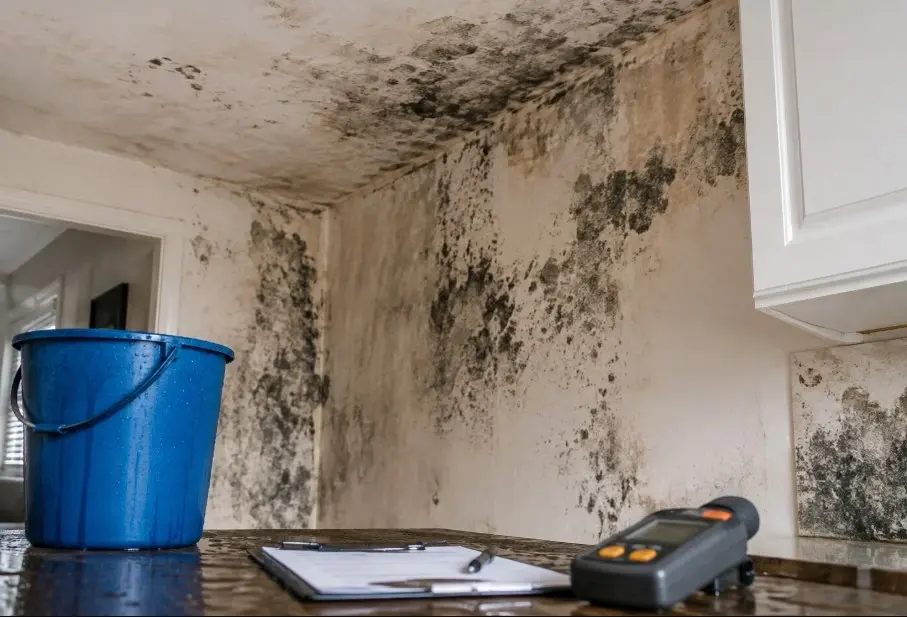
Most Texas Homeowners Policies Exclude Mold by Default, Most People Don’t Find Out Until It’s Too Late
Here’s something that surprises a lot of homeowners after they’ve already found mold: their policy may not cover it, and it was never hidden, it’s a standard, state-mandated exclusion built into Texas homeowners policies. Understanding this exclusion, and the one specific exception that determines whether a claim gets paid or denied, matters more than almost anything else in how a mold situation plays out financially.
This isn’t a “call us before you call insurance” tip. It’s the actual legal distinction, straight from Texas Department of Insurance rules, that decides which side of a mold claim you land on. If you’re dealing with active water intrusion right now, our Frisco water damage restoration team can document the source while it’s still fresh, which is exactly the evidence this article is about to explain.
Found mold and worried about your claim? Get a documented assessment before you call insurance.
Call (945) 297-3238The Texas Mold Exclusion, in Plain Language
Under the Texas Department of Insurance’s mandated policy language (Commissioner’s Order CO-01-1105), standard Texas homeowners policies contain a direct exclusion: loss caused by mold, fungi, or other microbes generally isn’t covered. That’s the default position your policy starts from.
But the same rule carves out a specific exception, and this exception is where almost every real-world mold claim actually gets decided: ensuing mold damage is covered if it resulted from a sudden and accidental discharge, leakage, or overflow of water that would otherwise be a covered loss. In other words, the mold itself isn’t what insurers are evaluating, they’re evaluating whether the water that caused it counts as sudden and accidental, or something else. Our Texas water damage insurance claim guide covers the broader claim process this mold exception sits on top of, and if you’re specifically dealing with a fire-related claim, our fire damage insurance claim guide walks through that separate process.
Why “Sudden and Accidental” Is the Phrase That Decides Everything
This is the single most important distinction in a Texas mold claim, and it’s also the most commonly disputed one:
- A burst pipe is a textbook example of sudden and accidental, it happens at a specific, identifiable moment, without warning. See our breakdown of burst pipe water damage in Frisco for what that looks like in practice.
- A slow leak under a sink that’s been dripping for weeks is the opposite, insurers often characterize this as gradual, and gradual damage is typically treated as a maintenance issue rather than a covered loss, since it’s considered something a homeowner reasonably should have caught and addressed.
The mold growth can look identical in both cases. What determines coverage isn’t what the mold looks like, it’s how the underlying water event is classified, and that classification is often exactly what gets contested. Slow, hidden sources like a ceiling leak or a sewage-related event with its own health risks tend to draw the most scrutiny, because the timeline is harder to pin down after the fact.
Texas water damage is also categorized by contamination level, which factors into both remediation approach and how insurers view a claim. Our guide to water damage categories explains how clean, gray, and black water are classified.
The Documentation That Actually Moves the Needle
Because “sudden vs. gradual” is a judgment call insurers make, the evidence that supports your side of that judgment call is what actually matters:
- When the water event was discovered and reported. A claim filed the same day water was noticed reads very differently than one filed weeks later, even if the underlying cause was genuinely sudden. Our first 24 hours after water damage checklist covers exactly what to capture in that window.
- Maintenance history. Records showing routine inspection of plumbing, appliances, and known risk areas support a “sudden” classification by demonstrating the damage wasn’t the product of neglect.
- Photos and timestamps from the moment of discovery, not after cleanup has already started. This is the evidence that shows what the water damage actually looked like before anything was touched.
- A professional assessment early in the process, documenting visible extent, likely cause, and timeline, this carries more weight in a coverage dispute than a homeowner’s own account after the fact.
If you’re trying to figure out whether what’s on your wall is actually mold before you even get to the insurance question, our guide on top warning signs of mold and our piece on what to do immediately about black mold in a Frisco home are worth reading first.
Get a dated, professional inspection report that documents cause and timeline from day one.
Request an AssessmentCommon Reasons Texas Mold Claims Get Denied
- The insurer classifies the water source as gradual rather than sudden, this is the single most common reason, and it’s exactly why the timeline and cause narrative matter so much.
- Reporting delay. A gap between discovering water damage and reporting it works against the “sudden and accidental” classification, even when the original cause genuinely was sudden.
- Pre-existing conditions. If an inspection or prior claim already noted a moisture issue in the area, insurers often argue the mold predates the current claim.
- Coverage sub-limits. Even approved mold claims are frequently capped well below the actual remediation cost, since mold coverage under the ensuing-loss exception often carries its own dollar limit separate from the general dwelling coverage. Our water damage cost calculator can help you sanity-check what a sub-limit might actually leave you owing out of pocket.
If a claim has already been denied and you believe the classification was wrong, the Texas Department of Insurance’s guidance on homeowners and renters insurance complaints outlines how to escalate a dispute with your insurer.
You Can Add Coverage Beyond the Default
Texas rules require insurers to offer applicants a Mold, Fungi, or Other Microbes Coverage Endorsement at the time of application, broader protection than the default policy provides. If you’re not sure whether your policy includes this endorsement, it’s worth a direct call to your insurance provider, since this is exactly the kind of coverage gap that isn’t obvious until a claim is already in dispute. It’s also worth checking your flood coverage separately, our hurricane and flood insurance guide covers how that policy type interacts with standard homeowners coverage, and whether water mitigation is typically covered once a claim is approved.
What to Do If You Find Mold Right Now
- Photograph everything immediately, before any cleanup, movement of items, or attempted drying. Timestamps matter.
- Identify and document the water source, if it’s identifiable, a burst pipe, appliance failure, or roof leak strengthens a sudden-and-accidental narrative.
- Get a professional assessment early. A documented, dated inspection report is stronger evidence than a homeowner’s account alone.
- Report to your insurer promptly. Delay is one of the most common, avoidable reasons a legitimately sudden event gets treated skeptically.
- Keep every record, photos, inspection reports, correspondence, and receipts, in one place from day one.
Our team documents mold situations with exactly this kind of insurance dispute in mind, photographing extent and probable cause before remediation begins, which supports your claim regardless of how the coverage conversation goes. If you’re not sure whether what you’re looking at is mold or just a stain, our guide on mold after water damage covers the visual warning signs, and our guide to preventing mold after water damage covers what to do once remediation is underway so it doesn’t come back.
Property maintenance and mold-related nuisance issues can also fall under the City of Frisco’s Code Enforcement Division, which is worth knowing about separately from the insurance side, particularly for rental properties or HOA-governed homes.
Don’t wait for the timeline to work against you. Get documented today.
Call (945) 297-3238 NowMold Remediation Across the DFW Metroplex
We handle mold situations tied to insurance disputes across Frisco and the surrounding metroplex, including Frisco, McKinney, Celina, Little Elm, The Colony, Plano, Allen, Prosper, Oak Point, Carrollton, Dallas, and Rockwall. If you’re comparing removal costs before you file a claim, our mold removal cost guide and black mold vs. regular mold comparison are good starting points, and our Little Elm mold remediation and Celina mold damage restoration pages go deeper on those specific service areas. For a broader look at who’s nearby, mold remediation near me rounds up service availability across the region.
Frequently Asked Questions
No, by default, standard Texas homeowners policies exclude mold. Coverage generally only applies as an exception, when the mold resulted from a sudden and accidental water event that would otherwise be covered, and even then it’s often subject to a lower sub-limit than your main dwelling coverage.
Generally, an identifiable, one-time event like a burst pipe or sudden appliance failure. Water damage that built up gradually over time, a slow leak, ongoing seepage, long-term humidity, is typically treated differently and often excluded, even if mold is the visible result either way.
Yes. Texas requires insurers to offer a specific mold coverage endorsement at the time of application. If you’re unsure whether you have it, contact your insurance provider directly to check your current policy.
Waiting too long to document and report it. A delay between discovering water damage and reporting it works against you even when the underlying cause was genuinely sudden, because it makes the timeline harder to prove.
Don’t Let Documentation Timing Cost You a Claim
Whether a mold claim gets paid often comes down to how well the timeline and cause are documented, not just what’s actually growing on the wall. If you’ve found mold and aren’t sure where to start, call (945) 297-3238 for an assessment that documents your situation properly from day one, across Frisco and the DFW metroplex. Learn more about how we work on our About Us page.
Ready for an assessment that protects your claim, not just your walls?
Schedule Your AssessmentSources
Texas Department of Insurance, Mold, Fungi or Other Microbes Endorsements, Order CO-01-1105
Texas Department of Insurance, Commissioner’s Order CO-01-1105 (full order)
Texas Department of Insurance, Get Help With a Homeowners or Renters Insurance Complaint
City of Frisco, Code Enforcement Division
Related Reading
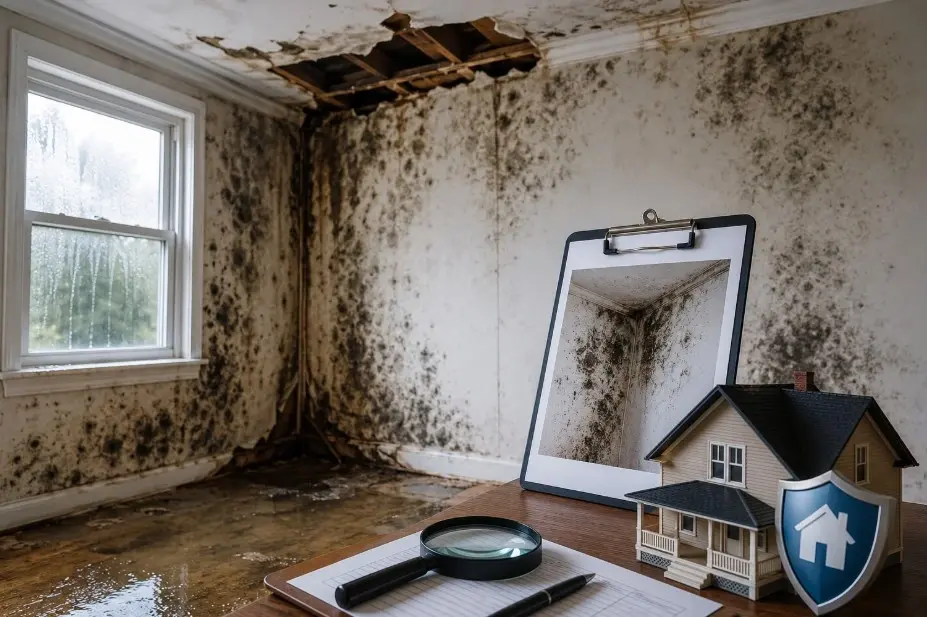
Need help right now? See our full guide to water damage restoration in Frisco, TX for emergency response, services, and coverage across the city.