
Frisco TX Water Damage Guide
Wet Carpet Padding in Frisco, TX: Dry It or Discard It?
Carpet and padding dry at completely different rates. Here’s how to check the layer that actually causes lingering odor, and when DIY stops being safe.
24-48 hrs
Minimum drying time for clean-water padding
1 day
Rough window before gray water padding should be replaced
Black water
Padding should not be treated as a DIY drying project
This is the mistake behind almost every “we cleaned it and the smell came back” situation: carpet and carpet padding are two completely different materials, and they don’t dry at the same rate or respond to the same treatment. Carpet fiber, especially synthetic fiber, sheds surface moisture relatively quickly. The dense foam padding underneath holds onto moisture far longer, and it’s usually where a lingering odor is actually coming from, even once the surface above it feels completely dry to the touch.
This is a practical guide to checking the layer that actually matters, deciding whether it can be dried or needs to go, and knowing when a small spill has crossed into territory where DIY isn’t the safe option anymore.
Why Padding Is the Real Problem, Not the Carpet
Padding is thicker, denser, and sits directly against the subfloor, often the coolest, least ventilated point in the whole system. That combination means it can stay damp for days after the carpet surface feels dry, particularly in North Texas, where indoor humidity during summer months slows down exactly the kind of passive air-drying a fan alone is counting on. A carpet that feels dry to the touch after a few hours can still be sitting on padding that’s holding significant moisture, quietly supporting bacterial growth that produces odor long before mold becomes visible. If you want more background on how that timeline plays out, our guide to lingering odor after water damage walks through it in more detail.
This is also why deodorizing products applied to the carpet surface alone often provide only temporary relief. They’re treating the layer that was never actually the source.
How to Actually Check the Padding, Not Just the Carpet
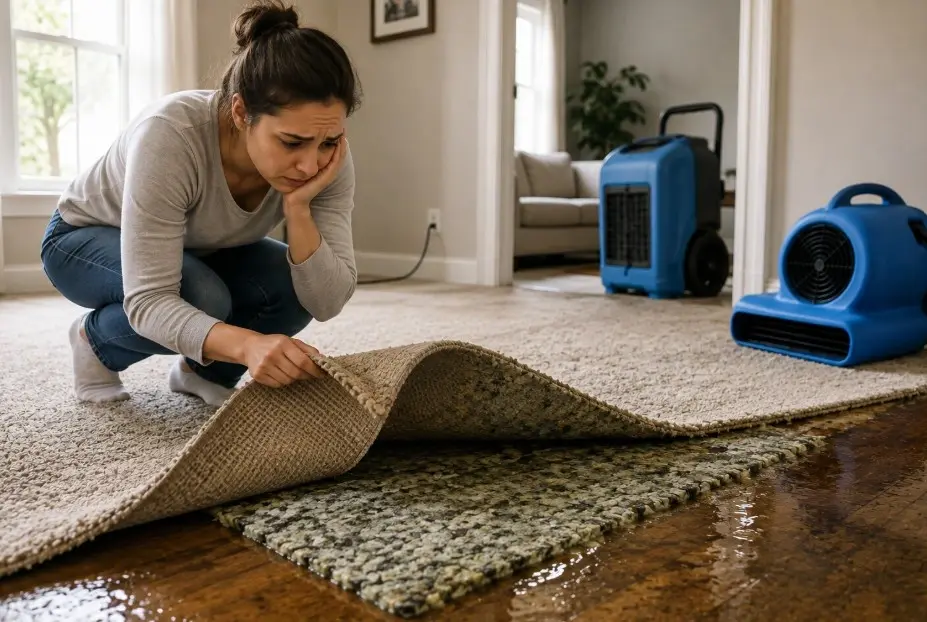
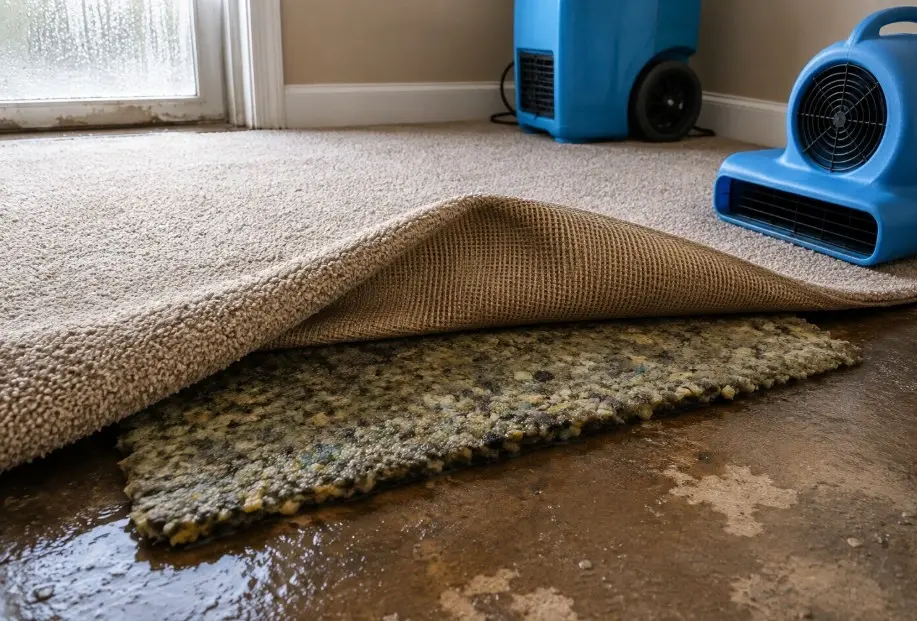
- Lift a corner. In an inconspicuous spot, pull the carpet back from the tack strip enough to see and touch the padding directly. This is the only reliable way to assess it, checking the carpet surface alone tells you nothing about what’s happening underneath.
- Press firmly and check for resistance. Dry padding feels light and springs back. Damp padding feels heavier, compresses without springing back fully, and may release visible moisture under firm pressure.
- Smell it directly, not just the room. A musty smell concentrated at the padding level, distinct from the room’s general air, is a strong sign it hasn’t fully dried even if the carpet above seems fine.
- Use a moisture meter if you have one. This removes the guesswork entirely and gives you an actual reading rather than a judgment call based on touch and smell.
What the Water Source Tells You Before You Even Start
Before deciding whether to attempt drying yourself, the source of the water matters more than how the carpet looks right now. This is the same clean, gray, and black water framework used across our water damage category breakdown:
- Clean water (a supply line, an overflowing sink with clean water, rainwater from a minor roof leak) — padding from this kind of event is often salvageable if it’s dried promptly and thoroughly.
- Gray water (a washing machine or dishwasher discharge, water that’s picked up some contamination) — padding exposed to this is a judgment call; if it’s been more than a day, replacement is often the safer and ultimately cheaper choice over uncertain cleaning.
- Black water (any sewage backup, floodwater from outside, water that’s been standing for an extended period) — padding exposed to contaminated water in this category should not be treated as a DIY drying project. The City of Frisco’s severe weather safety guidance treats standing floodwater as a hazard to avoid contact with, and padding is dense and porous enough that contamination can’t be reliably removed through home cleaning methods.
This distinction matters more than how much water there was. A small amount of contaminated water is a bigger problem than a larger amount of clean water.
If the Water Was Clean and Caught Early: A Realistic Drying Approach
- Extract as much liquid as possible first, either with a wet-dry vacuum or by pressing towels firmly into the carpet, before doing anything else. Applying a treatment to carpet that’s still saturated wastes the treatment. Our water extraction service covers what professional-grade extraction looks like if the area is larger than a spot spill.
- Lift the carpet along affected edges if the wet area is significant, exposing the padding directly to airflow rather than trying to dry through the carpet layer.
- Run fans and a dehumidifier together, not just fans alone. In North Texas, a dehumidifier is doing more of the actual work than air movement alone, since ambient humidity limits how much moisture the air can absorb from wet padding without it.
- Give it real time, 24 to 48 hours minimum, and confirm with a moisture check rather than assuming dryness based on a fixed schedule. Humid conditions or a larger affected area can extend this well beyond 48 hours, as we cover in our extraction vs. structural drying guide.
- Don’t skip checking the subfloor underneath the padding once you’ve lifted the carpet. If the subfloor itself feels damp, the padding was never going to fully dry while sitting on it. The same logic applies to hardwood floors sitting over a damp subfloor.
When Padding Should Just Be Replaced, Not Dried
- The water source falls into the gray or black water category
- The padding has already developed a noticeable odor before any treatment
- More than about 24 hours passed before the water was addressed
- The affected area is large enough that thorough drying and verification isn’t realistic with household equipment
Padding is inexpensive relative to the risk of leaving contaminated or partially-dried material under a carpet indefinitely. When in doubt, replacing it is usually the more cost-effective decision once you factor in the risk of a recurring odor or hidden mold problem down the line, something covered further in our mold after water damage guide.
Replacing carpet or padding is generally considered cosmetic interior work, and the City of Frisco’s Building Inspections Division notes that basic finish work like flooring typically doesn’t require a permit, though it’s worth a quick check if the job extends into subfloor repair. Once old padding is out, the City of Frisco’s Bulk Trash Pickup program and Environmental Collection Center are the correct channels for disposing of it responsibly, and the Environmental Services Division can answer questions about larger volumes from a bigger water event.
When to Call a Professional Instead
If a musty smell returns within a few days of a DIY drying attempt, that’s a reliable sign the padding, or the subfloor beneath it, didn’t fully dry the first time, not a sign you need a stronger deodorizer. Our team uses moisture meters to verify padding and subfloor moisture levels directly, rather than guessing from touch and smell, and our emergency water damage restoration equipment handles saturated padding more thoroughly than household tools can.
If the water source involved sewage or came from outside the home, our sewage cleanup process addresses the contamination directly rather than attempting to salvage material that shouldn’t be salvaged. For a broader look at what’s typically worth saving after a larger water event, our flood damage salvage guide covers material-by-material decisions beyond just carpet and padding. If standing water or drainage issues were part of the cause, the City’s Stormwater Management page is a useful reference for understanding local floodplain and drainage rules.
Frequently Asked Questions
Not necessarily, and this is the most common reason a treated area still smells musty afterward. Padding holds moisture significantly longer than carpet fiber, and the only reliable way to know is to lift a corner and check it directly.
At least 24 to 48 hours under good conditions with active airflow and dehumidification, and often longer in humid conditions or for a larger affected area. A moisture check is more reliable than assuming based on a fixed timeframe.
Yes, particularly if the water source wasn’t clean, if more than about a day passed before it was addressed, or if there’s already a noticeable odor. Padding is inexpensive enough that replacement is often the more practical choice over an uncertain drying attempt.
This usually means the padding, or the subfloor beneath it, wasn’t actually dry when treatment was applied to the carpet surface. A returning odor is a sign to check the layer underneath, not to apply a stronger surface treatment.
Check the Layer That Actually Matters
A dry-feeling carpet with damp padding underneath is one of the most common reasons a water damage smell keeps coming back. If you’re not sure what’s happening beneath the surface, call for an assessment across Frisco and the DFW metroplex.
Sources: City of Frisco Severe Weather Safety, City of Frisco Building Inspections, City of Frisco Bulk Trash Pickup, City of Frisco Environmental Collection Center, City of Frisco Environmental Services, City of Frisco Stormwater Management.
Need help right now? See our full guide to water damage restoration in Frisco, TX for emergency response, services, and coverage across the city.