
🏠

Ceiling leak in your Frisco TX home or business? Call (945)297-3238 now — 24/7 emergency ceiling leak repair near Frisco TX, 60-minute average arrival, IICRC S500 certified team.

Ceiling Leak Repair Frisco TX — Water Damage Frisco IICRC Certified Team

Need ceiling leak repair Frisco TX after water stains, bubbling paint, or an active drip? Water Damage Frisco is a locally based, IICRC S500 certified restoration company serving Frisco TX and all of North Texas including Plano, McKinney, Allen, Prosper, The Colony, Little Elm, Celina, Carrollton, and Rockwall. This guide covers the most common ceiling leak causes, urgent warning signs, what to do immediately, and the full repair process from moisture source identification to finished drywall and paint.

24/7Emergency Response
60 MinAvg. Arrival Near Frisco TX
IICRCS500 Certified
100%Insurance Documented

Ceiling Leak Repair Frisco TX — Why It Is Always Urgent

A ceiling leak is never a cosmetic issue you can safely defer. Water pooling above a drywall ceiling adds significant weight — a saturated 4×8 sheet of half-inch drywall can absorb over 30 pounds of water before it collapses. According to the Federal Emergency Management Agency (FEMA), water damage that reaches ceiling cavities and insulation creates mold conditions within 24 to 48 hours and becomes significantly more expensive to repair with every day of delay.

In Frisco TX, ceiling leaks are among the most common calls following North Texas hail storms, hard freeze events that burst pipes above living spaces, and upstairs bathroom overflows. Getting the moisture source identified and the drying process started quickly is the single most important factor in controlling total water damage restoration cost.

⚠️

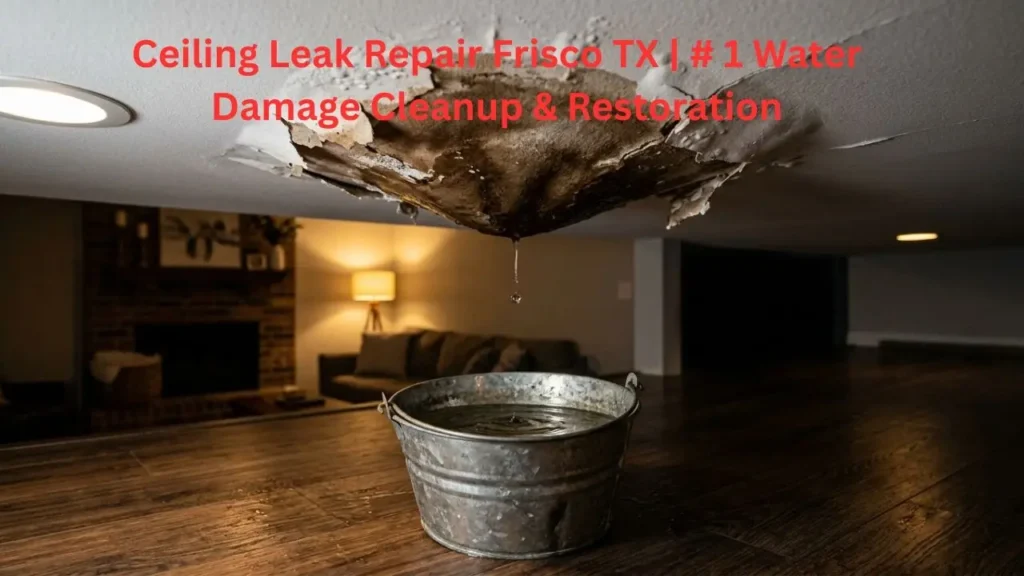
Ceiling Collapse Warning: A ceiling that is actively bulging, sagging, or has a clearly visible water pocket is at risk of sudden partial or full collapse. Do not stand beneath a bulging ceiling — carefully place buckets, move furniture and valuables away from the affected area, and call (945)297-3238 immediately. Our team can safely relieve ceiling water pressure to prevent a collapse during extraction.

Common Causes of Ceiling Leaks in Frisco TX Homes

🌧️ Roof Damage From Hail or Wind

Cracked or missing shingles from North Texas hail storms allow rainwater to penetrate the attic and travel to ceiling drywall. Leaks often appear in the center of rooms or along exterior walls directly below compromised shingles.

🚿 Upstairs Bathroom Plumbing

Toilet wax ring failures, slow drain leaks, shower pan cracks, and supply line failures in second-floor bathrooms are among the most common causes of first-floor ceiling leaks in two-story Frisco TX homes.

❄️ Burst Pipe Above Ceiling

Pipes running through attic spaces or between floors are vulnerable to freezing during North Texas hard freezes. A burst pipe in the attic can release hundreds of gallons directly onto ceiling drywall before it is discovered.

❄️ AC Condensate Pan Overflow

A clogged condensate drain line causes the AC drip pan to overflow, saturating the air handler cabinet and dripping onto ceilings below. This is an especially common ceiling leak cause in Frisco TX homes during peak summer cooling season.

🛁 Overflowing Tub or Sink

An unattended overflowing bathtub, sink, or washing machine on an upper floor can saturate subfloor material and push water through to the ceiling below within minutes. See our overflowing sink and tub guide for more details.

💧 HVAC Ductwork Condensation

Poorly insulated or disconnected ductwork in attic spaces can produce significant condensation during humid North Texas summers, dripping moisture onto ceiling drywall from above over weeks or months before staining becomes visible.

Warning Signs of a Ceiling Leak That Needs Immediate Attention

  • ⚠️
    Yellowish or brown water stain rings on ceiling drywall — even a dry stain indicates past or ongoing moisture intrusion that needs professional moisture testing.
  • ⚠️
    Paint bubbling, peeling, or blistering on the ceiling surface — this indicates water pooling between the paint layer and drywall face paper.
  • ⚠️
    Visibly sagging or bulging ceiling — a water pocket has accumulated above the drywall and the ceiling is at risk of collapse under its own saturated weight.
  • ⚠️
    Active dripping from ceiling — an active drip means the water source is still active or a large water pocket has accumulated above and is beginning to push through.
  • ⚠️
    Musty odor in the room below — this indicates mold growth has already begun inside the ceiling cavity above the visible stain area.
  • ⚠️
    Crack lines spreading from a stain — drywall paper is failing under the weight and moisture, and the affected section is structurally compromised.

How to Identify — Roof Leak vs Pipe Leak vs AC Overflow

Ceiling Leak TypeKey Identification CluesTypical Location
Roof LeakAppears or worsens during or after rain; more common in older homes or after hail stormsDirectly below roof penetrations, along exterior walls, near skylights or chimneys
Burst or Leaking PipeAppears regardless of weather; often correlates with a specific pipe or fitting aboveDirectly below a bathroom, kitchen, or laundry room on the floor above
AC Condensate OverflowAppears during hot weather when AC runs constantly; often near or directly below air handler locationBelow the attic air handler or near the air handler closet on the floor above
Bathroom OverflowAppeared suddenly after someone was using the bathroom above; water may be discoloredDirectly below upstairs bathroom — often bathroom, hallway, or bedroom ceiling
HVAC Duct CondensationAppears slowly over weeks; no single event; stain grows graduallyAnywhere below attic ductwork — often in hallways or central rooms

Our 7-Step Ceiling Leak Repair Process Near Frisco TX

1
Emergency Call & Source Containment

Call (945)297-3238 for 24/7 dispatch with a 60-minute average arrival. The active water source — whether a pipe, roof opening, or AC overflow — is shut off or secured before restoration work begins.

2
Moisture Mapping & Source Identification

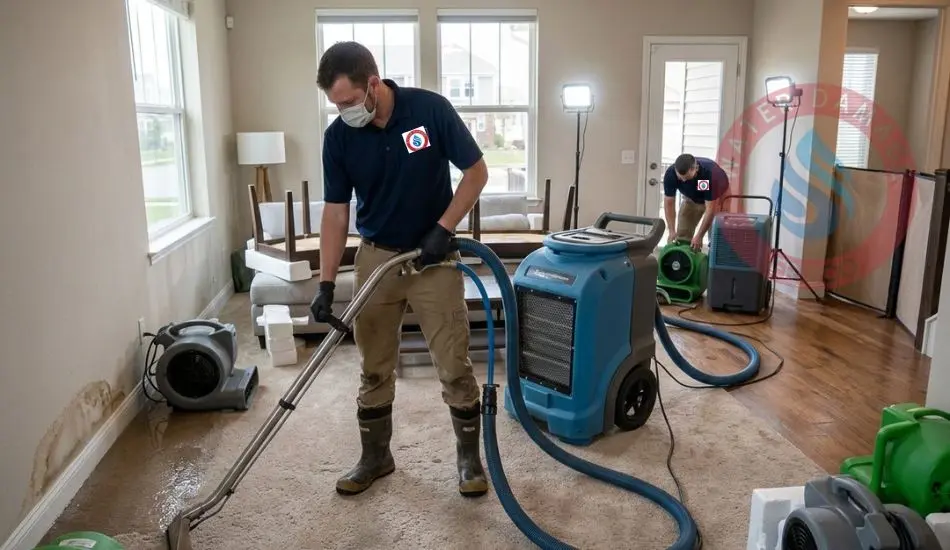
Our technicians use moisture meters and thermal imaging to trace the exact water source and map the full extent of moisture spread through ceiling drywall, insulation, and the floor structure above — often covering a much wider area than the visible stain suggests.

3
Ceiling Water Pressure Relief

If water has pooled above the drywall, our team carefully relieves the water pressure through a controlled point to prevent full ceiling collapse, then extracts the released water.

4
Structural Drying

Industrial dehumidifiers and air movers dry ceiling drywall, insulation, and structural framing from both above and below as part of our standard water damage restoration timeline.

5
Mold Prevention Treatment

Antimicrobial treatment is applied to all wet ceiling materials during the drying phase to prevent mold growth, reducing the risk of needing a separate mold remediation project.

6
Drywall Removal & Replacement

Unsalvageable ceiling drywall and saturated insulation are removed, new drywall is installed, taped, mudded, and textured to match the existing ceiling finish.

7
Stain-Blocking Primer & Final Paint

Stain-blocking primer seals any residual discoloration before the final finish coat is applied. Final moisture testing confirms the repair is fully complete.

What NOT to Do When You Discover a Ceiling Leak

  • 🚫
    Do not stand directly beneath a sagging or bulging ceiling — saturated drywall can collapse without warning under its own weight.
  • 🚫
    Do not poke a hole in a sagging ceiling yourself — without knowing what is above, you risk a sudden full-panel collapse or release of a large water volume.
  • 🚫
    Do not run the HVAC system if the leak is near ductwork or the air handler — this risks spreading contamination and moisture through the duct system. See our HVAC problems after water damage guide.
  • 🚫
    Do not paint over a water stain without professional moisture testing — stain-blocking paint applied over still-wet drywall traps moisture and allows hidden mold to grow undetected.
  • 🚫
    Do not delay calling a certified restoration company — mold begins growing inside ceiling cavities within 24 hours of moisture exposure. Call (945)297-3238 today.

Does Insurance Cover Ceiling Leak Repair in Texas?

Standard Texas HO-3 homeowners policies typically cover ceiling leak repair when the cause is a sudden, accidental covered event — a burst pipe, storm-related roof damage, or AC condensate overflow from a sudden equipment failure. Long-term slow leaks from gradual plumbing deterioration or deferred roof maintenance are generally excluded as maintenance issues. The Texas Department of Insurance (TDI) recommends photographing all ceiling damage and documenting the cause with time-stamped records before any repairs begin.

Water Damage Frisco provides complete ceiling leak documentation — moisture readings, source identification photos, and a line-itemized scope — formatted for direct insurance adjuster submission. See our Texas water damage insurance claim guide for the full filing process.

💡

Ceiling Leak + Mold Risk: Ceiling cavities hold insulation that absorbs and retains moisture far longer than drywall alone. Mold inside a ceiling cavity can grow completely hidden for weeks or months before visible staining or odor appears. If your ceiling leak was not dried professionally within 48 hours of the event, read our mold after water damage guide for next steps.

Ceiling Leak Repair Cost Frisco TX

Damage ScopeTypical Cost RangeWhat It Includes
Small stain — no active leak, no mold$800 – $2,000Moisture test, minor drywall patch, primer and paint
Single room ceiling — moderate damage$2,000 – $5,000Drying, full drywall panel replacement, texture, paint
Multi-room or large ceiling collapse$5,000 – $15,000Extraction, full ceiling replacement, insulation, structural repair
Ceiling leak + mold discovered$6,000 – $20,000+Adds full mold remediation of ceiling cavity — see mold remediation guide
Storm roof damage + ceiling water intrusion$4,000 – $18,000Emergency tarping, ceiling drying, drywall and insulation replacement

Ceiling Leak Repair — Residential & Commercial

🏠 Residential Ceiling Leak Repair

  • Storm and hail roof leak ceiling damage
  • Upstairs bathroom and pipe ceiling leaks
  • AC condensate overflow ceiling repair
  • Attic burst pipe ceiling damage
  • Popcorn and smooth ceiling texture matching

🏢 Commercial Ceiling Leak Repair

  • Office building roof and pipe ceiling leaks
  • Drop ceiling and T-bar grid water damage
  • Retail space ceiling water intrusion
  • Multi-floor commercial ceiling restoration
  • See our commercial water damage restoration page

All Water Damage Services Near Frisco TX

Ceiling Leak Repair — North Texas Cities We Serve

Water Damage Frisco provides IICRC S500 certified ceiling leak repair and water damage restoration across the entire DFW North Texas area:

Related Resources

FAQ — Ceiling Leak Repair Frisco TX

The most common causes are roof damage from hail or wind storms, burst or leaking pipes above the ceiling, AC condensate pan overflow, upstairs bathroom plumbing failures, and HVAC ductwork condensation dripping from above.
Yes. A water-saturated ceiling can collapse under its own weight, and mold growth begins within 24 to 48 hours of water exposure. Call (945)297-3238 immediately for 24/7 emergency ceiling leak repair response.
Yes. Ceiling drywall and the insulation above it hold moisture and create ideal mold conditions within 24 to 48 hours. Mold inside ceiling cavities often grows hidden for weeks before staining or odor becomes visible, by which time it has typically spread to adjacent areas.
Roof leaks appear or worsen during rain storms and are common along exterior walls or near skylights. Pipe leaks appear regardless of weather and are more common directly below a bathroom or kitchen above. Our technicians use moisture meters to trace the exact source before repairs begin.
Standard Texas HO-3 policies typically cover ceiling leak repair when the cause is a sudden covered event such as a burst pipe or storm damage. Long-term gradual leaks from deferred maintenance are generally excluded. The Texas Department of Insurance recommends documenting all damage before repairs begin.
Ceiling leak repair cost ranges from $800 to $2,000 for a minor single stain repair, $2,000 to $5,000 for a full single-room ceiling replacement, and $5,000 to $15,000 or more for major ceiling collapses or cases requiring mold remediation.

Ceiling Leak in Frisco TX? Call Now — We’re Ready 24/7

Water Damage Frisco is an IICRC S500 certified water restoration company. 24/7 emergency response, 60-minute arrival, complete insurance documentation. Serving Frisco, Plano, McKinney, Allen, Prosper, The Colony, and all North Texas.

About Water Damage Frisco

Water Damage Frisco is a locally owned and operated IICRC-certified restoration company based in Frisco TX, specializing in water damage restoration, mold remediation, fire damage restoration, and emergency restoration services for residential and commercial properties across the entire DFW North Texas area.

Our technicians are IICRC certified to S500 and S520 standards and work directly with all major insurance carriers. Learn more on our IICRC certification page.

📍 5000 Preston Rd Suite 200, Frisco TX 75034  |  📞 (945)297-3238  |  ✉️ info@waterdamagefrisco.org

Water Damage Restoration
Frisco, TX — Water Damage Service Area
3 ZIP codes served · Tap to call (945) 297-3238 · waterdamagefrisco.org
Fire Damage Restoration
Frisco, TX — Fire Damage Service Area
3 ZIP codes served · Tap to call (945) 297-3238 · waterdamagefrisco.org
Mold Remediation
Frisco, TX — Mold Remediation Service Area
3 ZIP codes served · Tap to call (945) 297-3238 · waterdamagefrisco.org
Ceiling Leak Repair Frisco TX Causes and Restoration Guide
(945)297-3238 ceiling leak repair Frisco TX causes signs emergency water extraction drywall restoration

Ceiling leaks are common throughout North Texas, including Frisco, McKinney, and Plano, due to expansive clay soil.