Sewage Backup Health Risks in Frisco TX: What to Do Before Anyone Touches It
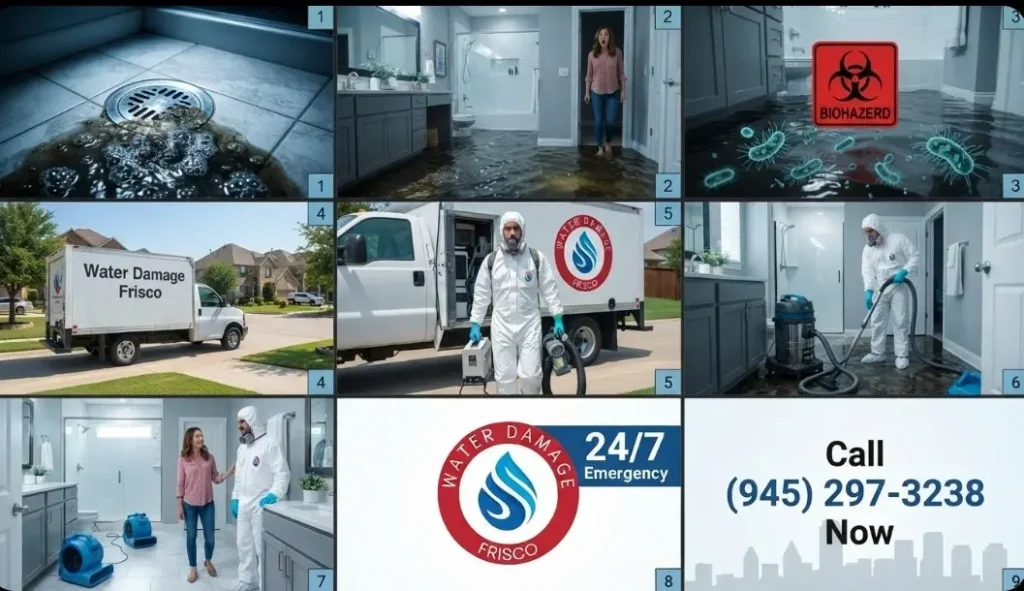
A backed-up toilet or a floor drain pushing dark water into your Frisco home is not a spill you mop up and forget. It is classified as the most contaminated category of water damage that exists, and the first five minutes decide how much of your home’s structure has to come out.
Why a Sewage Backup Is a Health Emergency, Not a Cleaning Job
Every restoration standard in the industry treats sewage the same way: as the single most dangerous category of water a home can be exposed to. Under the IICRC S500 standard, water damage is graded into three categories by contamination level, and sewage falls into Category 3, grossly contaminated water that can carry pathogenic, toxigenic, or otherwise harmful agents. That grading exists because sewage does not behave like clean or gray water. It carries live bacteria, viruses, and parasites straight into carpet padding, drywall, and subfloor within minutes of contact.
For homeowners across Frisco, Plano, and McKinney, the real danger is timing. The longer contaminated water sits against porous building material, the more of that material becomes unsalvageable, and the more the household is exposed to pathogens that can cause serious illness.
What Illnesses Can a Sewage Backup Actually Cause?
Sewage is not just unpleasant, it is a documented disease vector. The Indiana Department of Health lists E. coli, Salmonella, Campylobacter, Giardia, Cryptosporidium, and Hepatitis A among the pathogens routinely present in sewage exposure. E. coli and Salmonella typically cause severe stomach cramping, diarrhea, and vomiting, while Hepatitis A attacks the liver and can take weeks to fully resolve. Giardia and Cryptosporidium are parasites that trigger prolonged gastrointestinal illness, sometimes lasting far longer than a typical stomach bug.
What surprises most homeowners is that exposure does not require direct contact. Wiping, scrubbing, or even running a fan across a contaminated surface can aerosolize these pathogens into breathable droplets, which is one of the biggest reasons DIY sewage cleanup goes wrong.
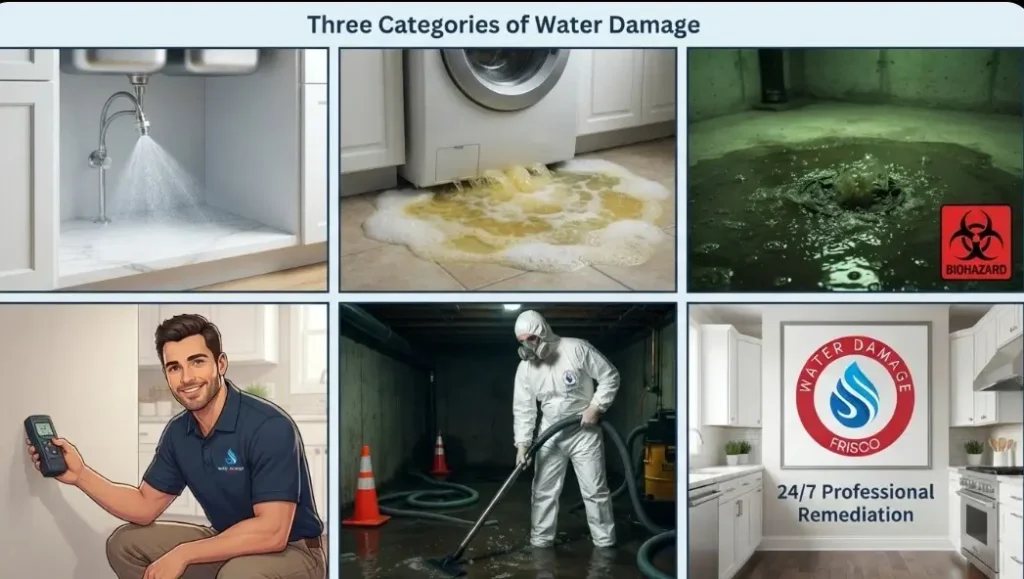
The Three Categories of Water Damage, and Why Sewage Is Always the Worst
Category 1: Clean Water
Comes from a sanitary source such as a supply line. Low risk if dried within 24-48 hours.
Category 2: Gray Water
Contains some contamination, such as washing machine or dishwasher discharge. Moderate health risk.
Category 3: Black Water
Sewage and floodwater. Grossly contaminated. Severe health risk. Porous materials usually must be removed.
Even floodwater that never touched a sewer line gets treated as Category 3, because there is no practical way to confirm what it picked up on its way into the house. Our breakdown of water damage categories covers how each classification changes the restoration approach.
The First 5 Minutes: What to Do the Moment Sewage Backs Up
The goal in the first few minutes is containment, not cleanup. Do not reach for a mop.
Do This Immediately
- Get children, pets, and anyone immunocompromised out of the affected area
- Shut off the HVAC system so contaminated air is not pulled through the ducts
- Stop using water in the house and stop flushing toilets
- Open windows or ventilate the space if it is safe to do so
- Call a professional restoration crew right away
Never Do This
- Don’t walk through the water or try to save soaked porous items
- Don’t run a household vacuum or a box fan directly on the sewage
- Don’t let anyone eat or drink anything the water may have touched
- Don’t assume a “quick dry” fixes contaminated drywall or padding
- Don’t wait until morning if the backup is active overnight
Can You Safely Clean a Sewage Backup Yourself?
Only in one narrow case: a very small, freshly contained spill, cleaned immediately with full personal protective equipment, boots, waterproof gloves, eye protection, and a respirator rated for biohazard exposure. Anything larger than that belongs to a trained crew, because Category 3 water that has soaked into carpet padding, baseboards, or drywall cannot be sanitized back to a safe condition. It has to be removed. Attempting to dry and treat contaminated porous material in place is the most common mistake homeowners make, and it leaves live pathogens sealed inside the wall or floor.
If you have handled a minor spill yourself, our guide on mold growth after water damage explains what to watch for over the following days, since damp, contaminated material is a fast track to secondary mold growth.
How Professional Sewage Cleanup Works in Frisco TX
Our crews follow a containment-first protocol on every Category 3 call. The affected zone is isolated first so contamination cannot spread further into the home. Standing sewage is extracted, and any porous material that absorbed it, drywall, insulation, carpet, and padding, is removed and bagged as biohazard waste per regulation. The remaining structure is treated with an antimicrobial application, then dried and monitored with moisture meters until it is verified safe to rebuild.
Every technician on a sewage call is trained to IICRC S500 and S520 standards, and our dispatch guarantees a technician on-site within 60 minutes across Frisco and the surrounding DFW area. If you want the full breakdown of that process, our water damage restoration service page covers each stage in more detail, and our first 24 hours guide is worth reading if the backup happened alongside a broader flooding event.
DIY Attempt vs. Professional Sewage Cleanup: What Actually Changes
| Factor | DIY Attempt | Professional Crew |
|---|---|---|
| Pathogen exposure | High, no containment or air scrubbing | Contained, PPE and negative air protocols |
| Porous material | Often “dried” and left in place, unsafe | Removed and disposed of per regulation |
| Hidden moisture | Usually undetected until mold appears | Verified with moisture meters before rebuild |
| Insurance documentation | Little to no record for a claim | Full documentation for your adjuster |
| Typical timeline | Days, often redone later | Same-day containment, structured drying schedule |
Does Homeowners Insurance Cover Sewage Backup?
Usually not by default. Most standard homeowners policies exclude sewer and drain backup unless you have added a specific endorsement for it. That makes it worth checking your policy before an emergency, not during one. Our overview of water damage insurance claims in Texas walks through what is typically covered and what documentation an adjuster will expect.
Sewage Backup Cleanup Across the DFW Area
We dispatch biohazard-trained crews for sewage and Category 3 water damage throughout Frisco and these nearby communities:
Frequently Asked Questions
Yes. It is classified as Category 3 black water under the IICRC S500 standard, the most hazardous grade of water damage, because it is grossly contaminated with bacteria, viruses, and parasites. Children, older adults, and anyone with a weakened immune system are at the highest risk.
Documented pathogens include E. coli, Salmonella, Campylobacter, Giardia, Cryptosporidium, and Hepatitis A. Symptoms range from severe gastrointestinal illness to liver infection, and exposure can happen through contact, ingestion, or breathing in aerosolized droplets during cleanup.
Only a very small, freshly contained spill, and only with full protective equipment. Anything larger needs a professional crew, since contaminated porous materials like drywall and carpet padding usually cannot be sanitized and have to be removed.
Typically only with a specific sewer or water backup endorsement added to your policy, since most standard homeowners policies exclude it by default. Check your policy details before you need to file a claim.
We guarantee a technician on-site within 60 minutes across Frisco and the surrounding DFW area, available 24/7 for Category 3 emergencies.
Sewage Backed Up in Your Home Right Now?
Keep everyone out of the area and call our biohazard-trained crew. We respond across Frisco and DFW in 60 minutes or less, 24 hours a day.
Call (945) 297-3238Conclusion
A sewage backup is one of the few situations at home where doing less, immediately, is the right move. Get everyone out, stop using water, ventilate if it’s safe, and call a professional before anyone touches the water. The contamination is too severe, and the risk of spreading it, too high to treat like an ordinary spill.
IICRC, “S500 Standard for Professional Water Damage Restoration,” iicrc.org/s500
Indiana Department of Health, “Diseases Involving Sewage,” in.gov/health
Need help right now? See our full guide to water damage restoration in Frisco, TX for emergency response, services, and coverage across the city.