
Refrigerator Defrost Drain Clogged: What It Means and Why Water Pools
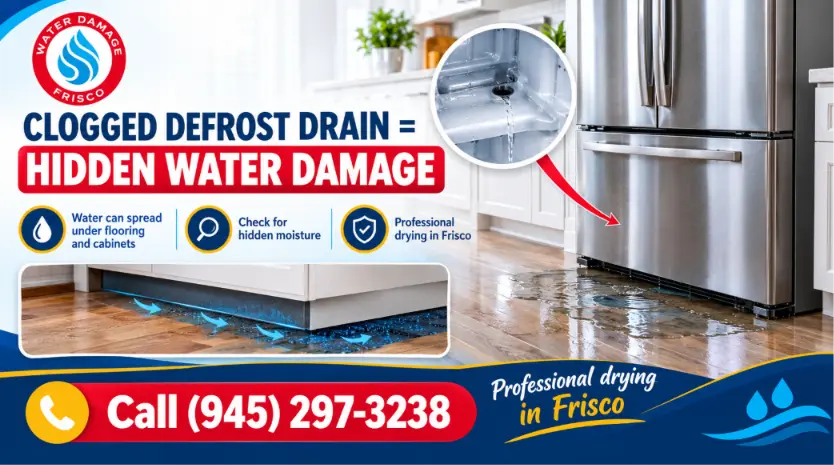
With a refrigerator defrost drain clogged by ice or food residue, the water your appliance makes every day during its automatic defrost cycle has nowhere to go. It backs up, refreezes, spills into the fresh food section, and eventually runs onto your kitchen floor. In a Frisco home built on a slab, that water does not disappear into a basement. It slips under the baseboards, into the cabinet toe-kick, and beneath the flooring, where it can stay hidden for days.
Quick answer: A clogged defrost drain is one of the most common hidden reasons a refrigerator leaks. Unplug the unit, melt the ice around the drain opening, flush it with warm water and a little baking soda, and clean the drain pan. If water has already reached the floor, dry it within 24 to 48 hours to avoid mold and warped flooring.
Water already on the floor? Our Frisco crew can find where it went and dry it out.
Call (945) 297-3238 NowHow the Refrigerator Defrost System Works
Most modern refrigerators are “frost-free.” Behind the freezer back panel sits an evaporator, a set of cold coils that pulls heat out of the air. Moisture in that air freezes onto the coils as frost. A few times a day a small heater warms the coils, the frost melts, and the meltwater runs into a trough under the evaporator. From there it travels through a narrow drain tube to a shallow drain pan near the compressor, where warm air evaporates it.
That whole path is only a few ounces of water at a time, which is why it relies on a small, clear tube. Anything that narrows the tube, whether ice, food residue, or slime, turns a quiet daily routine into a leak.
What Makes a Defrost Drain Clog?
The drain rarely fails for just one reason. These are the causes technicians see most often:
- Food particles and crumbs. Tiny bits of food travel with the airflow and settle in the trough, then stick in the drain opening.
- Ice that keeps re-forming. If the drain tube is cold enough to freeze the meltwater inside it, the ice plug grows with every defrost cycle.
- Worn door gaskets. A loose seal lets humid kitchen air in. More moisture means more frost on the coils and more water for the drain to handle. North Texas summers make this worse.
- Mold and biofilm. A warm, damp, dark tube is an ideal place for a slimy film that narrows the passage and causes a sour smell.
- A failed drain heater or defrost component. Some models have a small heater that keeps the drain tube from freezing. When it fails, the clog comes back again and again.
- A crowded freezer. Items pressed against the back wall block airflow and encourage uneven frost.
Signs Your Refrigerator Defrost Drain Is Clogged
Look for these patterns before you start pulling panels off:
- Water collecting under the crisper drawers or along the bottom of the fresh food compartment.
- A sheet of ice on the freezer floor or around the back wall.
- Water dripping down the inside of the back panel.
- A puddle on the kitchen floor at the front or underneath the refrigerator.
- A musty or sour smell that does not go away after cleaning the shelves.
Is it the drain, or something else?
Several different problems look alike on the floor. This table helps you separate them before you spend an afternoon on the wrong repair.
| What you see | Most likely cause | Where to look |
|---|---|---|
| Water under the crisper drawers, ice on the freezer floor | Clogged or frozen defrost drain | Evaporator cover and drain opening |
| Puddle that grows even when the fridge is idle, damp wall behind the unit | Leaking water supply line or fitting | Back of the refrigerator and the wall valve |
| Dripping from the ice or water dispenser, ice cubes stuck together | Ice maker or dispenser fault | Ice maker fill tube and inlet valve |
| Water beneath the unit, near the compressor | Cracked or overflowing drain pan | Pan at the bottom rear or front grille |
| Beads of water on the door edges, frost along the gasket | Worn door seal | Door gasket and hinges |
If the pattern points to the supply line or ice maker instead, read our guides on refrigerator water line leak hidden damage and ice maker leaking water signs. For the full list of causes, see why a refrigerator leaks water on the floor.
How to Clear a Clogged Refrigerator Defrost Drain
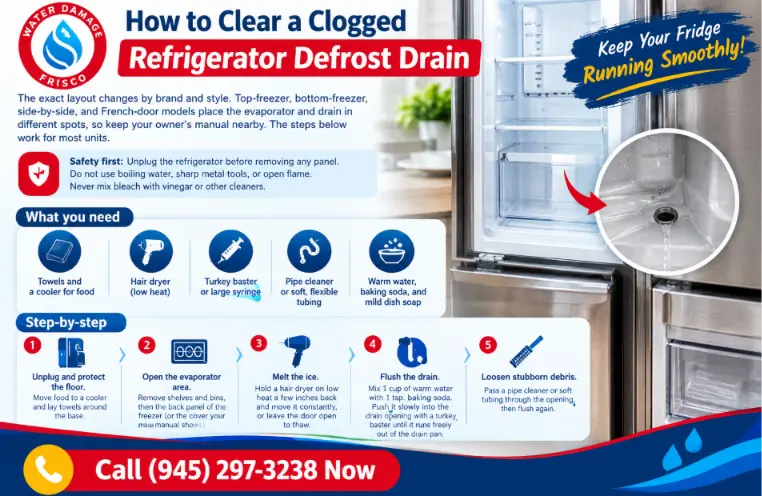
The exact layout changes by brand and style. Top-freezer, bottom-freezer, side-by-side, and French-door models place the evaporator and drain in different spots, so keep your owner’s manual nearby. The steps below work for most units.
Safety first: Unplug the refrigerator before removing any panel. Do not use boiling water, sharp metal tools, or open flame. Never mix bleach with vinegar or other cleaners.
What you need
- Towels and a cooler for food
- Hair dryer (low heat)
- Turkey baster or large syringe
- Pipe cleaner or soft, flexible plastic tubing
- Warm water, baking soda, and mild dish soap
Step-by-step
- Unplug and protect the floor. Move food to a cooler and lay towels around the base.
- Open the evaporator area. Remove shelves and bins, then the back panel of the freezer (or the cover your manual shows).
- Melt the ice. Hold a hair dryer on low heat a few inches back and move it constantly, or leave the door open to thaw. Plastic liners warp under direct, high heat.
- Flush the drain. Mix a cup of warm water with one teaspoon of baking soda. Push it slowly into the drain opening with a turkey baster until it runs freely out of the drain pan.
- Loosen stubborn debris. Pass a pipe cleaner or soft tubing through the opening, then flush again.
- Clean the drain pan. Slide it out, empty it, wash it with warm soapy water, dry it, and set it back in place.
- Reassemble and watch. Plug the unit in and check the compartment bottom and the floor for the next 24 to 48 hours.
When a Defrost Drain Problem Needs a Technician
Call an appliance technician if the clog returns within days, if heavy frost keeps building on the evaporator coils, or if the freezer is not holding temperature. These point to a failed defrost heater, thermostat, or control board, not just a blocked tube. Pay attention too to whether the leak began after a repair. A badly seated drain tube can send water behind the liner and create a leak you cannot see.
Not sure how far the water traveled? Ask for a moisture check before the flooring warps.
Talk to a Frisco Pro: (945) 297-3238How a Clogged Defrost Drain Turns Into Water Damage
The scary part of this problem is not the clog. It is the slow, quiet leak that follows it. Because the water is clean at first, many homeowners wipe the floor, assume it was a one-time spill, and move on. Meanwhile:
- Water slides under the refrigerator and into the seams of hardwood, laminate, or vinyl planks.
- It wicks into the cabinet toe-kick and the lower edge of the drywall.
- It soaks the subfloor, where it can sit for days with no airflow.
- Food residue in the water makes it a better home for bacteria and mold the longer it stays.
Water from a defrost drain starts out relatively clean, but standing water that lingers can degrade. Our guide to water damage categories explains how contamination levels change the cleanup plan. Because mold can begin to grow within about 24 to 48 hours in damp materials, read mold after water damage in Frisco and the top warning signs of mold if you notice a musty smell.
Check for hidden moisture around the refrigerator
- Pull the refrigerator out carefully and look at the floor beneath it.
- Press a dry paper towel on the flooring. If it comes up damp, water is present.
- Look for cupping or lifting at the plank edges and a soft, swollen toe-kick.
- Check the wall behind and beside the unit for stains or bubbling paint.
- If you see staining on the ceiling below (a second-story kitchen), treat it as urgent.
For a broader checklist, see hidden water damage signs in homes with no basement and what to do in the first 24 hours after water damage. If hardwood is affected, learn how to dry hardwood floors after water damage, and if you have carpet nearby, see wet carpet padding: dry or discard.
Professional Drying After a Refrigerator Leak in Frisco
When water has moved past the surface, towels and a fan are not enough. A restoration crew uses moisture meters to map the wet areas, extracts standing water, and sets up controlled drying equipment so the subfloor and wall cavity reach normal moisture levels. You can see how this differs from simple drying in water extraction vs. structural drying.
Our refrigerator leak water damage service covers moisture detection, drying, and cleanup for kitchens in Frisco. For larger spills, our water damage restoration in Frisco and water mitigation teams handle the full job. If the water is spreading right now, call our emergency water damage restoration line.
A leak from an appliance is a common cause of damage in kitchens and laundry areas. Our overview of appliance water damage in Frisco and the list of most common home water damage spots in Frisco show where else to check. You can also estimate your project with the water damage cost calculator.
Insurance, Utility Credits, and Disposal in Frisco
Insurance coverage depends on your policy wording. Many policies respond to sudden and accidental water damage but exclude long-term seepage or neglected maintenance, so photograph everything before cleanup and call your insurer early. Our guide on water damage insurance claims in Texas walks through the process. This is general information, not legal or insurance advice.
If the leak came from a supply line and raised your water bill, the City of Frisco notes that partial leak credit requests must be made in writing with repair receipts. Details are on the City’s Frisco Utility Billing page.
If the refrigerator itself is beyond repair, note that the City’s Frisco bulk trash pickup does not accept refrigerators or freezers. They go through the City’s metal recycling pickup form, which requires the unit to be empty and taped shut and lists a refrigerant fee that is waived with a technician’s refrigerant removal certificate. Check the form for current fees and rules before scheduling.
How to Keep Your Defrost Drain From Clogging Again
- Flush the drain with warm water and a little baking soda about every six months.
- Check the door gaskets. If a dollar bill slips out easily when the door is closed on it, the seal may be weak.
- Keep the freezer from being packed against the back wall.
- Wipe up spills and crumbs near the back of the compartments.
- Keep the refrigerator at 40°F or below and the freezer at 0°F, and avoid leaving the door open.
- Clean the drain pan and condenser coils twice a year.
- Place a small water sensor under the unit. Our guide to smart leak detectors and shut-off valves shows what works.
- If your refrigerator has a water line, review the guide on refrigerator water line replacement and learn how to shut off the main water valve in Frisco before an emergency.
Refrigerator Defrost Drain Clogged: Frequently Asked Questions
How do I know if my refrigerator defrost drain is clogged?
Look for water under the crisper drawers or on the bottom of the fresh food compartment, a sheet of ice on the freezer floor, water running down the back wall, or a puddle on the kitchen floor. A musty smell from the drain area is another clue.
Can I unclog a refrigerator defrost drain myself?
Often yes. Unplug the unit, melt the ice with low heat, and flush the opening with warm water and a little baking soda using a turkey baster. If the clog returns within days, the cause is probably a failed drain heater, a worn gasket, or a defrost system fault, and a technician should look at it.
Is it safe to use bleach or boiling water in a defrost drain?
No. Boiling water can warp the plastic drain and liner, and bleach can create harmful fumes if it meets other cleaners. Warm water with baking soda or mild dish soap is the safer choice.
How long does a leaking refrigerator take to damage the floor?
A slow drip can soak into flooring and subfloor within a few days, and moisture left in place for more than 24 to 48 hours gives mold a chance to start. Hardwood, laminate, and cabinet toe-kicks near the refrigerator show damage first. Our post on dishwasher leaks and hardwood floor damage shows how quickly planks can react to kitchen water.
Does homeowners insurance cover water damage from a refrigerator leak?
Many Texas policies cover sudden and accidental water damage but exclude long-term seepage or maintenance-related leaks. Document the damage with photos and speak with your insurer before cleanup.
How can I stop the defrost drain from clogging again?
Flush it with warm water about every six months, keep the door gaskets sealed, avoid overpacking the freezer, wipe up spills near the back of the compartments, and place a small water sensor under the refrigerator.
Need Help in Frisco? Here Is What to Do Next
A clogged defrost drain is usually a simple fix, but the water it leaves behind is not always simple to clear. If the floor, toe-kick, or wall has been wet for more than a day, get it checked. Browse our Frisco water damage restoration page, read the full list of restoration services, or send us the details through the contact page.
Water Damage Frisco: fast response, honest advice.
Call (945) 297-3238 Today