
Extraction removes standing water — it doesn’t dry a structure. Here’s what actually has to happen after the water’s gone, and how professionals verify it before calling a job finished.
The Water Is Gone. So Why Does the Room Still Feel Damp?
This is the question that catches a lot of homeowners off guard a day or two after a leak: the visible water is gone, a wet-vac or pump did its job, and the floor looks dry — but the room still feels heavy, or a musty smell starts showing up that wasn’t there before. That’s not your imagination. Water extraction and structural drying are two different jobs, and skipping straight from one to “it’s handled” is the single biggest reason water damage turns into a mold problem weeks later.
This isn’t a “how to hire us” page — it’s an explanation of what’s actually happening in your walls and floors after extraction, and what needs to happen next before a space is genuinely dry. If you’re in the middle of an active event right now, our water damage restoration team can walk the property with you the same day.
What Water Extraction Actually Removes
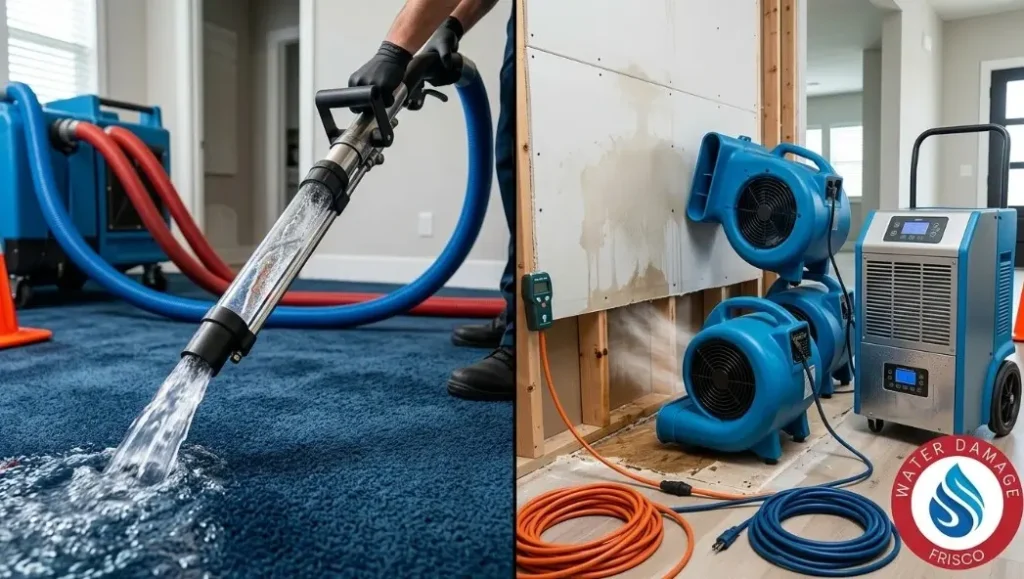
Extraction — pumps, wet-vacs, truck-mounted extractors — removes free water: the standing puddle, the saturated top layer of carpet, the pooling on a hard floor. It’s fast and it’s necessary, but it’s mechanically limited to water that’s still liquid and reachable. It does not remove water that has already wicked into drywall, subfloor, baseboards, or insulation — and in most water events, a meaningful amount already has, often within the first hour. Our water extraction team treats speed as the whole point of this step, precisely because every extra hour lets more water wick into material that then has to be dried separately.
The EPA’s Moisture Control Guidance for Building Design, Construction and Maintenance is built around exactly this distinction: liquid water and the moisture it leaves behind in materials are two separate problems that need two separate solutions. EPA’s own building survey data found that a large majority of surveyed buildings had experienced water damage at some point, and a substantial share had active leaks at the time of the study — moisture in building materials is common enough that “the water looked gone” is a poor test of whether a structure actually dried out properly the first time.
Why the Water Damage “Class” Matters More Than People Realize
Restoration professionals classify water damage on a 1–4 scale based on how much material absorbed moisture and how hard it will be to dry — not just how deep the water was. Our full water damage categories breakdown covers this in more depth, but here’s the short version:
Class 1
Minimal absorption, limited to part of a room, materials with low porosity (concrete, some tile).
Class 2
Water has wicked up walls, affected carpet and padding, and moved into the room more broadly.
Class 3
Water came from overhead or saturated ceilings, walls, and insulation — the highest amount of absorbed moisture.
Class 4
“Specialty drying” — hardwood, plaster, concrete, or dense materials that release moisture very slowly and need extended, monitored drying.
The class isn’t cosmetic — it determines how long drying legitimately takes and how aggressively it needs to be monitored. A Class 1 spill might genuinely be dry within a day. A Class 3 or 4 situation can take several days of active drying even after every visible drop of standing water is gone, and stopping early just because the floor looks dry is exactly how a Class 3 event turns into a mold remediation job a few weeks later.
How “Dry” Is Actually Verified — It’s Not a Visual Check
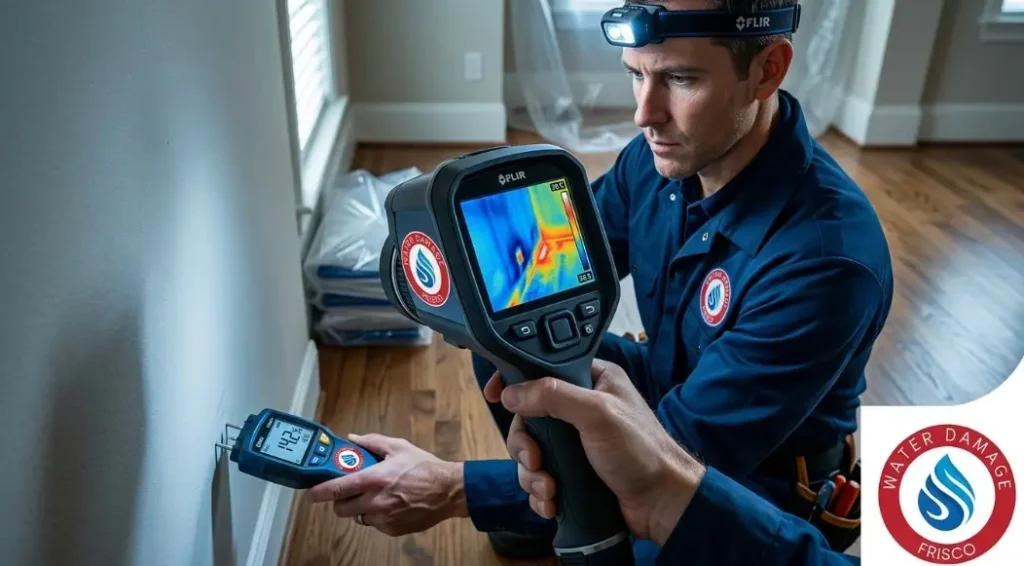
A material can look and feel dry to the touch while still holding enough moisture to support mold growth. That’s why professional drying isn’t a matter of running fans until a room “seems” dry — it’s measured:
- Moisture meters read moisture content inside drywall, subfloor, and framing — not just the surface.
- Thermal imaging cameras find temperature differences that reveal trapped moisture behind walls or under flooring that isn’t visible any other way.
- Hygrometers track ambient humidity in the space, since drying equipment is adjusted based on how much moisture is actually still leaving the materials, not on a fixed schedule.
Drying is considered complete when moisture readings return to a normal baseline for that material — not when a set number of days has passed. This is also why “just run a few box fans for a couple of days” often falls short: fans move air, but without dehumidification and material-level verification, there’s no way to actually confirm the moisture is gone rather than just less visible. Hardwood is one of the trickiest materials to get this right on — our guide on drying hardwood floors after water damage covers why it needs its own monitored timeline.
Why This Is a Bigger Deal in North Texas Than in Drier Climates
Structural drying relies on a humidity gradient — moisture moves from wetter material into drier surrounding air, and dehumidifiers pull that moisture out of the room. NOAA’s National Weather Service Fort Worth climate data for North Texas shows just how humid a typical summer stretch here runs, and in that kind of outdoor humidity, opening windows to “air it out” can slow drying rather than speed it up, since the air coming in may hold more moisture than the air already in the room. This is part of why DIY drying attempts that work fine in a dry climate can quietly stall out in DFW, leaving materials damp for longer than anyone realizes — and why standing moisture indoors carries its own stagnant water health risks the longer it sits.
What Happens When Drying Stops Too Early
Materials that are still holding moisture when drying equipment gets pulled don’t just take longer to fully dry on their own — they usually don’t, especially once a room is sealed back up or refinished. That trapped moisture is exactly the condition mold needs, and it’s a large part of why a water event that looked fully handled can produce a musty smell or visible growth weeks later. The CDC’s Homeowners and Renters Guide to Mold Cleanup After Disasters makes the same point from the health side: mold takes hold wherever moisture is left behind, regardless of how the space looks on the surface. If that’s already happened in your case, our mold after water damage guide covers the warning signs, and our mold remediation team handles it directly.
Extraction Is Step One, Not the Whole Job
None of this is a knock on extraction — pulling standing water out fast is genuinely the most time-sensitive part of the process, and our water extraction team treats it that way. The point is that extraction being finished isn’t the same signal as the property being dry, and knowing the difference is what actually prevents a second, bigger problem. If you’re trying to figure out how long your specific situation should realistically take, our breakdown of how long water mitigation takes walks through the variables, and our DIY vs. professional water mitigation guide covers where the line actually sits for a homeowner deciding whether to handle it themselves. If you’re trying to plan around cost as well as timeline, our water damage cost calculator is a quick way to get a ballpark before a crew ever arrives.
DIY Fans vs. Verified Structural Drying
| Factor | Box Fans / DIY | Professional Structural Drying |
|---|---|---|
| What it targets | Surface air movement only | Moisture inside drywall, subfloor, and framing |
| Verification | Visual / by feel | Moisture meters, thermal imaging, hygrometers |
| North Texas humidity | Often stalls if windows are opened | Managed with dehumidification, not outside air |
| Class 3/4 materials | Rarely dries fully | Extended, monitored drying schedule |
| Mold risk if stopped early | High — no way to confirm true dryness | Low — equipment stays until baseline is hit |
Frequently Asked Questions
Get the Whole Job Done, Not Just the Visible Part
Extraction stops the immediate damage. Verified drying is what actually prevents mold and long-term structural problems. If you’ve had a leak or flood recently and something still feels off, call for a moisture assessment across Frisco and the DFW metroplex.
Call (945) 297-3238EPA — Moisture Control Guidance for Building Design, Construction and Maintenance
EPA — A Brief Guide to Mold, Moisture and Your Home
CDC — Homeowners and Renters Guide to Mold Cleanup After Disasters
NOAA / National Weather Service Fort Worth — North Texas Climatology
Related Reading
Need help right now? See our full guide to water damage restoration in Frisco, TX for emergency response, services, and coverage across the city.