
Mold Under Kitchen Sink: What It Means and What to Do First
Finding mold under kitchen sink cabinets is one of the most common moisture surprises in Frisco homes. The cabinet is dark and warm and packed with pipes, so a slow drip can feed mold for weeks before anyone opens the door. The good news is that a small patch caught early is manageable. The key is to stop the water first and clean second.
- Fix the water source first. Mold cleanup without a repair means the mold comes back.
- Under about 10 square feet on a hard surface is usually a homeowner job (EPA guidance). 25 contiguous square feet or more falls under Texas licensed mold remediation rules.
- Soft, swollen or crumbling cabinet floors need to be replaced, not scrubbed.
- Musty smell but nothing visible? The mold is probably behind the cabinet back or in the wall.
Mold Under Your Sink Right Now?
Our IICRC S500 and S520 certified team offers a 60-minute response in Frisco.
(945) 297-3238How to Tell If It Is Mold Under the Kitchen Sink or Something Else
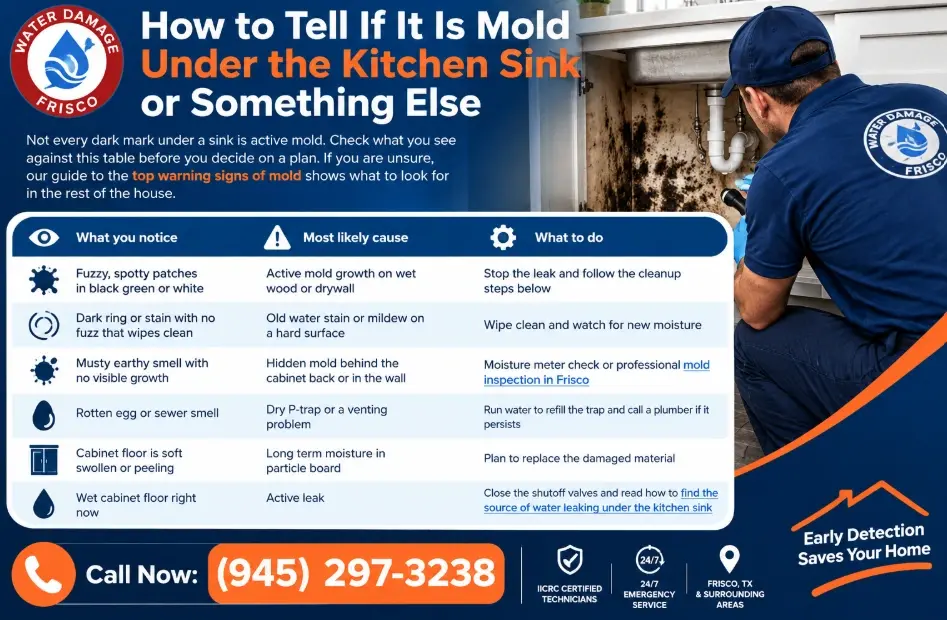
Not every dark mark under a sink is active mold. Check what you see against this table before you decide on a plan. If you are unsure, our guide to the top warning signs of mold shows what to look for in the rest of the house.
| What you notice | Most likely cause | What to do |
|---|---|---|
| Fuzzy, spotty patches in black green or white | Active mold growth on wet wood or drywall | Stop the leak and follow the cleanup steps below |
| Dark ring or stain with no fuzz that wipes clean | Old water stain or mildew on a hard surface | Wipe clean and watch for new moisture |
| Musty earthy smell with no visible growth | Hidden mold behind the cabinet back or in the wall | Moisture meter check or professional mold inspection in Frisco |
| Rotten egg or sewer smell | Dry P-trap or a venting problem | Run water to refill the trap and call a plumber if it persists |
| Cabinet floor is soft swollen or peeling | Long term moisture in particle board | Plan to replace the damaged material |
| Wet cabinet floor right now | Active leak | Close the shutoff valves and read how to find the source of water leaking under the kitchen sink |
Why Mold Grows Under Kitchen Sinks in Frisco Homes
Mold needs only moisture a food source and time. A sink cabinet supplies all three: damp air wood or particle board and paper from stored boxes and cleaning products. Most Frisco homes are built on slabs with no basement, so water that escapes under the sink spreads along the cabinet floor and the base of the wall rather than draining away. Our guide to hidden water damage signs in Frisco homes explains why these leaks stay quiet for so long.
The usual moisture sources
- Slow drips from supply lines and shutoff valves. A weeping fitting wets the same spot every day.
- Loose drain connections and P-traps. Small seepage at the slip nuts is easy to miss. See our guide to a sink leaking underneath: P-trap supply line or faucet for how to tell them apart.
- The garbage disposal. Seals and housings fail over time. Learn where a leaking garbage disposal sends the water.
- The dishwasher connection. Hoses and drain lines often run through the sink cabinet. Read about a dishwasher leak under the sink and the cabinet damage it causes.
- Failed caulk around the sink or faucet. Water from the countertop side drips down into the cabinet.
- Condensation on cold water pipes. Humid North Texas summers can wet pipes even when nothing leaks.
- Filter and water line fittings. Reverse osmosis systems and added water lines create extra joints that can weep.
Black Mold Under the Kitchen Sink: Should You Be Worried?
Black mold under the kitchen sink looks alarming, but color does not prove how harmful a mold is. Many molds look dark and only a lab test can identify the species. What matters more is how much there is and who lives in the home. The EPA notes that mold can cause nasal stuffiness eye irritation wheezing and skin irritation in sensitive people. Children older adults and anyone with asthma or allergies should stay out of the area during cleanup. Read our full breakdown of black mold vs regular mold in Frisco and what to do if you find black mold in your Frisco home. Wondering about other colors? See whether green mold is dangerous.
Musty Smell Under the Sink but No Visible Mold
A musty smell is often the first sign. If the cabinet looks dry but smells damp check these spots with a flashlight: the back panel behind the pipes the underside of the countertop near the sink the base of the wall and the floor of the cabinet at the edges. A pin type moisture meter reads wet wood quickly. If readings are high and you cannot see why the leak may be inside the wall. That is the time to call for a professional mold inspection instead of guessing. Our article on mold after water damage in Frisco explains how fast growth spreads behind finished surfaces.
How to Remove Mold Under Kitchen Sink Cabinets Step by Step
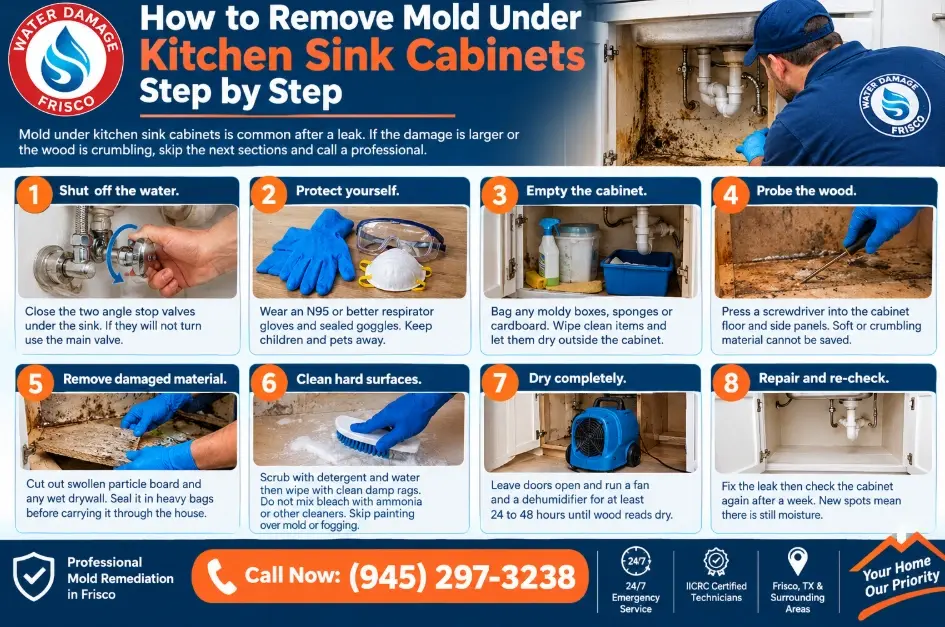
These steps are for a small area of mold on hard surfaces after a minor leak. If the damage is larger or the wood is crumbling skip to the next sections.
- Shut off the water. Close the two angle stop valves under the sink. If they will not turn use the main valve. Our guide shows how to shut off the main water valve in Frisco.
- Protect yourself. Wear an N95 or better respirator gloves and sealed goggles. Keep children and pets away.
- Empty the cabinet. Bag any moldy boxes sponges or cardboard. Wipe clean items and let them dry outside the cabinet.
- Probe the wood. Press a screwdriver tip into the cabinet floor and side panels. Soft or crumbling material cannot be saved.
- Remove damaged porous material. Cut out swollen particle board and any wet drywall. Seal it in heavy bags before carrying it through the house.
- Clean hard surfaces. Scrub with detergent and water then wipe with clean damp rags. Do not mix bleach with ammonia or other cleaners. Skip painting over mold or fogging.
- Dry completely. Leave doors open and run a fan and a dehumidifier for at least 24 to 48 hours until wood reads dry.
- Repair and re-check. Fix the leak then check the cabinet again after a week. New spots mean there is still moisture.
Mold on Particle Board Under the Sink: Clean or Replace?
Most budget cabinets use particle board for the sink base. It acts like a sponge. Once it swells or the laminate peels the mold roots go deep and surface cleaning will not remove them. Replace the damaged panel or the whole sink base if the floor is soft. If the cabinet is sound and only the finish is stained cleaning and complete drying may be enough. For repair choices read our guide to water damage under a sink cabinet: dry repair or replace.
When to Call a Professional: EPA and Texas Rules
Two benchmarks help you decide. The EPA says that mold covering less than about 10 square feet can usually be handled by the homeowner and larger problems call for more careful remediation (see the EPA mold cleanup guidance). In Texas the Department of Licensing and Regulation (TDLR) licenses mold assessors and remediators and generally requires a license when 25 or more contiguous square feet of mold is remediated (see TDLR mold program information). Check any company license before hiring.
Call a professional when you see any of these:
- Mold on the wall behind the cabinet or running up the drywall
- A leak inside the wall or under the slab you cannot reach
- Repeat mold after a thorough cleanup
- Someone in the home with asthma allergies or a weak immune system
- Sewage or dirty water involved. Learn about water damage categories to understand the risk.
Our crews follow IICRC S500 and S520 standards. We find the moisture source set containment dry the structure and remove damaged material. You can see how our process works on the Frisco mold remediation page or learn more about our team. If the leak started with a failed fixture our sink leak water damage and mold service covers the whole job from drying to repair.
How to Prevent Mold Under the Kitchen Sink
- Look monthly. Touch the pipes and valves with a dry paper towel and check for drips.
- Add a leak sensor. A small sensor on the cabinet floor warns you early. See our guide to smart leak detectors and shutoff valves.
- Do not overstore. Keep cardboard and sponges out of the cabinet and leave airflow around the pipes.
- Reseal the sink and faucet. Replace cracked caulk right away.
- Replace old supply lines. Braided lines wear out. Swap them before they fail.
- Dry spills fast. Never let a wet cabinet stay shut. Our checklist on how to prevent mold after water damage applies here too.
The same habits protect other damp spots. See our tips on mold prevention in Frisco attics garages and closets.
Insurance and Mold Under the Kitchen Sink
Coverage depends on your policy and on whether the leak was sudden or long term. Many policies limit or exclude mold from slow seepage. Photograph the damage before cleanup keep every receipt and read the water and mold sections of your policy before filing. Our guides on the Texas water damage insurance claim process and on what to do when a mold insurance claim is denied in Frisco explain your options. If the sink overflowed from the top instead read about overflowing sink and tub water damage.
Frisco Resources for Homeowners
Local offices can answer questions about repairs and health concerns. Replacing cabinets or plumbing may need a permit. The City of Frisco Building Inspections Division can tell you whether your project does. For environmental health questions you can contact the City of Frisco Health and Food Safety department. If a mold problem appears after a larger flood or leak see our emergency water damage restoration in Frisco.
Frequently Asked Questions About Mold Under the Kitchen Sink
Is mold under the kitchen sink dangerous?
It can be. Mold can irritate the eyes nose throat and skin and can trigger wheezing or allergy symptoms in sensitive people. Color alone does not tell you how harmful a mold is. Treat any mold under a kitchen sink as a moisture problem that needs fixing and talk to a doctor if anyone in the home has breathing issues.
Why does it smell musty under my kitchen sink but I cannot see mold?
A musty smell usually means mold or mildew is growing somewhere damp that you cannot see such as behind the cabinet back panel under the cabinet floor or inside the wall. A moisture meter or a professional inspection can confirm it. A sewer type smell is different and usually points to a dry P-trap or a vent problem.
Can I clean mold under the sink myself?
For a small patch on a hard surface many homeowners can. The EPA says areas smaller than about 10 square feet can usually be handled by the homeowner. Fix the leak first wear a respirator gloves and goggles and throw away porous materials such as swollen particle board or soaked drywall.
Does bleach kill mold under a kitchen sink?
Bleach can lighten stains on hard nonporous surfaces but it does not penetrate porous materials such as particle board or drywall so the mold can return. Detergent and water scrubbing plus complete drying works better on hard surfaces. Never mix bleach with ammonia or other cleaners.
When does Texas law require a licensed mold professional?
Texas regulates mold assessors and remediators through TDLR. In general remediation of 25 or more contiguous square feet of visible mold must be done by a licensed mold remediation contractor. Smaller areas can be cleaned by the owner. Always check a company license on the TDLR license search before you hire.
How fast does mold grow after a sink leak?
Mold can begin to grow within 24 to 48 hours when materials stay wet. That is why drying the cabinet fast matters as much as fixing the pipe.
Will homeowners insurance cover mold under my kitchen sink?
It depends on your policy and on whether the leak was sudden or long term. Many policies limit or exclude mold from slow seepage. Photograph everything keep receipts and read your policy before you file.
Related Guides From Our Frisco Team
Do Not Let Mold Spread Behind Your Cabinets
Call now for a fast response from certified Frisco mold and water damage specialists.
(945) 297-3238