“Is Green Mold Dangerous?” Is the Wrong Question
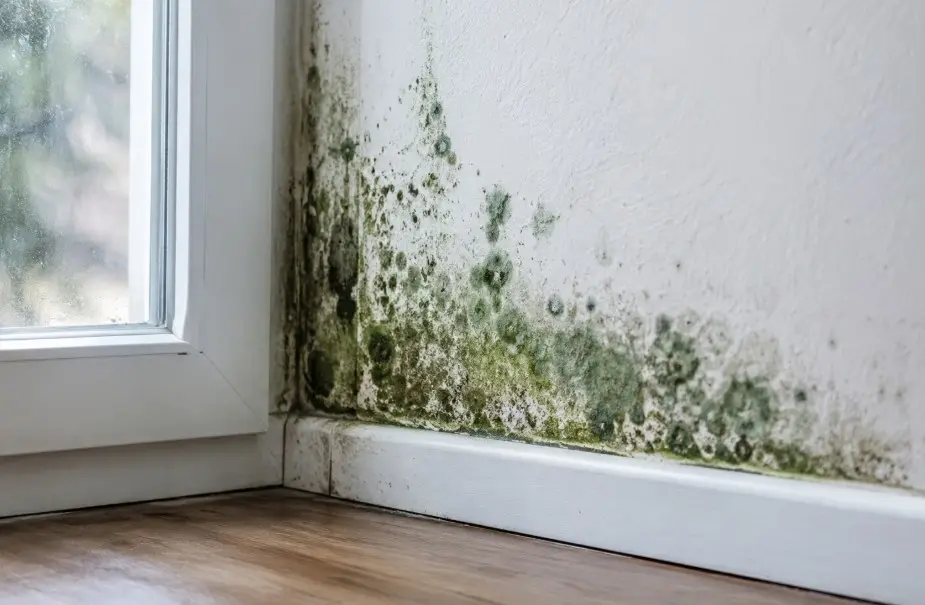
It’s the most common question people ask when they spot green growth on a wall or ceiling — and it’s built on an assumption that turns out to be false. Color doesn’t tell you how dangerous a mold is. It’s one of the most persistent myths in how people think about mold and it leads to two opposite mistakes: panicking over green mold that’s genuinely low-risk or dismissing it as “not black mold so it’s fine” when it deserves the same response either way.
Here’s what actually determines risk according to the CDC and EPA — and why “green mold” was never really the right category to begin with. If your growth showed up after a leak or flood our mold after water damage guide covers the timeline in more detail, and if you’re trying to tell shades apart our black mold vs regular mold comparison walks through the same color myth from the other direction.
“Green Mold” Isn’t a Species — It’s a Color Several Different Molds Happen to Be
The CDC’s own guidance is direct about this: you don’t need to know the type of mold growing in your home to know what to do about it, and the agency doesn’t recommend routine testing to identify species because health effects vary too much person to person for a lab result to predict individual risk. The same logic that applies to “black mold” not being a single species applies to green — the EPA’s own mold training materials note that “black mold” isn’t a species or specific kind of mold at all. It’s shorthand for appearance, not identification, and the same is true of any color-based label.
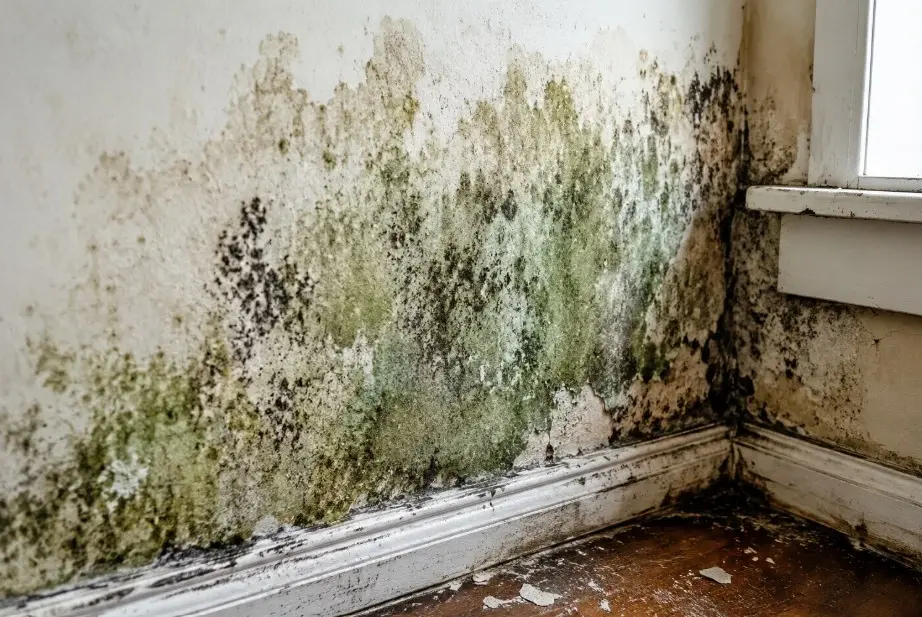
According to the CDC, the most common indoor molds are Cladosporium, Penicillium, and Aspergillus — and all three regularly appear green, along with several other colors, depending on what they’re growing on, how old the colony is, and the lighting it’s viewed under. A green patch on drywall and a green patch on a bathroom windowsill could easily be two entirely different organisms that just happen to look similar to the eye. If you’re seeing early signs and aren’t sure whether it’s worth acting on yet, our warning signs of mold page covers what to look for beyond color.
Why the Same Mold Can Look Different Colors in Different Spots
This is the part that trips people up: mold color isn’t fixed the way paint color is. The same species can appear a different shade depending on the material it’s growing on, its age, moisture level, and even the light it’s viewed under. A colony that started out pale green can darken as it matures. This is exactly why visual color identification — by a homeowner or even a professional without lab equipment — isn’t a reliable way to determine species or risk level. Actual species identification requires laboratory analysis, not a visual assessment.
So What Actually Determines the Risk?
Since color doesn’t predict danger, what does?
- How much is there, and how long has it been growing. A small, recently-formed patch is a different situation than sustained, widespread growth that’s had weeks to establish.
- Who’s exposed. The CDC notes that people with asthma or mold allergies may have more severe reactions, and immune-compromised individuals or those with chronic lung disease face a higher risk of lung infection from mold exposure — this matters more than which color is on the wall.
- Whether the underlying moisture problem is still active. Mold still growing because a leak hasn’t been fixed is a different problem than a stain left behind after a moisture issue was already resolved.
- The material it’s growing on. Growth on a non-porous surface behaves differently than growth that’s worked into porous drywall or insulation.
None of these factors are visible from color alone — which is exactly the CDC’s point in not building their guidance around it. For state-level guidance on the same issue the Georgia Department of Public Health’s indoor air quality program takes the identical position: mold inspections and testing have no enforceable state or federal standard tied to species or color.
Not sure if what you’re looking at needs more than a wipe-down?
Call (945) 297-3238 for a Free AssessmentWhy “Treat It the Same Regardless of Color” Is the Right Approach
Both the CDC and EPA converge on the same practical stance: rather than trying to determine species or “toxicity level” before acting, the right response is the same regardless of what color you’re looking at — identify the moisture source, fix it, and remove the mold. Waiting to see whether a patch is “the dangerous kind” before addressing it delays the one thing that actually matters: getting the moisture problem solved before the growth spreads further.
This doesn’t mean every green spot needs a professional remediation crew. A small, contained patch on a non-porous surface (tile, glass, sealed countertop) is often manageable with basic cleaning and proper ventilation. But growth on porous material, growth that keeps returning after cleaning, or growth covering a significant area is worth a professional assessment — not because of the color, but because of what those factors indicate about how deep the problem actually goes. Our guide on how to prevent mold after water damage covers the moisture-control side of this in more depth.
When It’s Worth Calling a Professional
- Growth is on drywall, insulation, wood framing, or other porous material rather than a hard, non-porous surface
- The same spot keeps coming back after you’ve cleaned it
- There’s a musty odor without visible growth, suggesting mold somewhere you can’t see
- The affected area is larger than roughly a few square feet
- Anyone in the household has respiratory conditions, allergies, or a weakened immune system
In any of these situations, the color of what you’re looking at isn’t the deciding factor — the extent and location of the growth is. Our mold remediation team follows IICRC S520 protocols regardless of what color growth we’re addressing, because the removal and moisture-source process doesn’t actually change based on shade.
Growth on drywall, insulation, or framing? That’s a job for a professional assessment, not a spray bottle.
See Our Mold Remediation ProcessFrequently Asked Questions
Is green mold more or less dangerous than black mold?
Neither, as a general rule — color doesn’t reliably predict danger. Both “green mold” and “black mold” are informal terms covering multiple different species, and actual risk depends on the specific species, how much is present, and individual sensitivity, not the color itself.
Why does the CDC say I don’t need to know what type of mold I have?
Because their recommended response — fix the moisture, remove the mold — is the same regardless of species, and the CDC doesn’t recommend routine mold testing since health effects vary too much between individuals for a lab result to predict someone’s personal risk.
Can the same mold look green in one spot and black in another?
Yes. The same species can appear different shades depending on the material it’s growing on, its age, moisture level, and lighting conditions — which is a major reason visual color identification isn’t considered a reliable diagnostic method.
Do I need to test what species of green mold I have before cleaning it?
Usually not. For a small area on a non-porous surface, cleaning and addressing the moisture source is the standard response regardless of species. Testing becomes more relevant when there’s an ongoing health concern that a doctor wants species information for, or for larger remediation projects.
Don’t Let Color Decide Your Response — Let the Moisture Source Decide
Whatever color the growth is, the fix is the same: find the moisture, remove the mold, and confirm the area is actually dry afterward. If you’re not sure whether what you’re looking at needs a professional response, our team serves Frisco and the entire DFW metroplex and can tell you over the phone whether it’s a DIY job or not.
Get a straight answer on your mold situation today.
Call (945) 297-3238 Explore Mold Removal Services