
Washing Machine Overflowing Drain Standpipe: What Is Actually Going On
A washing machine overflowing drain standpipe problem almost always means one thing: the machine is pushing water out faster than your drain line can carry it away. During the drain cycle your washer pumps a large burst of water through the drain hose and into the standpipe. If that standpipe, the trap below it, or the vent behind it is restricted, the water has nowhere to go but up and out onto your laundry room floor.
Homeowners across Frisco, Plano, McKinney and Prosper call us for this exact problem, and the cleanup is often bigger than people expect. Gray water soaks into the subfloor, drywall and the room below before you ever notice it. This guide explains what is happening, how to diagnose it yourself, which fixes are safe, and when it is time to bring in a licensed plumber and a certified water damage team.
Washer Water Already on the Floor?
Our crews reach Frisco homes fast with a 60-minute response guarantee. Call now and we will start extraction and drying right away.
What to Do in the First 5 Minutes
Speed matters because washer drain water keeps flowing as long as the machine is running. Do these steps in order:
- Pause or cancel the cycle and unplug the washer. Do not step into standing water while the machine is plugged in. If water has reached outlets or the breaker panel, stay out and call an electrician.
- Turn off the washer supply valves. The hot and cold valves behind the machine stop more water from entering. If you cannot reach them, use our guide to shutting off the main water valve in Frisco.
- Stop the spread. Towels and a wet vac help, but do not run a household vacuum on standing water.
- Pull the washer forward if you can do it safely. This lets you see whether the overflow came from the standpipe, the hose connection or the machine itself.
- Take photos and video of the water, the standpipe and anything damaged. You will want them for an insurance claim.
For the full emergency checklist, read what to do when a washing machine overflows and what to do in the first 24 hours after water damage.
How Your Washer Drain System Works
Understanding the path the water takes makes every cause easier to spot. In a typical Frisco home, the washer drains like this:
- Drain hose: a corrugated hose from the back of the washer, looped up high so water cannot siphon out on its own.
- Standpipe: a vertical pipe, usually in the wall box behind the washer, that receives the hose. It is open at the top so air can enter.
- P-trap: a U-shaped bend below the standpipe that holds a little water to block sewer gas.
- Branch drain and vent: the horizontal line that carries water away and the vent pipe that lets air in so the water flows smoothly.
Any restriction along this path, or any mistake in how the hose sits in the standpipe, can cause the standpipe to fill and spill over.
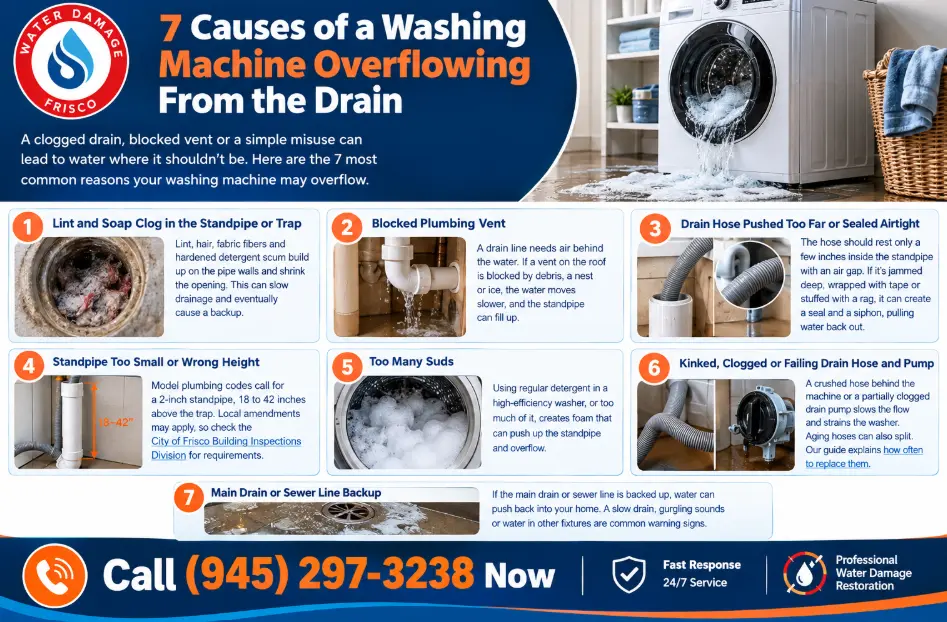
7 Causes of a Washing Machine Overflowing Drain Standpipe
1Lint and Soap Clog in the Standpipe or Trap
This is the number one cause of a washing machine overflowing drain standpipe. Lint, hair, fabric fibers and hardened detergent scum build up on the pipe walls and shrink the opening. The washer still works, so nothing seems wrong until a big load drains and the standpipe cannot keep up. A slow drain, a gurgle at the end of the cycle, or water sitting visibly high in the standpipe are early warnings.
2Blocked Plumbing Vent
A drain line needs air behind the water. If a vent on the roof is blocked by debris, a nest or ice, the water moving through the pipe creates suction that slows the flow. The standpipe then fills faster than it empties. Gurgling from nearby sinks or tubs often shows up at the same time.
3Drain Hose Pushed Too Far or Sealed Airtight
The hose should rest only a few inches inside the standpipe with an air gap around it. If it is jammed deep, wrapped with tape or stuffed with a rag, it can create a seal and a siphon that interferes with proper draining and forces water back out the top. This is a common installation mistake after a washer replacement.
4Standpipe Too Small or Wrong Height
Model plumbing codes commonly call for a 2-inch standpipe, with the top set roughly 18 to 42 inches above the trap. A pipe that is too narrow cannot take the washer’s discharge burst, and one that is too short can spill when the pump surges. Because local amendments apply, confirm requirements with the City of Frisco Building Inspections Division before any plumbing changes.
5Too Many Suds
Using regular detergent in a high-efficiency washer, or simply too much of it, creates foam that can push up the standpipe and overflow. If you see suds around the standpipe opening, this is likely your cause, and it is the easiest one to fix.
6Kinked, Clogged or Failing Drain Hose and Pump
A crushed hose behind the machine or a partly clogged drain pump slows the flow and strains the washer. Aging hoses also split. Our guide on how often to replace washing machine hoses covers inspection and replacement timing.
7Main Drain or Sewer Line Backup
If the washer drain is the lowest opening in the house, a blocked main line sends wastewater out through it. Watch for toilets that gurgle, tubs that back up when the washer drains, or several slow drains at once. This is a plumber job, and the water should be treated as contaminated.
Symptom Guide: Match What You See to the Likely Cause
| What you notice | Most likely cause | First move |
|---|---|---|
| Standpipe fills slowly then spills at end of drain cycle | Lint and soap clog | Clean the standpipe and trap, or call a plumber |
| Gurgling sinks or tubs when the washer drains | Blocked vent or branch line | Call a plumber to inspect the vent and line |
| Suds or foam coming up the pipe | Too much or wrong detergent | Run rinse cycles and switch to HE detergent |
| Overflow began right after a washer install | Hose too deep or sealed | Reseat the hose with an air gap |
| Overflow only on big loads | Standpipe too small or partly blocked | Have the pipe size and condition checked |
| Water or odor from floor drains and toilets too | Main line backup | Stop using water and call a plumber and our team |
Safe DIY Fixes You Can Try
If the overflow was minor and no sewage is involved, these steps are reasonable:
- Reseat the drain hose. Keep a loop at the top, insert the end only a few inches and leave air around it.
- Straighten any kinks and check the hose for cracks or soft spots.
- Remove visible lint from the standpipe opening with a drain snake or a small brush.
- Cut back detergent and use only high-efficiency detergent if you have an HE machine.
- Add a lint trap on the discharge end of the hose if your laundry load is lint-heavy.
Is the Overflow Water Dangerous?
Water from a washer drain is generally classified as gray water, which carries soap, body soils and bacteria. If the overflow came from a sewer backup instead, it is worse: it must be handled as contaminated water. Learn the difference in our guide to water damage categories, and see sewage backup health risks in Frisco and why toilet overflow water is Category 3 for the same reasoning. Keep children and pets out of the area until it is cleaned and dried.
The Hidden Damage After a Washer Drain Overflow
The visible puddle is the small part of the problem. Water travels under baseboards, into drywall and down through the subfloor. Typical damage includes:
- Swollen baseboards, bubbling paint and soft drywall at the bottom of walls
- Wet carpet padding, laminate that cups or lifts, and warped hardwood. See when to dry or discard wet carpet padding
- Stains and sagging on the ceiling below, especially from second-floor laundry rooms. Read about upstairs washing machine leaks and ceiling damage
- Mold growth that can begin within 24 to 48 hours in damp materials. Our guide to mold after water damage in Frisco explains the timeline, and how to prevent mold after water damage shows what to do now
Surface drying with towels and a fan rarely reaches wet wall cavities. Professional extraction, moisture mapping and structural drying are what actually protect the home. See our breakdown of how long water damage restoration takes and water damage cost estimates in Frisco so you know what to expect.
Will Insurance Cover a Washer Overflow?
Many Texas homeowner policies cover sudden and accidental water discharge from an appliance, but they commonly exclude damage from long-term seepage or poor maintenance, and the details differ by policy. Document everything, keep damaged items until the adjuster sees them, and start drying quickly, because delays can hurt a claim. Our Texas water damage insurance claim guide walks through the process, and you should always confirm coverage with your own insurer.
Get a Free Damage Check in Frisco
IICRC-certified technicians, industrial drying equipment and direct help with your insurance paperwork.
How to Stop Your Washer From Overflowing Again
- Clean the standpipe opening and hose end every few months, and have a plumber snake the line if the washer drains slowly.
- Use the right detergent in the right amount. More soap does not mean cleaner clothes.
- Check the hose seat any time the washer is moved or replaced.
- Replace aging rubber hoses with braided stainless steel versions and inspect them yearly.
- Do not run back-to-back loads if the drain has been slow.
- Install a leak sensor and automatic shut-off. See smart leak detectors and shut-off valves for options that can stop the next incident before it spreads.
- Add a drain pan with a drain line if the laundry room is upstairs or sits over finished space.
For a wider view of where appliances cause trouble, read appliance water damage in Frisco and our guide to a washing machine leaking from the bottom, which covers leaks from the machine itself rather than the drain.
How Water Damage Frisco Handles a Washer Overflow
When you call (945) 297-3238, we follow the same process on every job:
- Fast arrival: a 60-minute response guarantee for emergencies.
- Water extraction and moisture mapping: we find every wet area, including inside walls and under flooring.
- Structural drying and dehumidification: equipment is monitored until materials reach dry standards. Learn more about our water mitigation services.
- Sanitizing and mold prevention: if growth has started, we move to mold remediation in Frisco.
- Documentation for your insurer: photos, moisture readings and drying logs.
Our work follows IICRC S500 and S520 standards. See what that means on our IICRC certified page, or visit the main washing machine leak water damage service page for everything we cover.
Washing Machine Overflowing Drain Standpipe: Frequently Asked Questions
Why is my washing machine overflowing drain standpipe water onto the floor?
The drain line cannot carry away the water as fast as the washer pumps it out. The usual causes are a lint and soap clog, a blocked vent, a hose that is inserted wrong, or a main line backup.
Can I unclog a washing machine standpipe myself?
Yes, if the clog is near the top. A drain snake or small brush can remove lint near the opening. If the standpipe stays full or other drains are slow, the blockage is deeper and a plumber should clear it.
How high should a washing machine standpipe be?
Model plumbing codes commonly place the top of a 2-inch standpipe about 18 to 42 inches above the trap. Because cities adopt local amendments, check with the City of Frisco Building Inspections Division before changing the plumbing.
Is washing machine overflow water considered sewage?
Normally it is gray water, not sewage. If the water is coming up because the main sewer line is blocked, it should be treated as contaminated and cleaned by professionals.
How fast can mold grow after a washer overflow?
Mold can start within 24 to 48 hours when walls, padding or subfloor stay damp. Prompt extraction and drying greatly reduce the risk.
Does homeowners insurance cover a washing machine overflow?
Often yes when the discharge was sudden and accidental, but policies vary and commonly exclude gradual leaks or neglected maintenance. Confirm with your insurer and document the damage right away.
Should I call a plumber or a water damage company first?
If water is still spreading or has soaked into floors and walls, start drying immediately and call us at (945) 297-3238. A plumber should fix the drain problem so it does not happen again.
Do Not Let the Water Sit
Every hour a wet subfloor stays wet raises the repair bill. Call our Frisco team now and we will take it from here.
Plumbing codes and permit requirements can change. For current Frisco rules visit the City of Frisco Building Inspections page or review the city’s permit FAQs.