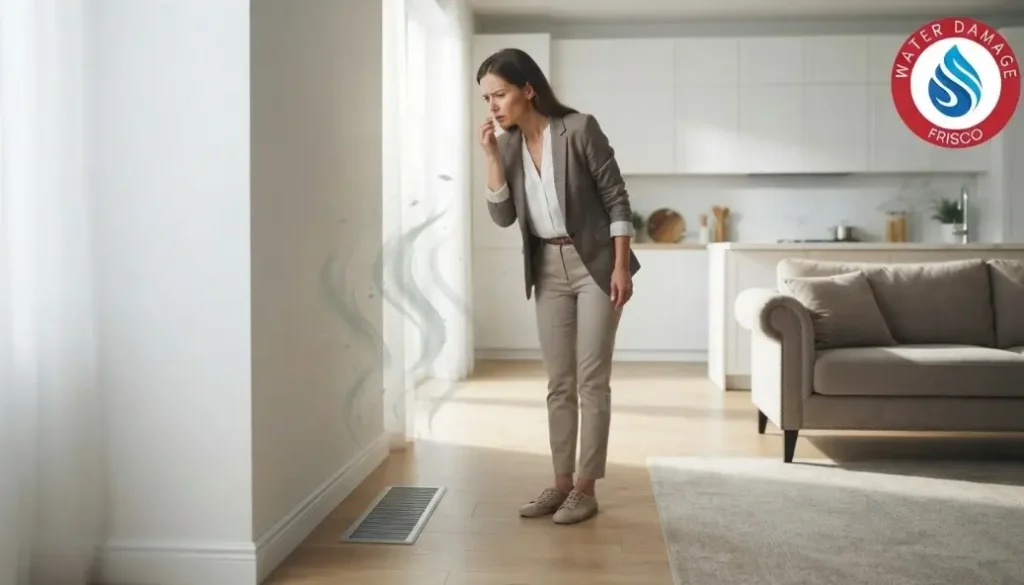
If the Damage Is “Fixed” But the Smell Isn’t Gone Something Was Missed
A smell that lingers after cleanup isn’t cosmetic — it’s information. Odor after a water, fire, or storm event almost always means the source wasn’t fully removed, not that it just needs to air out.
Air fresheners and open windows mask the symptom temporarily, and in a humid North Texas summer, they can actually make certain odors worse by adding moisture to a space that’s still drying out. This guide breaks down the three odor categories homeowners in Frisco and DFW run into most after a disaster — musty/mold, smoke, and sewage/water — what’s actually causing each one, and why professional treatment differs by category instead of being a one-size-fits-all fix.
Why the Smell Outlasts the Visible Damage
Odor-producing compounds are often gaseous byproducts released by decay, combustion, or bacterial activity — not the damaged material itself. According to the EPA, volatile organic compounds (VOCs) are released as gases from a wide range of materials, and indoor concentrations can run several times higher than outdoors, especially in enclosed, poorly ventilated spaces. That’s the mechanical reason cleaning the visible surface doesn’t always solve the smell — the compounds causing the odor have often already worked their way into porous materials like drywall, insulation, subfloor, and fabric, well beyond what a surface wipe-down reaches.
Musty, Earthy Smell
That “damp basement” or “wet cardboard” smell is produced by microbial volatile organic compounds released as mold and bacteria grow and metabolize. It can persist even after visible mold is cleaned if moisture or absorbed material is still present.
Smoke Smell
Smoke particles work into porous materials, fabric fibers, and paint layers. A room can be repainted and still smell like smoke months later if the source material underneath wasn’t treated first.
Sewage / Water Smell
A sewage backup or floodwater intrusion leaves behind bacteria and organic contamination, not just moisture. The odor from Category 3 water is a health signal, not just an inconvenience.
The Musty Earthy Smell What’s Actually Causing It
It’s possible to smell this odor even after visible mold has been cleaned, because the compounds can persist in materials the growth was feeding on, particularly in humid conditions like a Texas summer where relative humidity indoors can climb quickly if a space isn’t fully dry.
If a musty smell continues after mold remediation, it usually means one of two things: either moisture is still present somewhere in the structure (behind a wall, under flooring, above a ceiling), or porous material that absorbed the odor wasn’t removed along with the visible growth. Our mold remediation process addresses both — treating the source and verifying the material is actually dry, not just wiped down. If you’re not sure whether what you’re dealing with is mold-related, our guide on mold after water damage covers the warning signs to check first.
The Smoke Smell Why It Sticks to Everything
Smoke odor behaves differently than most people expect. It isn’t just sitting on the surface of a wall or a couch — smoke particles are small enough to work into porous materials, fabric fibers, and even paint layers, which is why a room can be repainted and still smell like smoke months later if the source material underneath wasn’t treated first. Smoke also carries VOCs from whatever burned, which is part of why lingering smoke odor is a health consideration for kids, older adults, or anyone with respiratory sensitivity, not just an unpleasant smell. The EPA’s guidance on wildfires and indoor air quality notes that fine smoke particles and residue can keep releasing odor from HVAC filters, ductwork, and soft surfaces long after a fire is out.
Surface cleaning alone rarely resolves smoke odor once it’s worked into porous materials — it usually requires a combination of treatments matched to how deep the odor has penetrated and how large the affected area is. Our smoke and soot cleanup process is built around that reality rather than treating every smoke job the same way, and our dedicated smoke odor removal service targets odor that has already worked into walls insulation and ductwork after the visible soot is gone.
The Odor Nobody Talks About Sewage and Category 3 Water
This is the category general “post-disaster odor” articles tend to skip entirely, and it’s arguably the most important one for a water damage-specific event. A sewage backup or floodwater intrusion leaves behind bacteria and organic contamination, not just moisture — and the odor from Category 3 water is a health signal, not just an inconvenience. Standing contaminated water that’s been treated for visible cleanup can still leave odor-causing residue in flooring, baseboards, and subfloor if the material wasn’t properly disinfected or removed.
Stagnant water sitting for any length of time in North Texas heat accelerates bacterial growth, which is part of why our team treats any lingering odor after a sewage or flood event as a signal to recheck the affected materials rather than something to simply cover up. The CDC’s floodwater safety guidance outlines why contact with contaminated water and the surfaces it touches carries real health risk, not just an odor problem. If your situation started with standing water, our breakdown of stagnant water health risks covers what’s actually in that water and why it matters for cleanup decisions, and our page on sewage backup health risks goes deeper into the specific bacteria and contaminants involved.
Why an Air Freshener Usually Makes It Worse Not Better
Masking an odor doesn’t address what’s producing it, and in some cases it actively works against you. Adding scented sprays to a space that’s still drying out introduces more moisture and more VOCs into air that already has an air quality problem — you’re adding a second odor layer on top of the original source instead of removing either one.
If a smell keeps coming back no matter how often a room is cleaned or sprayed, that’s usually the clearest sign the source material itself needs to be addressed, not the air around it.
When a Smell Means Call a Professional
A few signals that a lingering odor needs more than home cleaning:
- The smell returns within days of cleaning, even after ventilating the space
- It’s noticeably stronger in one specific area, room, or wall
- Anyone in the household has started noticing headaches, throat irritation, or breathing discomfort when in the affected space
- The odor followed a flood, sewage backup, or fire — not just routine humidity or cooking smells
In any of these cases, the smell is telling you the source is still there. Our team can identify what’s actually producing the odor and treat it at the source rather than temporarily covering it, whether the original event was water damage or fire damage — contact us if a smell from a past event in your Frisco-area home or business hasn’t fully gone away.
Frequently Asked Questions
Usually because either moisture is still present somewhere in the structure, or a porous material that absorbed odor-causing compounds during the mold growth wasn’t removed along with the visible mold. A lingering musty smell is worth a follow-up inspection rather than assuming it will fade on its own.
Yes, if the material underneath the paint wasn’t treated first. Smoke odor works into porous surfaces, and paint alone doesn’t seal off compounds that are already embedded in the material beneath it.
It can be a sign that bacterial contamination wasn’t fully addressed, not just an unpleasant smell. Category 3 water contamination should be treated as a health consideration, and persistent odor after cleanup is worth having reassessed.
It can help with ventilation, but it won’t resolve an odor that’s coming from compounds embedded in drywall, flooring, or insulation. Airflow dilutes the smell temporarily; it doesn’t remove the source.
Don’t Let a Lingering Smell Become a Bigger Problem
A smell that won’t go away is rarely just a smell — it’s usually pointing at moisture, contamination, or material that still needs attention across Frisco and the DFW metroplex.
Call (945) 297-3238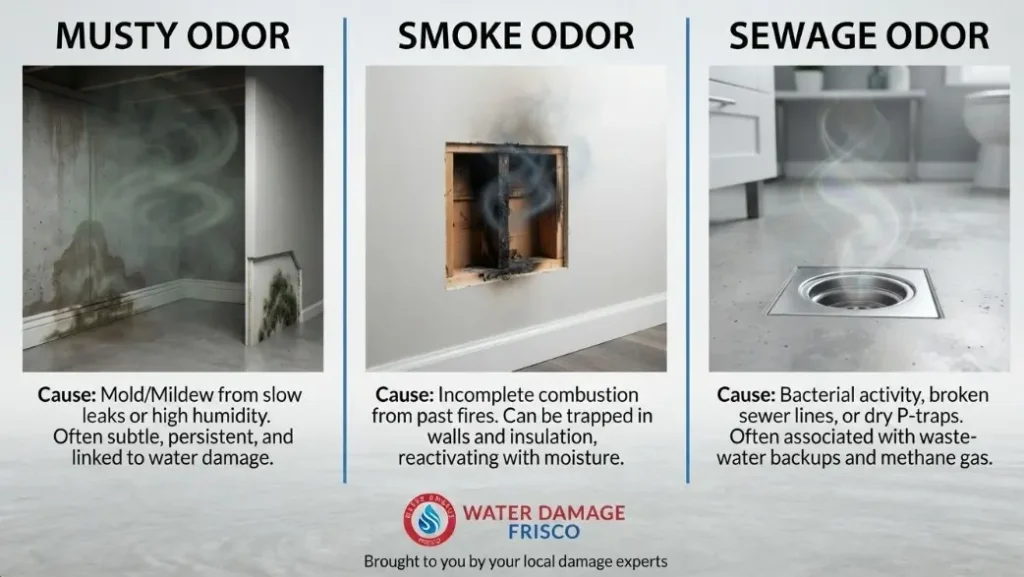
Related Reading
Need help right now? See our full guide to water damage restoration in Frisco, TX for emergency response, services, and coverage across the city.