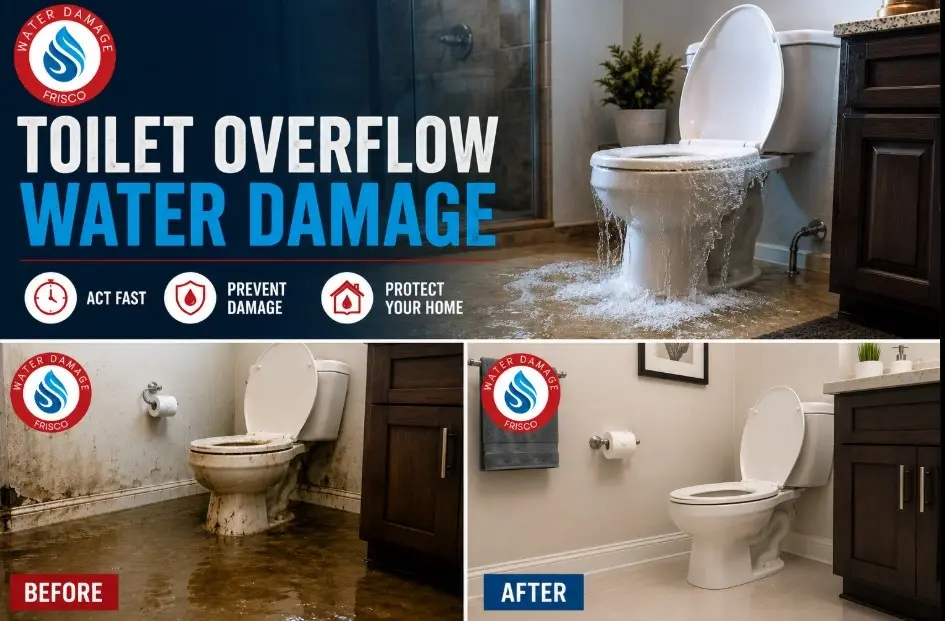
The water is climbing toward the rim, and it isn’t stopping. In the time it takes to react, toilet overflow water damage can put gallons on a Frisco bathroom floor — and if the bathroom is upstairs, straight through the ceiling below. Whether that’s a five-minute mop-up or a biohazard cleanup depends on one thing: where the water came from. This guide walks through exactly what to do in the first few minutes, how to tell if the water is dangerous, and when it’s time to call a restoration professional instead of reaching for a towel.
Key Takeaways
- Stop the water first — shut the valve behind the toilet clockwise, or lift the tank float if there’s no valve.
- The danger depends on the source: clean tank water is low-risk, but a sewage backup is Category 3 “black water,” a genuine biohazard.
- Overflow water travels downward — an upstairs bathroom can soak the ceiling, insulation, and drywall of the room below.
- Dry everything within 24–48 hours to head off mold, and treat any sewage-contaminated overflow as a job for professionals, not a mop.
What to Do About Toilet Overflow Water Damage in the First 5 Minutes
Stop the flow before you do anything else. Reach behind the toilet and turn the shutoff valve clockwise until it stops. If there’s no valve, or it’s seized, remove the tank lid and hold the flapper down or lift the float arm to cut off the fill. Once the water is off, lay towels around the base to contain what’s already on the floor, and move rugs, baskets, and anything porous out of the spill’s path.
Speed matters because the damage curve is steep — a single inch of standing water can cause tens of thousands of dollars in repairs once it reaches subflooring and cabinetry. With the valve closed, your next job is figuring out what kind of water you’re actually dealing with, because that decides everything about how you clean it up.
Why Do Toilets Overflow? Common Causes in Frisco Homes
Most overflows trace back to a clog or a failed fill mechanism — too much paper, a flushed wipe or toy, or a slow buildup in the trap. But if more than one fixture in the house backs up at the same time, the problem usually sits deeper in the plumbing: a blocked main line or a sewer backup pushing water up through the lowest drain in the home.
That distinction matters for your health as much as your plumbing bill. A single-fixture clog is typically clean or lightly soiled water. A main-line or sewer backup means the water rising in the bowl is sewage. If you’re seeing repeated backups in more than one drain, the City of Frisco’s Sewer Division asks residents to report it immediately so crews can check for a blockage in the city line before you call a plumber for the private side.
Is Toilet Overflow Water Dangerous?
It depends entirely on the source. Restoration professionals classify water into three categories: Category 1 (clean), Category 2 (gray), and Category 3 (black). A toilet overflowing with clean tank or bowl water — before it reaches waste — is close to Category 1. A toilet backing up with sewage is Category 3, and it’s treated as a biohazard, not a cleaning job.
That’s not an overreaction. The CDC notes that contact with human waste and sewage carries real infection risk, including bacterial and viral illness, which is why protective gear and proper handwashing matter for anyone exposed. For the full breakdown of how restoration crews grade contamination, see our guide to water damage categories.
How Overflow Damage Spreads — Floors, Ceilings, and Hidden Moisture
An upstairs overflow is rarely a one-room problem. Water pools on the bathroom floor, finds the gaps around the toilet flange and baseboards, and drains straight down — soaking the ceiling drywall, insulation, and light fixtures of the room below. By the time a stain shows up downstairs, the subfloor and joists above it have usually been wet for hours already.
That’s why an overflow that looks “cleaned up” can still cause problems days later. Moisture trapped inside a floor assembly doesn’t dry on its own, and it’s exactly where mold takes hold. If you’re noticing a spreading ceiling stain, a musty smell, or soft drywall, our guide on hidden water damage signs covers what to watch for before it becomes a bigger repair. Overflow damage isn’t limited to toilets, either — sinks and tubs follow the same pattern, which we cover in our guide to overflowing sink and tub water damage.
DIY Cleanup vs. Calling a Restoration Professional
Match your response to the category of water. For a clean overflow, extract the standing water, disinfect the floor, and get air moving to dry the area within 24 to 48 hours — the window the EPA recommends to prevent mold growth after any indoor water event. For anything involving sewage, stop. Contaminated porous materials — carpet, padding, drywall that’s wicked up water — usually have to be removed rather than dried, and every surface needs proper disinfection.
The instinct to grab a towel and move on is what turns a small overflow into a mold remediation bill. Our team compares extraction and drying methods in more detail in water extraction vs. structural drying, and if wet carpet or padding is involved, our guide on drying vs. discarding wet carpet explains what’s salvageable. When sewage is involved, professional cleanup protects your health as much as your home — see our page on the most common water damage spots in Frisco homes for where hidden moisture tends to collect after an overflow.
Does Homeowners Insurance Cover Toilet Overflow Damage in Texas?
Usually yes, when the overflow is sudden and accidental. The Texas Department of Insurance confirms that a toilet overflow is one of the everyday events typically covered under a standard homeowners policy, alongside a burst pipe or a broken washer hose — though damage from a problem you knew about and ignored may not be. Sewer backup coverage is often a separate endorsement, so it’s worth checking your policy before an emergency hits.
Document everything before you clean: photograph the standing water, the source, and the damage below. That record supports the claim and helps establish the cause. Our guide to filing a water damage insurance claim in Texas walks through the documentation adjusters actually want to see. If mold has already started from a delayed cleanup, that’s a separate line item your adjuster will want addressed by a licensed remediation crew.
How We Handle Toilet Overflow Water Damage in Frisco
Our IICRC S500/S520-certified crew identifies the water category on arrival, contains and removes anything that can’t be saved, disinfects every affected surface, and dries the structure with the same monitoring equipment insurers expect to see documented. From there we handle water extraction, structural drying, and — if the overflow sat long enough to seed mold — mold remediation, all under one roof so you’re not coordinating three separate contractors during a stressful week.
We serve homeowners across Frisco and the surrounding DFW metroplex, with a 60-minute response guarantee and direct insurance billing so the claim process doesn’t fall entirely on you. If you want a sense of what a project like this runs, our water damage restoration cost guide breaks down typical pricing by scope.
Toilet Overflowed in Your Frisco Home?
Call our IICRC-certified team 24/7 for a fast inspection. We handle contaminated water safely, dry it right, and bill your insurance directly.
Call (945) 297-3238Frequently Asked Questions
Is toilet overflow water always dangerous?
No — it depends on the source. Clean tank or bowl water is low-risk, but a sewage backup is Category 3 “black water,” a biohazard that carries real infection risk according to the CDC. When you can’t tell where the water came from, it’s safest to treat it as contaminated until proven otherwise.
What’s the first thing I should do when my toilet overflows?
Stop the water. Turn the shutoff valve behind the toilet clockwise, or lift the tank lid and raise the float to stop the fill. Then lay towels to contain the spill and move porous items off the floor before you assess whether the water is clean or contaminated.
Can a toilet overflow damage the room below it?
Yes, if the bathroom is upstairs. Water drains through the gaps around the toilet flange and baseboards into the ceiling, insulation, and fixtures of the room below, often before any stain becomes visible. Catching that hidden moisture early is what keeps a repair small.
Will homeowners insurance cover a toilet overflow in Texas?
Sudden, accidental overflows are typically covered under a standard Texas homeowners policy, per the Texas Department of Insurance. Damage from a known, ignored problem usually isn’t. Photograph the source and the damage before you start cleanup so you have documentation for the adjuster.
Can I clean up a toilet overflow myself?
A small, clean-water overflow — yes, if you extract, disinfect, and fully dry the area within 24 to 48 hours. A sewage backup or main-line overflow is a biohazard that needs professional cleanup and protective equipment, and any water that reached the floor below should be assessed by a restoration pro.
The Bottom Line for Frisco Homeowners
A toilet overflow is a race against two clocks: how far the water spreads, and the 24–48 hour mold window. Stop the water at the shutoff valve immediately. Let the source decide the risk — clean water you may be able to handle yourself, sewage never is. Watch the room below for hidden moisture, and get everything dry inside two days. When in doubt, a quick call beats a costly repair down the line.
If a toilet has overflowed anywhere in Frisco or the surrounding DFW area, call (945) 297-3238 for a free, fast inspection — we’re available 24/7 and we bill your insurance directly.