
Toilet Overflowing and Wont Stop First Steps: The First 5 Steps Before Help Arrives
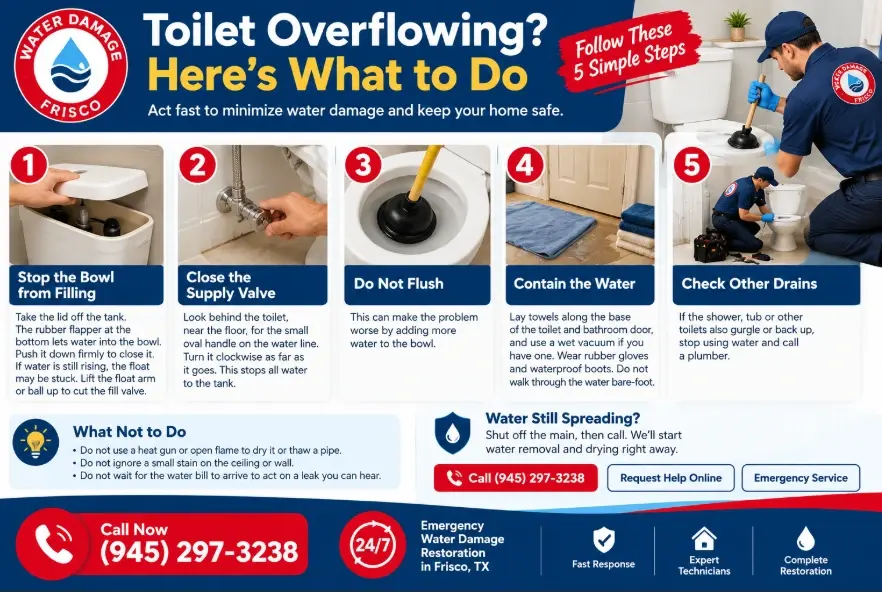
An overflowing toilet gets worse every second you wait. Do these five things in order. They stop the water, protect your floors, and tell you whether it is a simple clog or a bigger problem.
- Stop the water entering the bowl. Lift the tank lid and push the rubber flapper down. If the water keeps filling, lift the float up.
- Close the supply valve behind the toilet (turn clockwise until it stops). This ends the flow into the tank.
- Do not flush again. Each flush adds more water to the bowl.
- Contain it. Put towels down, move rugs and belongings, and keep children and pets out of the bathroom.
- Check other drains. If the shower, tub or other toilets also gurgle or back up, stop using water and call a plumber.
Most overflows come from a clog in the toilet itself, and the water is stopped within minutes. The risk is what happens if you wait. Water from the bowl runs across the floor, under the baseboards, and into the room below, and it can carry bacteria. This page covers only the emergency steps. For what to do about the damage afterwards, see toilet overflow water damage.
The 5 Steps in Detail
Step 1: Stop the bowl from filling
Take the lid off the tank. The rubber flapper at the bottom of the tank lets water into the bowl. Push it down firmly to close it. If water is still rising, the float may be stuck. Lift the float arm or ball up to cut the fill valve.
Step 2: Close the supply valve
Look behind the toilet, near the floor, for the small oval handle on the water line. Turn it clockwise as far as it goes. This stops all water to the tank. If the valve is stuck or leaks, shut off the main water valve at the house.
Step 3: Do not flush
This sounds obvious, but many overflows are made worse by a second or third flush. Let the bowl settle before you do anything else.
Step 4: Contain the water
Lay towels along the base of the toilet and the bathroom door, and use a wet vacuum if you have one. Wear rubber gloves and waterproof boots. Do not walk through the water barefoot and keep it away from kitchens and bedrooms.
Step 5: Decide if it is more than a clog
If only one toilet is affected, a plunger is usually enough once the water has stopped. If several fixtures are backing up together, the problem is further down the line.
Clog or Sewer Line Problem?
| What you notice | Likely cause | What to do |
|---|---|---|
| One toilet overflows, others work normally | Clog in that toilet or its trap | Plunge gently after the water stops, or call a plumber |
| Toilet overflows and the shower or tub gurgles | Blockage in the main drain | Stop using water and call a plumber |
| Water or sewage in a floor drain or tub | Main sewer backup | Stop using water, keep people out of the area, call a plumber |
| Toilet keeps running and refilling | Faulty flapper or fill valve | Close the supply valve and repair or replace the parts |
| Toilet overflows again soon after plunging | Clog further down, or an object stuck in the trap | Call a plumber rather than force it |
If sewage is involved, see sewage backup health risks in Frisco for the safety steps.
Safety: Treat the Water as Contaminated
- Wear gloves, boots and a mask if the smell is strong, and wash hands thoroughly afterwards.
- Keep children, pets and anyone with a weakened immune system away from the area.
- Do not use fans or heaters to dry the area until the water is cleaned up, they can spread contamination through the air.
- Do not use household cleaners on porous materials like carpet or drywall that have soaked up toilet water. These often need to be removed.
Our guide to water damage categories explains how contamination changes the cleanup.
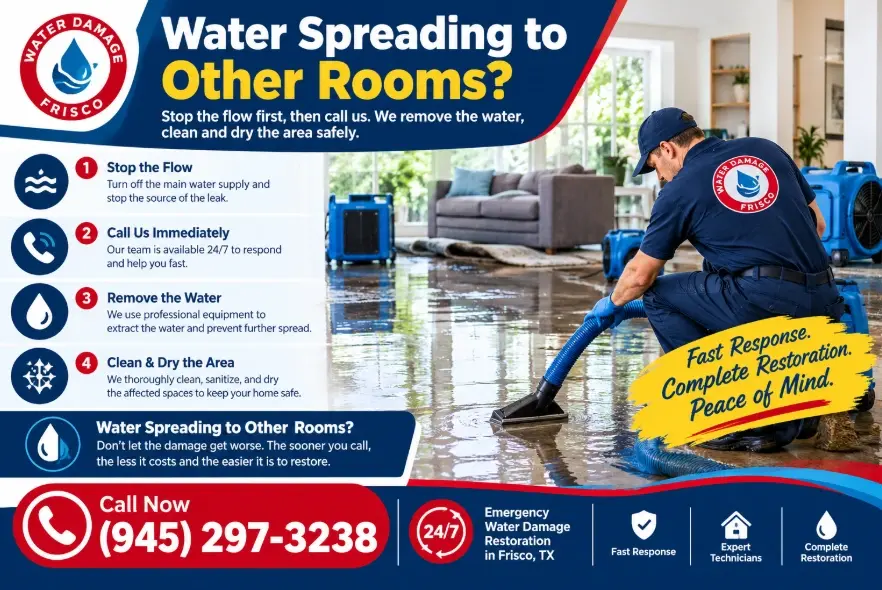
Water Spreading to Other Rooms?
Stop the flow first, then call us. We remove the water, clean and dry the area safely.
When It Becomes a Cleanup Job
If the water reached flooring, baseboards, or the ceiling below, towels will not be enough. Moisture soaks into subfloors and drywall, and it stays there. Our toilet overflow cleanup service in Frisco removes the water, disinfects the area and dries the structure. If it happened upstairs, check the ceiling below for stains, see water bubble on a ceiling.
Insurance and Documentation
Take photos before you clean up, keep plumber and cleanup receipts, and report the loss promptly. Coverage depends on your policy and the cause. Our Texas water damage insurance claim guide walks through the process.
Frisco City Resources
For water service, utility billing or city questions, start with the City of Frisco:
Frequently Asked Questions
What do I do first when a toilet is overflowing?
Take the lid off the tank, push the flapper down to stop water entering the bowl, and close the water supply valve behind the toilet by turning it clockwise. Do not flush again.
Where is the water shutoff for a toilet?
There is a small oval-handled valve on the wall or floor behind the toilet, near the base. Turn it clockwise until it stops.
Is toilet overflow water dangerous?
It can be. Water from the bowl can carry bacteria, and water from a sewer backup is more contaminated. Wear gloves and boots, keep children and pets away, and avoid touching the water with bare skin.
Should I use a plunger on an overflowing toilet?
Only after the water supply is off and the bowl has stopped rising. Use a flange plunger and push gently first. If the water keeps rising or other drains are backing up, stop and call a plumber.
When is an overflow a sewer line problem?
If the toilet overflows along with a gurgling shower or tub, a backed-up floor drain, or a sink that fills when you flush, the main sewer line is likely blocked. Stop using water and call a plumber.
Toilet Still Overflowing?
Close the supply valve and call. We are available day and night.
This guide is general information for Frisco, TX homeowners and does not replace a licensed plumber or your insurance policy. Always wear protective gear around contaminated water and turn off electricity before working near it.
To understand how contaminated the water is, read is toilet overflow water Category 2 or 3.